Beach wedding photography looks easy in a finished gallery. On the day itself, it usually is not.
You are working in full sun, with sand reflecting light back into faces, wind moving hair and fabric, salt spray hitting gear, humidity lowering contrast, tourists drifting into the background, and tide conditions changing where you can safely shoot. The location is beautiful, but it is not stable.
That is why beach wedding photography needs to be treated less like an inspiration shoot and more like fieldwork. The goal is not just to capture a scenic wedding. The goal is to deliver a gallery that still feels flattering, controlled, and complete when the environment keeps trying to take control away from you.
Why Beach Wedding Photography Is Harder Than It Looks
A protected outdoor wedding often gives you at least one advantage: shade, walls, trees, predictable access, or cleaner backgrounds. A beach often removes all of those at once.
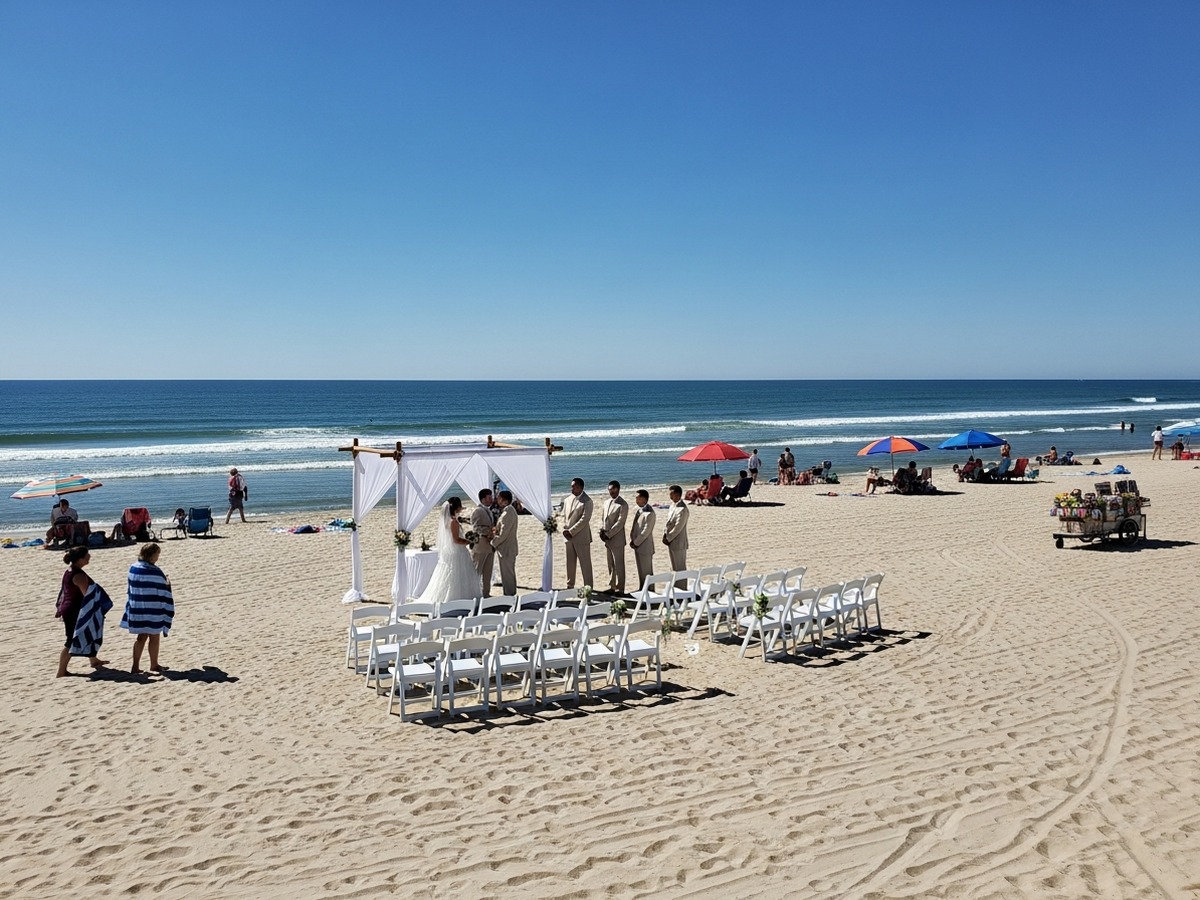
The light is the first problem. A full sun ceremony can create hard shadows under brows, bright hotspots on cheeks, blown highlights in a white dress, and strong bounce from the sand that lifts some parts of the frame while leaving others harsh. Add blue-green water and bright sky to the background, and suddenly you are balancing skin tone, dress detail, and sky highlights in the same scene.
The second problem is movement. Wind changes hair, veils, fabric, and posture constantly. What looks relaxed in person can look messy in photos if you are not directing around it.
The third problem is logistics. A beach wedding timeline can shift quickly because of tide, permit restrictions, transport delays, crowded public access, or a ceremony spot that looks good online but fails in real light.
That combination is what makes beach wedding photography different. It is not just an outdoor wedding with prettier scenery. It is a faster-moving environment with fewer recovery options.
Before the Wedding: The Checks That Save the Shoot
The easiest problems to solve in beach wedding photography are the ones you catch before the wedding day.
Use a short field checklist before the wedding day:
- Check the ceremony time against actual sun position, not just the calendar timeline.
- Check the tide chart, especially if portraits or the ceremony depend on a specific stretch of sand.
- Confirm whether the location needs a permit, where the usable ceremony footprint actually is, and how access changes with the tide.
- Lock a backup location that still fits the day visually.
- Build real walking and transition time into the sunset portrait plan.
- Scout for tourist-heavy zones, visual clutter, and cleaner background angles.
Lens planning should stay simple. A 24-70mm is usually the safest working lens for a beach wedding because it covers most of the day without constant swaps in wind and sand. A 70-200mm is useful when you need cleaner compression during the ceremony or want to simplify a messy shoreline. A wide-angle lens works for scene-setting frames, but it should be used on purpose. Too much wide coverage is one of the main reasons beach wedding photography starts to look generic.

That prep work does more than protect logistics. It also keeps you from promising the couple a clean, empty shoreline that the location cannot realistically give you.
How to Handle the Ceremony in Full Sun
Full sun ceremony coverage is one of the fastest ways for beach wedding photography to break.
Start with consistency. Manual exposure is usually the safer choice when the couple stays in the same area and the light is not changing dramatically from second to second. It keeps skin tone and clothing exposure more stable across the sequence, which matters later when you are trying to build a clean edit. If the light is moving quickly because of broken clouds, you may need to adapt, but the goal is still to avoid a ceremony set that swings wildly from frame to frame.
The second priority is protecting the white dress. In harsh midday light, a dress can go dead white very quickly, especially if the sand is throwing extra brightness back upward.
A practical approach is:
- Watch the dress highlights before you worry about brightening the whole frame.
- If the dress is clipping, back off slightly and recover faces later in post rather than losing the fabric detail entirely.
- Change your angle before changing everything else. A small move can reduce harsh bounce and improve facial shape at the same time.
- If possible, avoid placing the brightest part of the sand directly behind or below the dress in your composition.
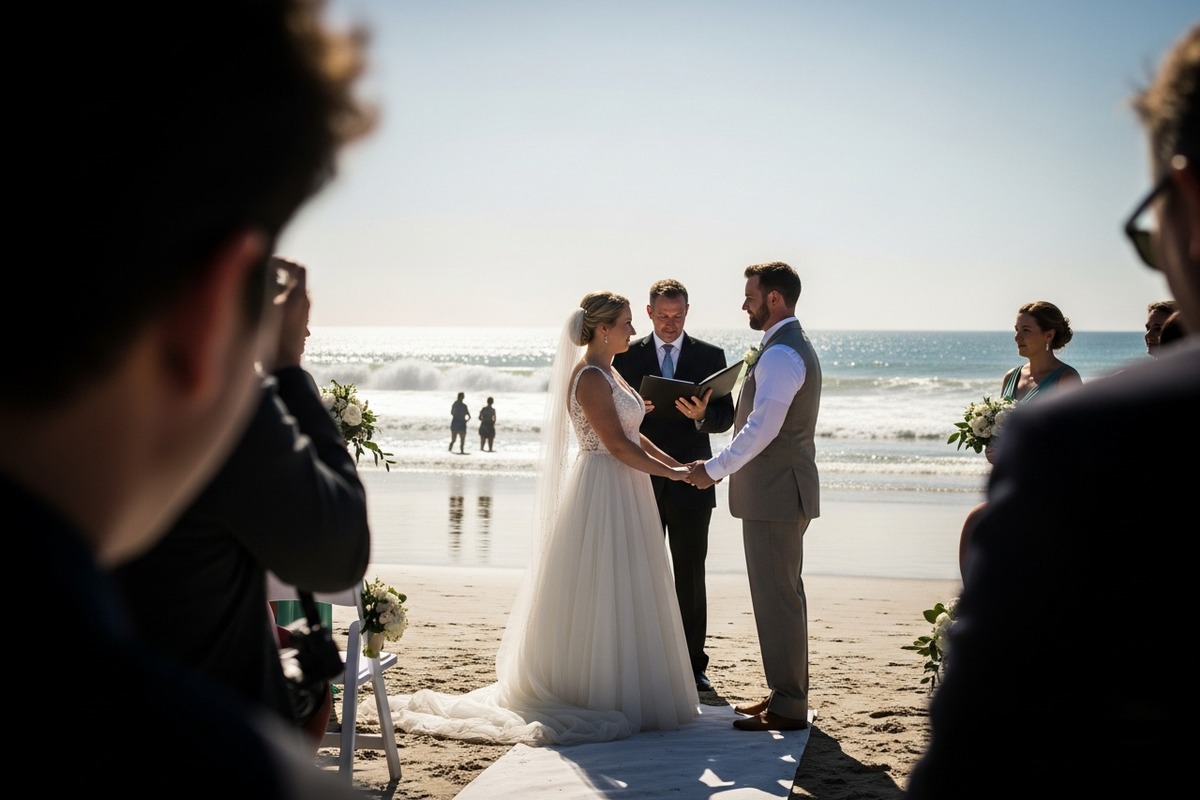
That does not mean every frame needs to be dark. It means the dress should still look white, but not empty.
If the dress and face cannot both hold perfectly in the same moment, protect the dress detail first and wait for a cleaner angle or softer facial turn.
CPL use also needs restraint. It can help with glare off the water or wet sand in hard midday conditions, but it also cuts light and can make the sky and water shift too much from shot to shot if you leave it on all day. Use it when glare is the real problem, not just because you are near the ocean.
HSS flash can help in controlled moments, especially for portraits, but a windy beach is not always the place to build an overcomplicated lighting setup. Keep the ceremony priorities simple: clean faces, stable exposure, and the key moments that have to land.
How to Make Beach Portraits Look Intentional, Not Generic
A lot of beach wedding photography falls into the same visual trap: couple in the middle, ocean behind them, lots of empty space, very little direction.
That is how you get pretty scenery and forgettable portraits.
To avoid that, start with movement and shape. Wind is not always the enemy, but it needs direction. A slight turn, a change in walking angle, or a pause with the couple leaning into each other can make wind feel cinematic instead of messy.
Keep these portrait fixes in mind:
- If hair is crossing both eyes, fix it immediately. It rarely looks better in post.
- Use a 70-200mm when the shoreline is crowded or visually noisy.
- Use a 24-70mm when you want context but still want the couple to dominate the frame.
- Do not let every portrait become a wide scenic shot.
- Look for relief: dune edges, boardwalk lines, cliffs, vegetation, hotel walls, or even darker background zones that separate the couple from the beach.
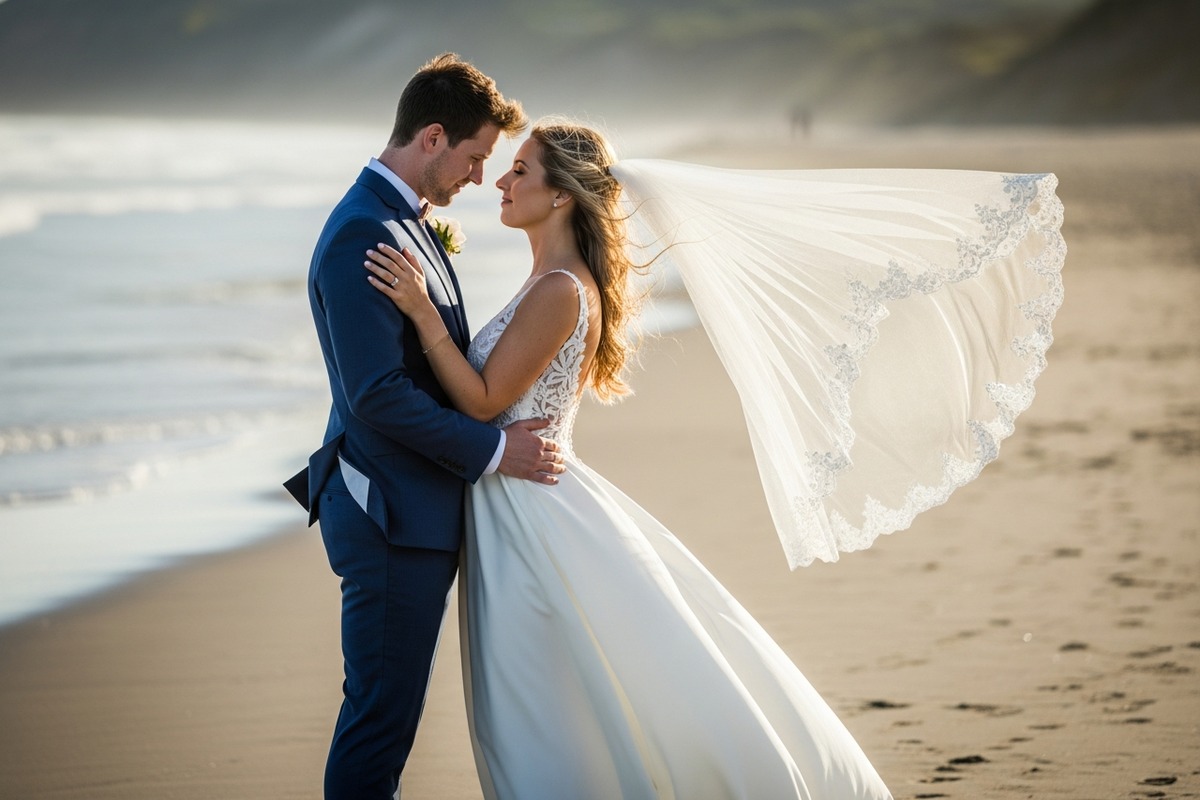
Timing matters too. Golden hour is still the easiest window for stronger skin tone and better depth, but not every wedding gives you that luxury. If portraits happen in harder light, look for cleaner angles and shorter directing prompts instead of forcing a long posing sequence on open sand.
Most beach wedding photography ideas online are too dependent on location and not specific enough about direction. The better portraits usually come from simple prompts, cleaner framing, and more deliberate lens choice, not from inventing dramatic poses in unstable light.
Post-Production: Cleanup, Color, and Evoto Workflow
Post-production is where beach wedding photography either starts to feel polished or starts to feel patched together.
A practical workflow is to cull first, correct the difficult light, clean the distractions, and only then lock the final look.
Start with culling. Beach weddings usually create more near-duplicates than calmer venues because wind changes hair, veils, fabric, and expressions from frame to frame. Evoto‘s AI Culling is useful here because it speeds up the first pass and gets you to the real keepers faster instead of wasting time on dozens of almost-identical files.
Then build the base correction around the problems beach light creates most often: unstable skin tone, blown dress highlights, and mixed color from sand, water, and sky. If those three things are not under control early, the rest of the gallery never feels settled.
Cleanup comes next, and this is where beach wedding photography gets more labor-heavy than many photographers expect. The repeat offenders are usually:
- footprints near the dress hem
- litter, towels, bags, or ceremony leftovers in the sand
- tourists behind the couple
- stray signs, posts, or small background distractions

This is also where Evoto fits most naturally into the workflow. Instead of treating every frame like a one-off retouch, you can use it to move faster through cleanup, repeated object removal, and batch consistency work across a large outdoor set.
Once one strong frame is established, sync the look across similar scenes and use AI Color Match to pull changing beach light back into one cohesive gallery. That matters more on a beach wedding day because the set often swings from harsh ceremony light to softer portraits to warmer sunset color in a very short time.
The finishing style should still stay restrained. The beach looks that hold up best are usually:
- clean and bright, with controlled highlights
- soft coastal color, without oversaturating the blues
- slightly warm sunset finish, while keeping skin believable
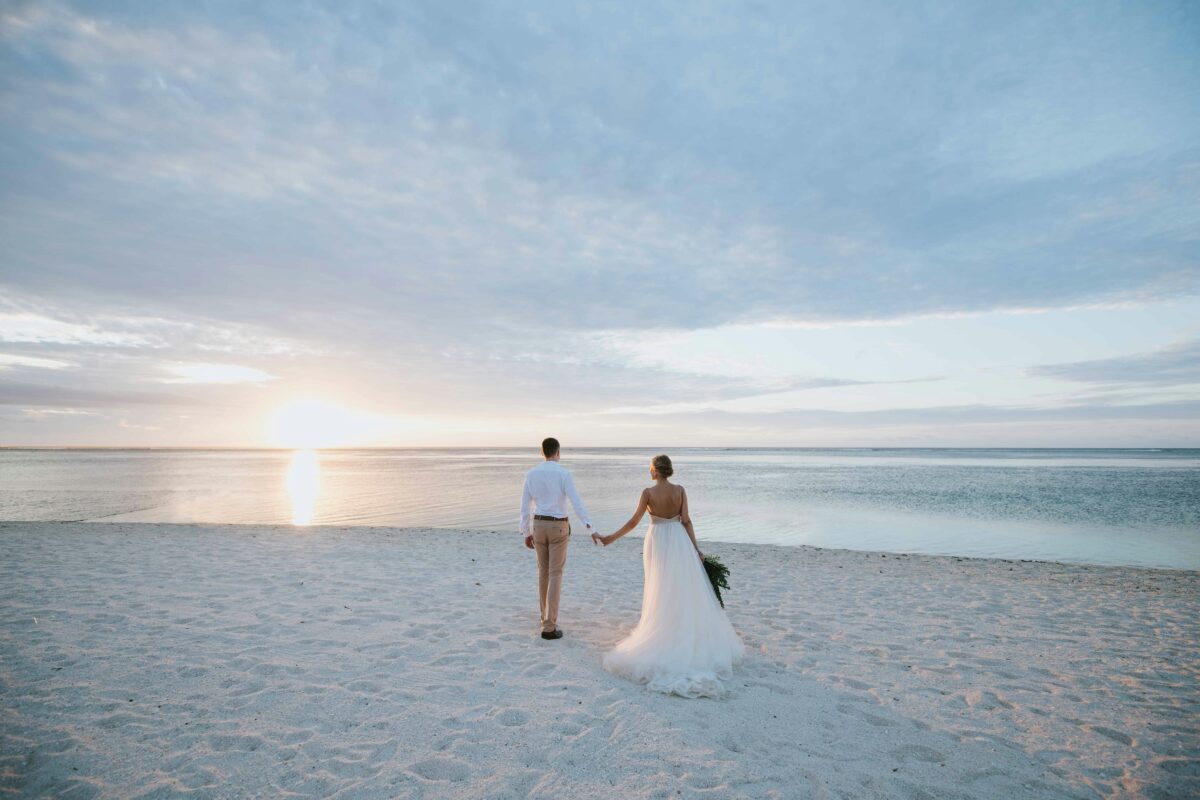
The common mistake is pushing the beach too hard. If the water becomes electric cyan, the sky gets overly dramatic, or the skin turns too warm, the gallery starts feeling trend-driven instead of timeless.


Powerful AI Photo Editor
Final Thoughts
Beach wedding photography rewards preparation more than improvisation.
If you check the tide chart, protect the dress highlights, use a CPL only when it solves a real glare problem, direct portraits with more intention, and keep the edit clean and consistent, the beach stops feeling like chaos and starts feeling manageable.
The scenery still matters. But in beach wedding photography, it is the workflow behind the scenery that determines whether the final gallery feels polished or just lucky.
Try Evoto AI Photo Editor
Retouch photos with Evoto AI and make your photos best! Available on Windows, MacOS and iPadOS.