

Outdoor family photography is a field problem before it is a posing problem.
You may have a strong location, coordinated outfits, and a family that wants natural images. The session still has to survive real light, changing backgrounds, tired children, nervous parents, and a delivery gallery that needs more than one good group frame.
The photographer’s job is to control the conditions without making the session feel controlled. That means choosing usable light before dramatic scenery, starting with a reliable family portrait, using prompts that create movement quickly, and protecting consistency once the files move into post.
This guide is written for photographers who need outdoor family photos that feel relaxed on set and hold together in the final gallery.
Plan for the Family You Actually Have
A location can be visually strong and still be the wrong choice for the family in front of you.
A meadow with beautiful backlight may have no shade. A city block may offer texture but too many cars, signs, and interruptions. A park may feel safe but turn unusable at midday when the open grass becomes flat and harsh. A trail may photograph well, but not if toddlers, grandparents, or outfit choices make the walk stressful before the first frame.
Before confirming the plan, check the real session constraints:
- the children’s ages and attention span
- how far the family can walk comfortably
- the best time of day for the kids, not just the light
- whether the parents expect polished portraits, candid coverage, or both
- whether the location supports sitting, carrying, walking, and resets
- where you can move if the first background stops working
These decisions shape the files before you press the shutter. When the location fits the family, expressions come faster and the set needs less rescue work later. When the plan fights the family, every frame costs more effort.
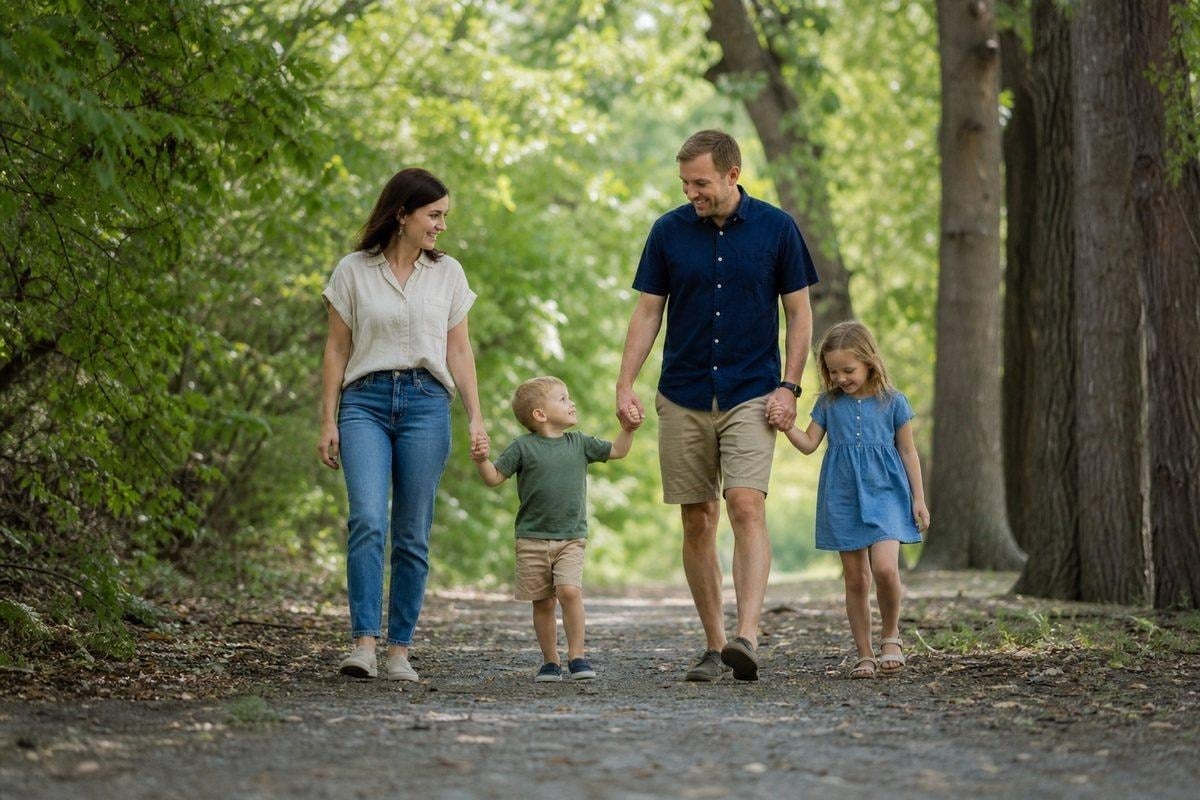
Start with one dependable setup. A shaded path, porch edge, tree line, simple wall, or quiet field edge gives you a clean opening frame before the session becomes more active.
Choose Light for Faces First
Natural light family photography is not about accepting whatever light the location gives you. It is about finding the light that keeps faces readable.
A background may look beautiful while the family is squinting, shiny, underlit, or covered in color cast. Overhead sun creates dark eye sockets and blown clothing. Tree shade can push skin green. Open fields can warm faces too far at sunset. Pavement, water, grass, and painted walls can all bounce unwanted color into skin.
For most outdoor family portraits, start with one of these light situations:
- open shade with bright surroundings for natural fill
- early morning light for younger children
- late afternoon side light for softer shape
- golden hour only when the family can still cooperate
- soft backlight with exposure held on faces
- bright overcast when the location has enough depth
Open shade is usually the most dependable choice. Look for building shade, porches, covered walkways, tree lines, fences, cliffs, or the shadow side of a hill. The goal is not a dark background. The goal is even face light with enough brightness in front of the family to keep the eyes clear.
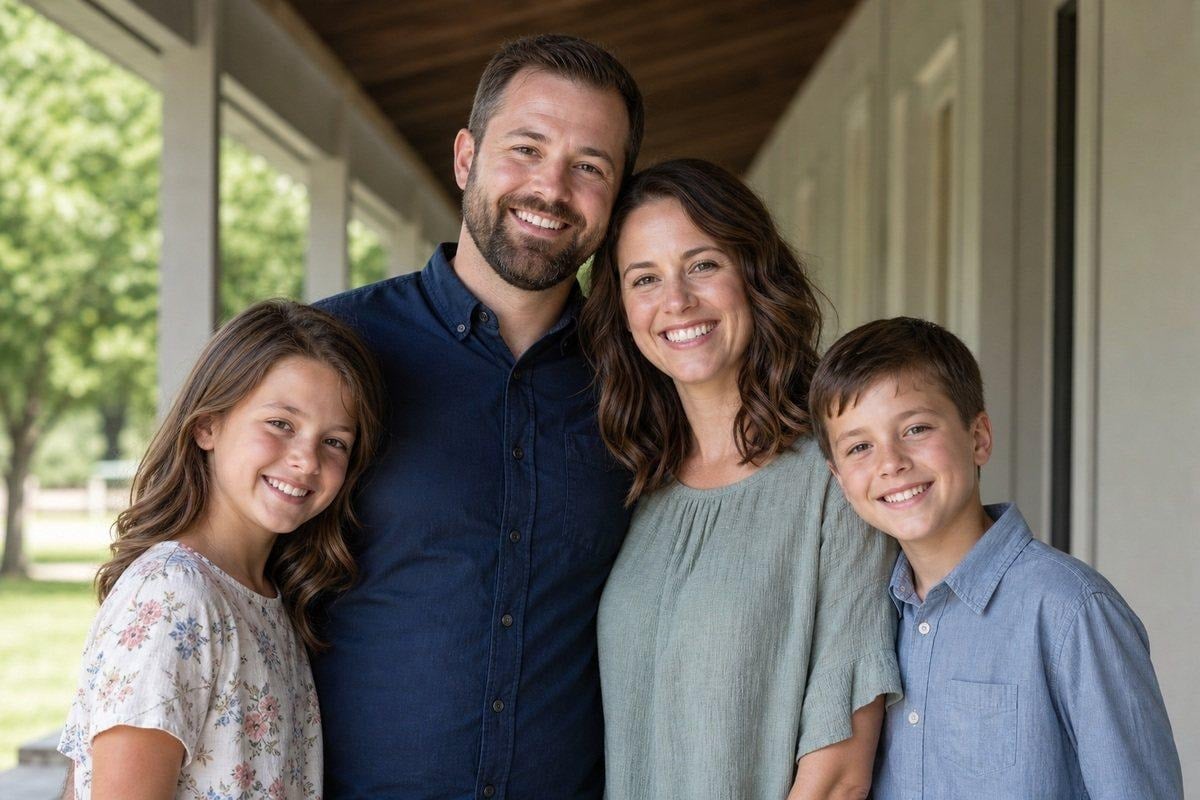
Do not save the essential frame for the final minutes of golden hour. If children are young, secure the main family portrait while they still have energy. Use the warmer end of the session for walking, cuddling, silhouettes, and lower-pressure variations.
If the session must happen near midday, simplify. Find shade first. Avoid patchy sun on faces. Crop tighter if the background is too bright. Work in short blocks. Midday can support documentary movement or graphic frames, but it is rarely the best path for classic soft family portraits.
Direct Movement, Then Refine Still Frames
Outdoor family sessions become stiff when the photographer asks everyone to hold a pose too long.
Children move. Parents correct them. Older kids get self-conscious. Toddlers leave the frame. A better structure is to use movement for expression and stillness for short, deliverable frames.
Begin with the safe frame:
- every face visible
- bodies close enough to feel connected
- no obvious background interruption through heads or shoulders
- hands simple
- expression natural enough for client delivery
That image does not need to be formal. It needs to be secure. Once it exists, the rest of the session can open up.
Then move through prompts that are easy to follow:
- Walk slowly toward me and stay close
- Let the kids lead, but keep holding hands
- Look at whoever is laughing
- Pick them up for one quick squeeze
- Sit close and touch shoulders
- Let the youngest run back into you
- Walk away, then turn back together
- Hold one quiet hug before we move
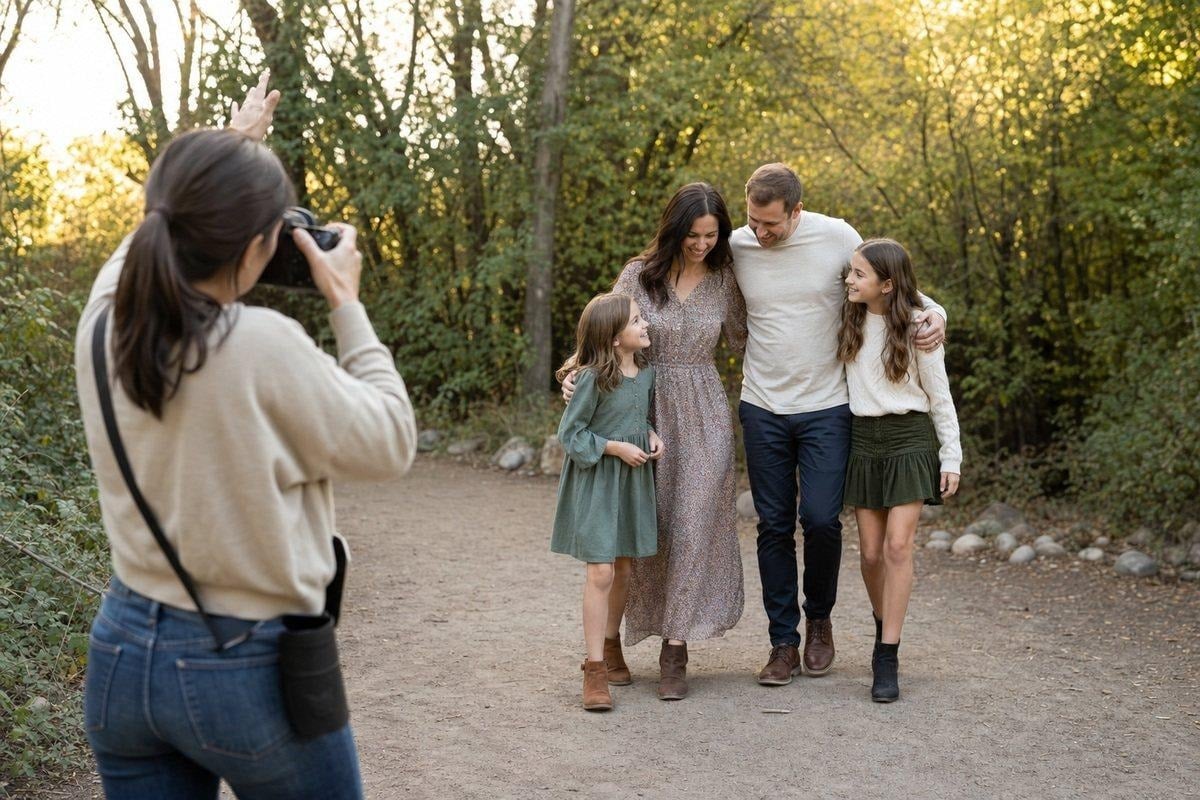
Good family photography poses are usually simple structures, not complex arrangements. A slow walk, a parent lifting a child, siblings sitting shoulder to shoulder, or a family leaning together on a blanket can give you shape, contact, and expression without over-directing the scene.
Use motion to loosen the family. Use brief still frames to secure the gallery.
Match the Idea to the Setting
Outdoor family photo ideas work when the activity belongs naturally in the location. You do not need a heavy prop list. You need one clear action the family can actually do.
Park Path Walk
Use it when: You need movement, depth, and a low-pressure start.
Best light: Morning, late afternoon, or open shade.
Prompt: Walk slowly toward the camera, swing a younger child between parents, or stop halfway for a quick hug.
Field or Meadow Session
Use it when: The family wants a softer, open look and the light is low enough to control.
Best light: Late afternoon or golden hour. Open fields become harsh quickly under strong sun.
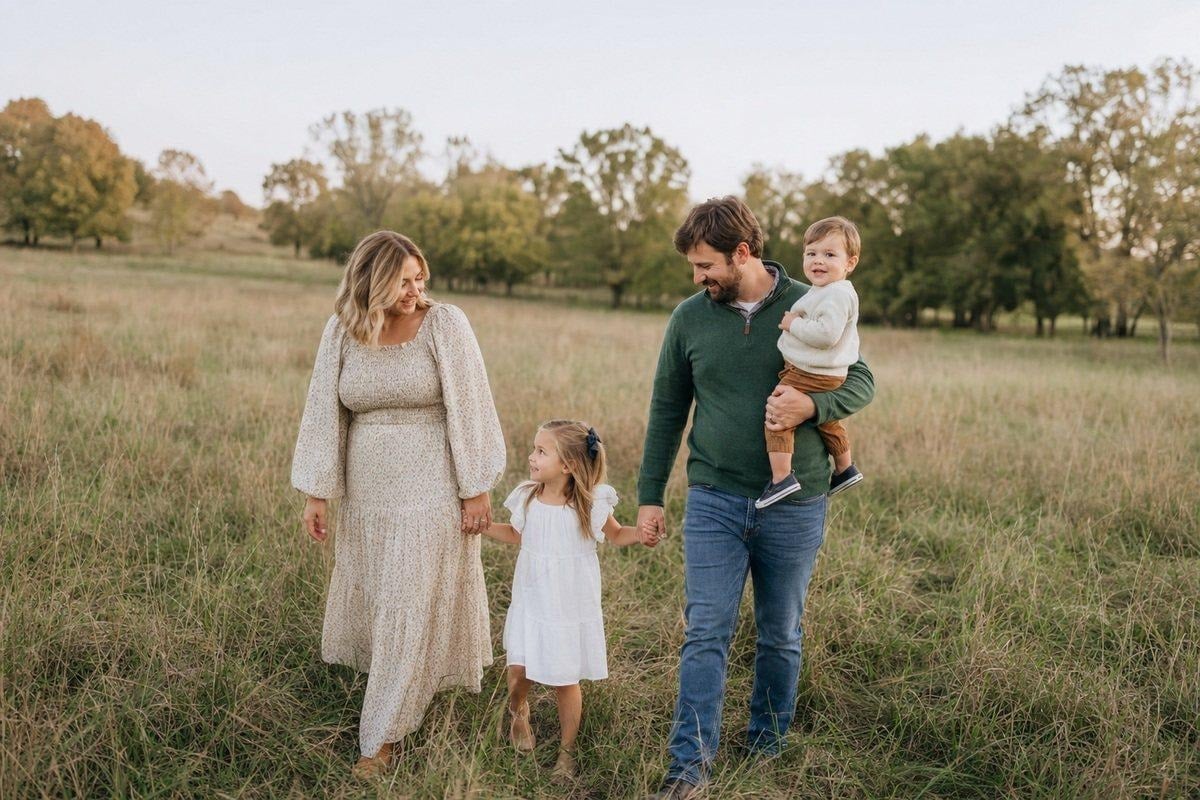
Prompt: Walk through the field, sit close in the grass, or have the children run back into a parent’s arms.
Backyard or Front Porch
Use it when: Younger children need a familiar space or the family wants images that feel personal.
Best light: The softest side of the house, usually morning or late afternoon.
Prompt: Sit on the steps, walk out the front door together, water plants, share a snack, or let the kids move between parents.
Beach or Lakeside Session
Use it when: Water, horizon lines, and movement support the family’s story.
Best light: Early morning, late afternoon, or controlled backlight.
Prompt: Walk along the waterline, hold hands near the edge, let kids run ahead, or sit together facing the water for a quieter frame.
City or Neighborhood Walk
Use it when: The family wants something more personal than a park and the location is part of their daily life.
Best light: Open shade, side streets, covered storefronts, or late afternoon.
Prompt: Walk along a quiet block, sit on steps, cross a courtyard, or pause against one simple wall color.
Each idea should produce coverage, not just one attractive frame. Before you commit, ask whether the setting can support close portraits, half-body frames, a full-family image, movement, and one wider story shot.
Clean the Background Before You Pose
Outdoor backgrounds need constant attention.
Branches cut through heads. Cars sit behind shoulders. Bright signs pull the eye away from faces. White sky clips around hair. Grass becomes too saturated. Open water or horizon lines cut through necks. A strong expression can still fail if the background is careless.
Fix the frame before you start directing:
- move two steps left or right
- raise or lower your camera height
- rotate the family slightly
- use a longer lens when the background is busy
- bring the family closer to a simple plane
- check edges before shooting the final version
Key areas to scan:
- behind heads and shoulders
- frame edges
- horizon lines
- bright signs, cars, bins, and playground color
- tree gaps and branches
- strong color patches near faces
- hands and feet near the crop
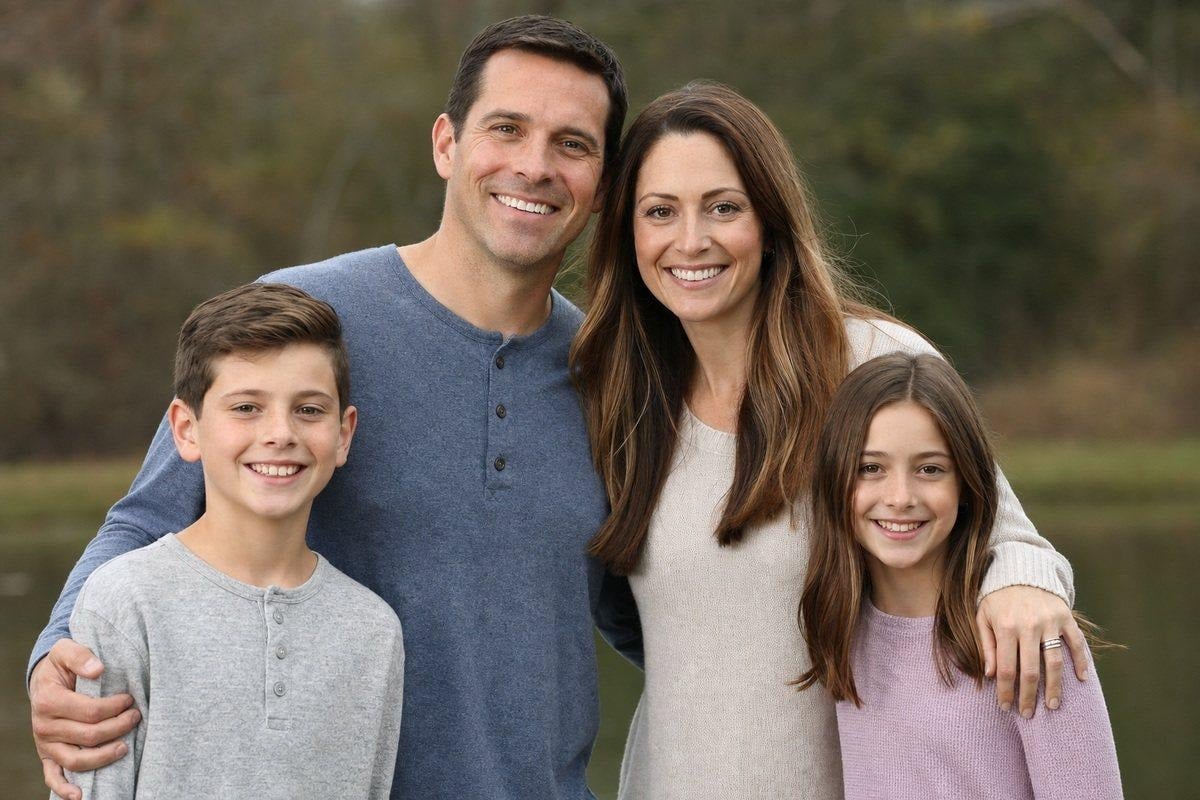
For outdoor family portraits, a quieter background usually gives the image more authority. It lets the viewer read faces, contact, and body language first.
Guide Outfits for the Actual Location
Family photo outfits affect comfort, posture, color, and editing consistency.
Outdoor family sessions require clothes that can handle sitting, walking, carrying children, wind, grass, sand, paths, and temperature changes. If the clothing is too stiff, too bright, too hot, or too fragile, the family will move less naturally.
Reliable guidance:
- choose soft neutrals, earth tones, muted blue, cream, warm white, soft brown, or muted green
- mix one subtle pattern with mostly solids
- avoid large logos, neon colors, and several competing prints
- choose shoes that make sense for the terrain
- avoid clothing that prevents sitting or lifting children
- use texture when the palette is simple
For green parks, warm neutrals often balance the environment better than cool gray. For beach or lakeside sessions, pale blue, cream, tan, and soft white usually work well. For urban sessions, one stronger color can work if the rest of the palette stays calm.
The goal is not matching outfits. The goal is a coherent palette that keeps faces important.
Build the Gallery in Layers
Outdoor family photography should not deliver one strong group portrait and dozens of small variations.
Build the set with clear roles:
- clean full-family portrait
- parent-child close-ups
- sibling interaction
- walking or movement frame
- seated connection frame
- wide environmental image
- detail frame with hands, hair, flowers, clothing, water, or a family object
- playful frame
- quiet closing frame
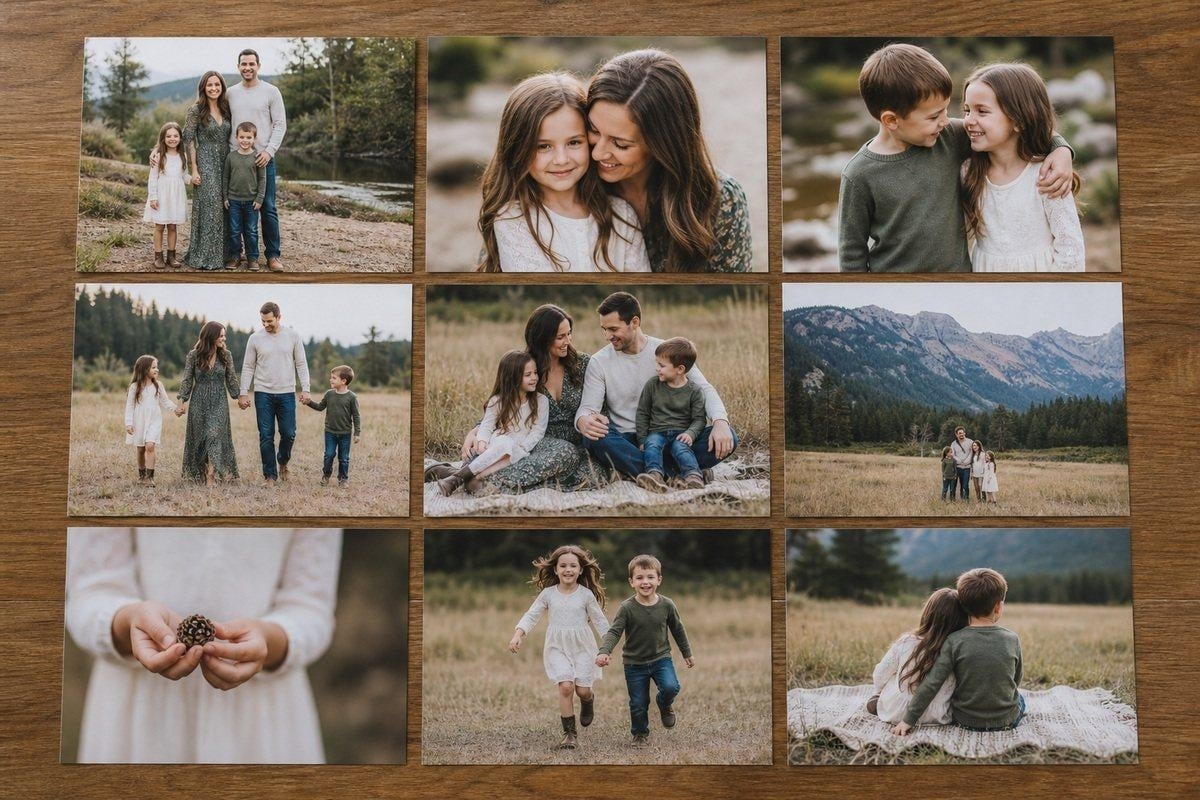
This structure helps both the session and the edit. If every frame has a job, culling becomes faster and the final gallery feels intentional. If every file is a tiny variation of the same pose, the selection process slows down and the delivery feels thin.
Shoot enough to catch expression, then move on. Outdoor sessions create duplicates quickly because children move, parents reset, and light changes. A coverage plan keeps you from overworking one setup while missing the rest of the story.
Finish the Gallery Without Breaking Skin Tone
Outdoor family photo editing gets difficult because one session rarely stays in one light.
A gallery may include tree shade, open sky, backlight, grass, water, pavement, and golden hour warmth. Skin can shift green, orange, blue, or gray across the set. If the correction is too aggressive, the family starts looking less natural than they did on location.
Start with a controlled base:
- correct white balance before adding warmth
- protect skin tones before pushing background color
- recover highlights on faces and light clothing
- reduce shine without removing real skin texture
- clean small distractions near faces and frame edges
- match color across lighting groups


Powerful AI Photo Editor
For more on color control, see White Balance in Photography: What It Is and How to Adjust It.
Once the selects are locked, Evoto can support the delivery workflow without replacing the photographer’s judgment. For family galleries with many similar frames, AI Culling can reduce repeated expressions, closed eyes, and weak near-duplicates before editing begins. For close portraits, Portrait Retouching fits the finishing pass because the goal is light skin polish, not changing how people look. When the session moves through shade, sun, and golden hour, AI Color Match can help keep the final gallery visually consistent.
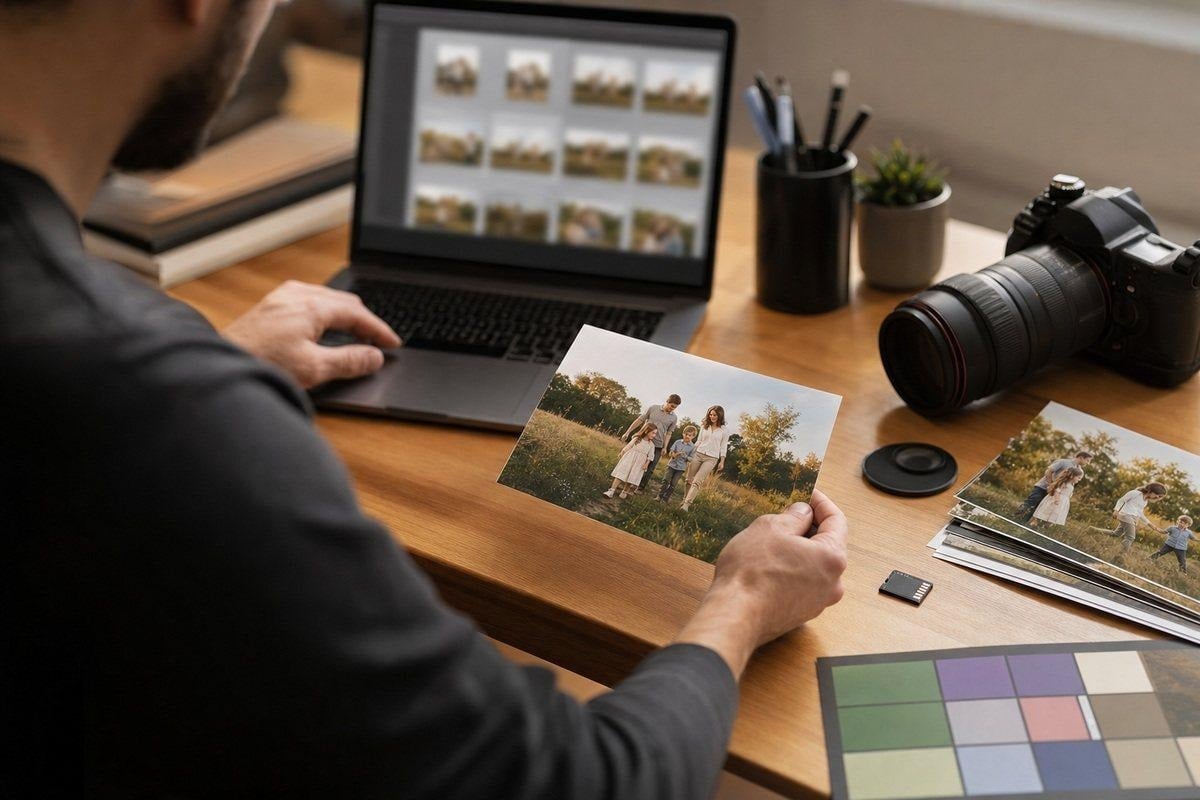
The final pass should feel restrained. Outdoor family photos should look clean, warm, and connected, not forced through one heavy preset.
Outdoor Family Photography Checklist
Before the session:
- Does the location fit the family’s age range and energy?
- Is there usable shade or a fallback spot?
- Is the scheduled time realistic for both light and children?
- Do the outfits support movement and clean color?
- Can the location produce close, medium, wide, and movement frames?
- Do you know where the safe family portrait will happen?
During the session:
- Are faces readable in the light?
- Are eyes clear and relaxed?
- Is the background clean behind heads and shoulders?
- Are prompts short enough for children to follow?
- Has the safe frame been captured before looser moments?
- Is the gallery being built in layers instead of repeated poses?
Before delivery:
- Do skin tones stay natural across the set?
- Are green, blue, or orange casts controlled?
- Do highlights on faces and clothing hold detail?
- Are small distractions cleaned without over-editing?
- Does the gallery feel consistent from first frame to last?
- Does the final set show the family, not just the location?
Final Thoughts
Outdoor family photography works when the session is designed for real families, not ideal conditions.
Choose locations that give people room to move. Use light that supports faces before it supports the background. Keep direction short. Capture the reliable group frame early. Then build the gallery with movement, connection, close frames, wide frames, details, and quieter moments.
The strongest outdoor family photos do not depend on perfect scenery. They show a family looking comfortable, connected, and true to themselves in a place that helps the story instead of competing with it.
Try Evoto AI Photo Editor
Retouch photos with Evoto AI and make your photos best! Available on Windows, MacOS and iPadOS.