

Football photography is the art of capturing the speed, emotion, pressure, and culture of a football match in still images.
A strong football photo does more than freeze a tackle or a goal. It shows the tension before a penalty, the shape of a goalkeeper’s dive, the frustration after a missed chance, the relationship between players and fans, or the weather and atmosphere around the ground.
Unlike slower portrait or studio work, football photography gives you very little control. You cannot pause the match. You cannot move the player. You cannot ask for the moment again.
That means your job starts before kick-off. The best images usually come from photographers who already know what they are looking for, where they need to stand, and how they will handle the edit once the game ends. Here are some football photography tips you need to know.
Before the Match: Prepare for the Story, Not Just the Settings
Good soccer photography starts before you arrive at the stadium.
Camera settings matter, but preparation matters more. You need to understand the match context, the light, the layout, and the kind of images you want to bring back.
Know the Match Narrative
Every game has a possible story.
It might be a title race, a derby, a player’s return, a young talent’s debut, a relegation fight, or a manager under pressure. If you know the story before kick-off, you can make better decisions during the game.
Ask yourself:
- Who is likely to matter?
- Which players will the editor or client expect?
- Is the emotion bigger than the action?
- Where might the winning moment happen?
- Do you need tight action, crowd culture, celebration, or atmosphere?
You will not predict everything. Football does not work that way. But a clear narrative helps you avoid shooting randomly.
Study the Stadium and Light
Every stadium shoots differently.
Some grounds give you clean backgrounds behind the goal. Some have strong advertising boards that can distract from action. Some have heavy shadows in daytime matches. Night games may be easier because the light stays more consistent, but you still need to know how the floodlights affect color and exposure.
Before kick-off, check:
- where the sun or floodlights hit the pitch
- whether one half is darker than the other
- where the cleanest backgrounds are
- how close you can get to the goal line
- whether a long lens or wider lens gives you the better story
- where celebrations are most likely to face
Your shooting position is a creative decision. There is no perfect spot. There is only the spot that gives you the best chance at the image you want.
Choose Gear Around Coverage
For football photography, your gear should help you cover three types of images:
- tight action
- wider atmosphere
- reaction and emotion
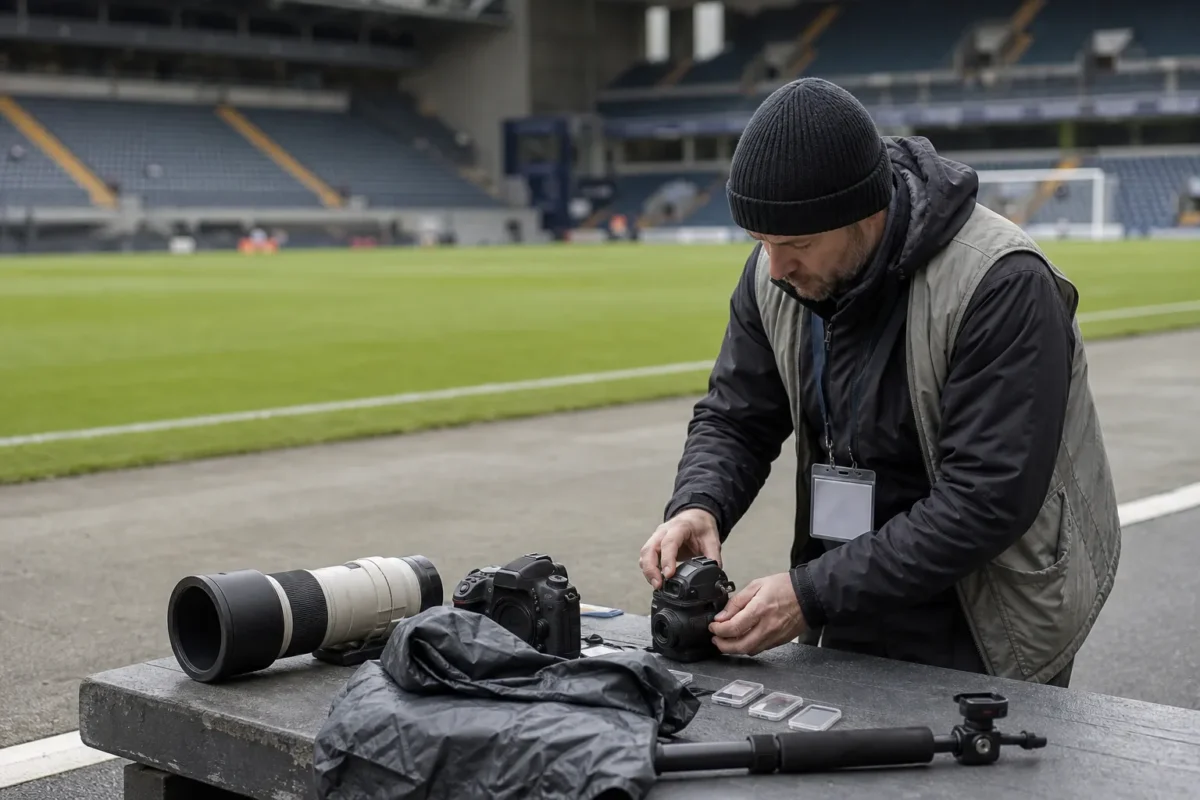
A long telephoto lens is useful for midfield battles, goalmouth pressure, and isolated player moments. A shorter lens can be useful behind the goal, near the touchline, or when you want rain, fans, stadium shape, and emotion in the frame.
A monopod can help with heavy telephoto lenses. Fast memory cards matter. Extra batteries matter. Rain covers matter. Football photographers do not only fight motion. They fight weather, distance, deadlines, and limited access.
How to Shoot Football Photography During the Match
Once the match starts, the biggest challenge is attention.
The ball moves fast. The story moves faster. If you only follow the obvious action, you may miss the image that actually defines the game.
Pick Your Position With Intention
Your position controls your visual story.
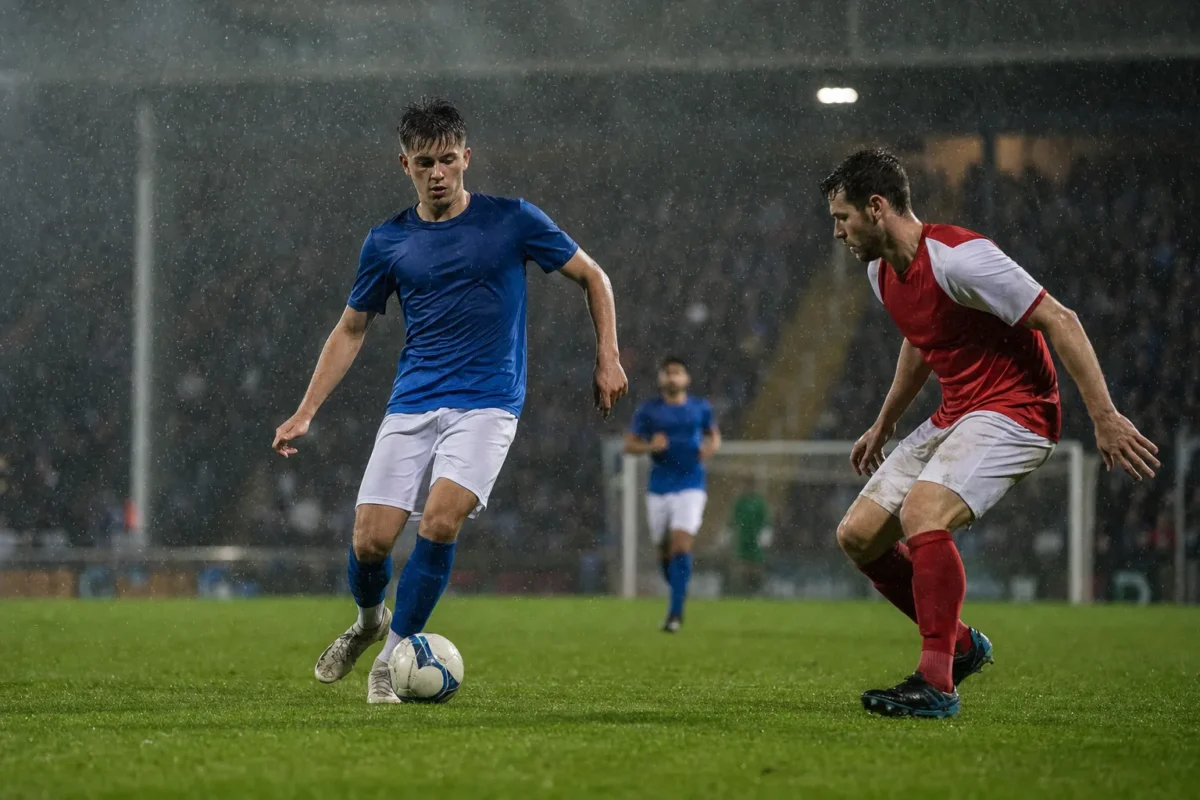
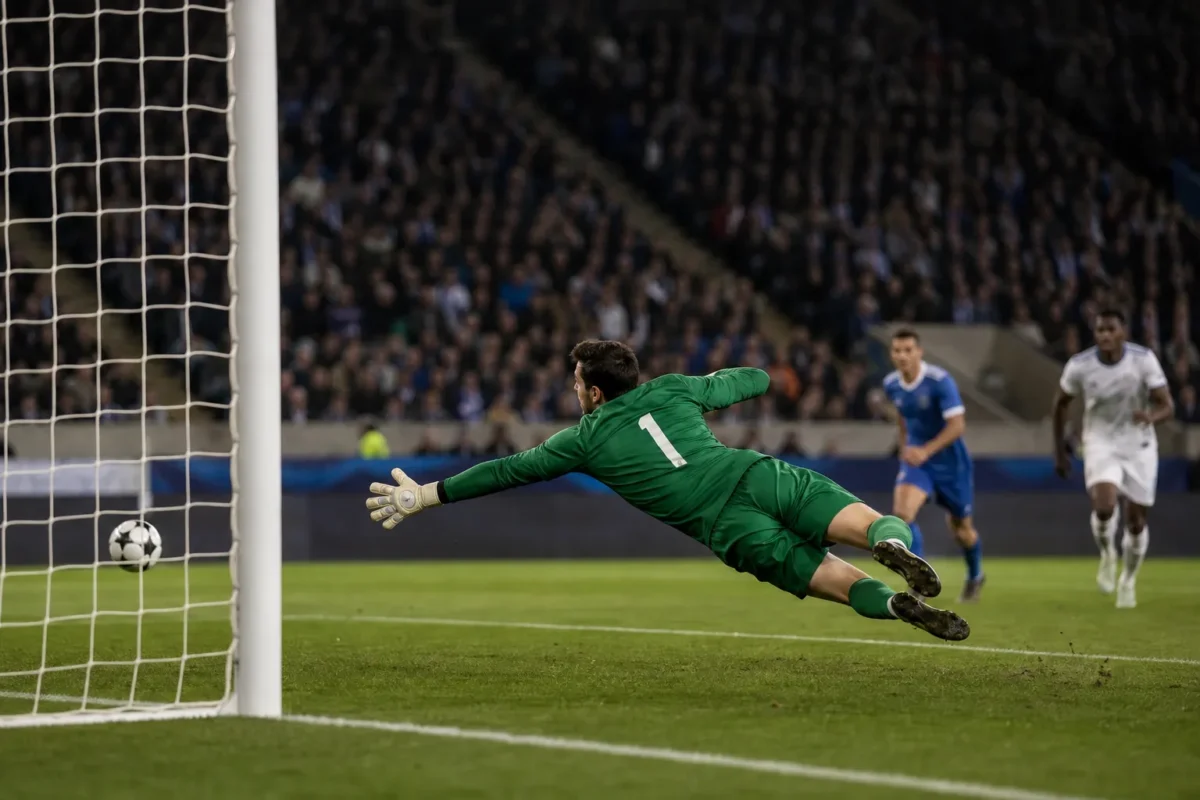
Behind the goal can give you saves, celebrations, tackles in the box, and attacking pressure. The corner can work well for goal celebrations and wide player movement. Higher positions can show shape, tactics, crowd scale, and the geometry of the pitch.
But do not choose a position only because everyone else is there.
If every photographer is waiting for the celebration, consider whether the better picture might be the goalkeeper, the defender, the manager, or the player who missed the chance. Football photography rewards anticipation, not just reaction.
Use Fast Shutter Speeds for Core Action
For most match action, you need a fast shutter speed.
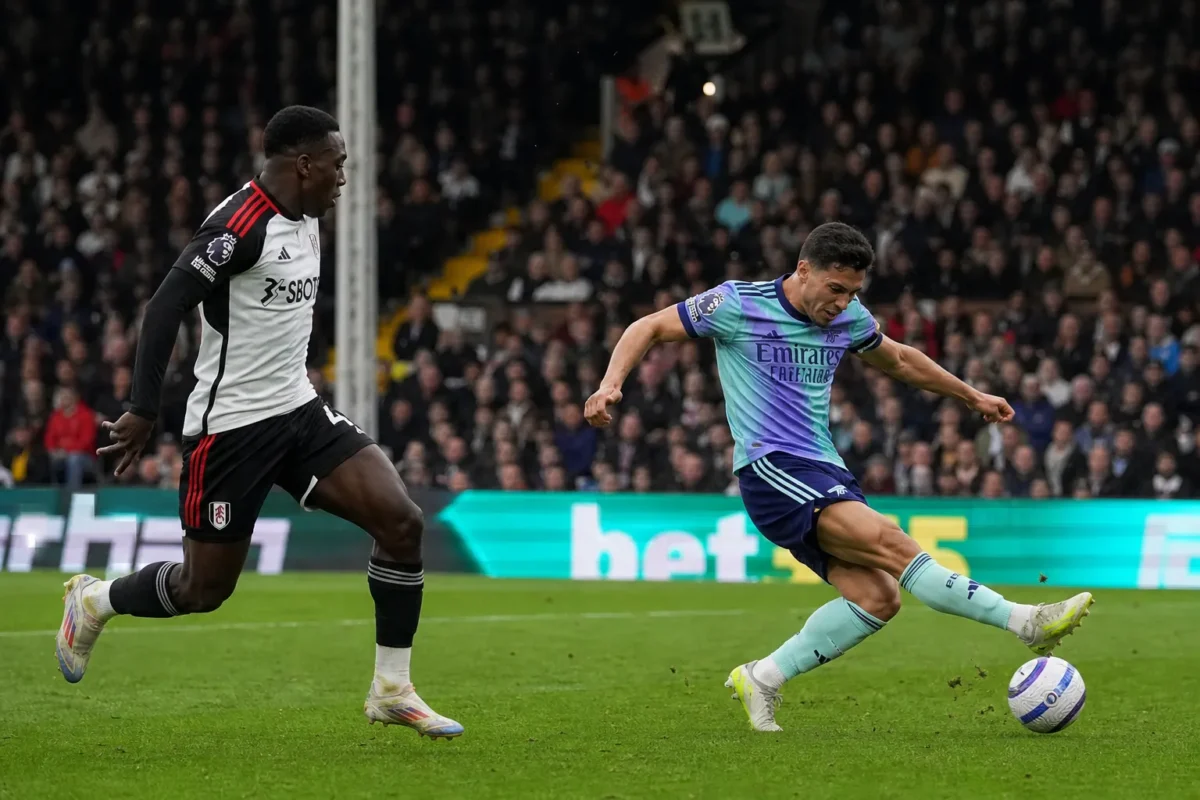
A common starting point is around 1/1000s or faster to freeze tackles, headers, sprints, and saves. If the action is extremely fast, or if you are shooting with a long lens, you may need to go higher.
Your exact settings depend on the light, lens, and camera, but the working goal is simple: keep the player sharp at the moment of impact.
Aperture often stays wide enough to isolate players from busy backgrounds. ISO rises when the light drops. In night matches, once the stadium light is stable, exposure can become easier to control. Daylight games can be harder because players move between sun and shadow.
Do Not Ignore Slower Shutter Speeds
Freezing action is not the only option.
A slower shutter speed can show motion, speed, and energy. It can turn a sprint, tackle, or crowd movement into something more expressive. The risk is failure. Slow shutter work requires timing and restraint.
Use it when you already have safe coverage. Once you know you have the essential images, experiment with motion blur, panning, and wider atmosphere.
Shoot the Game Around the Ball
The ball matters, but football is not only the ball.
Some of the strongest images happen away from the obvious action:
- a goalkeeper organizing the defense
- a substitute warming up in bad weather
- a manager reacting to a missed chance
- fans watching a penalty
- players arguing after a foul
- a captain lifting the team after a mistake
- a defender collapsing after the final whistle
These images give the match emotional structure. They also help your final gallery feel less repetitive.
Watch the Fans, Weather, and Culture
Match day photography includes the culture around the match.
Fans arriving before kick-off, scarves, old shirts, rain, smoke, flags, stewards, ground staff, and stadium architecture can all help tell the story. These images may not be the main action shot, but they can make a match-day set feel complete.
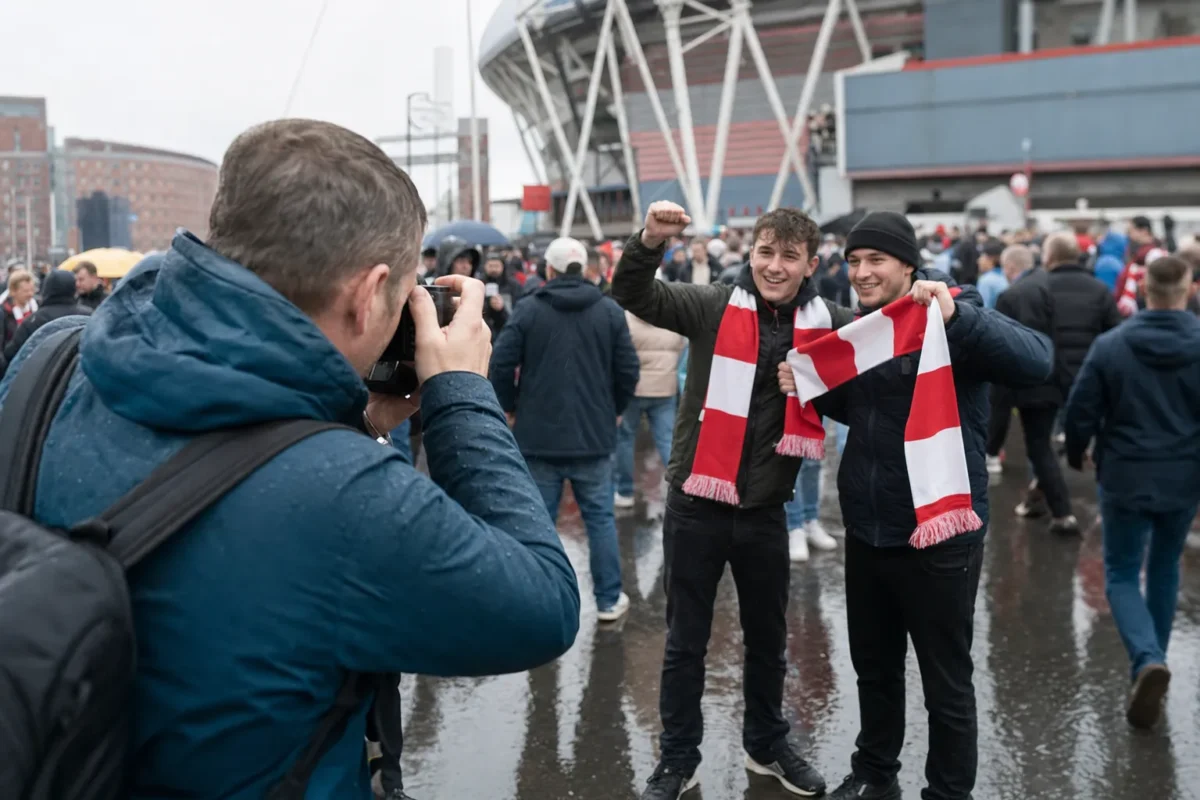
If the weather is dramatic, use it. Rain, fog, low winter light, and muddy surfaces can make the game feel more physical. The trick is to make the weather part of the story, not just a technical problem.
After the Match: Build a Faster Football Photography Workflow With Evoto
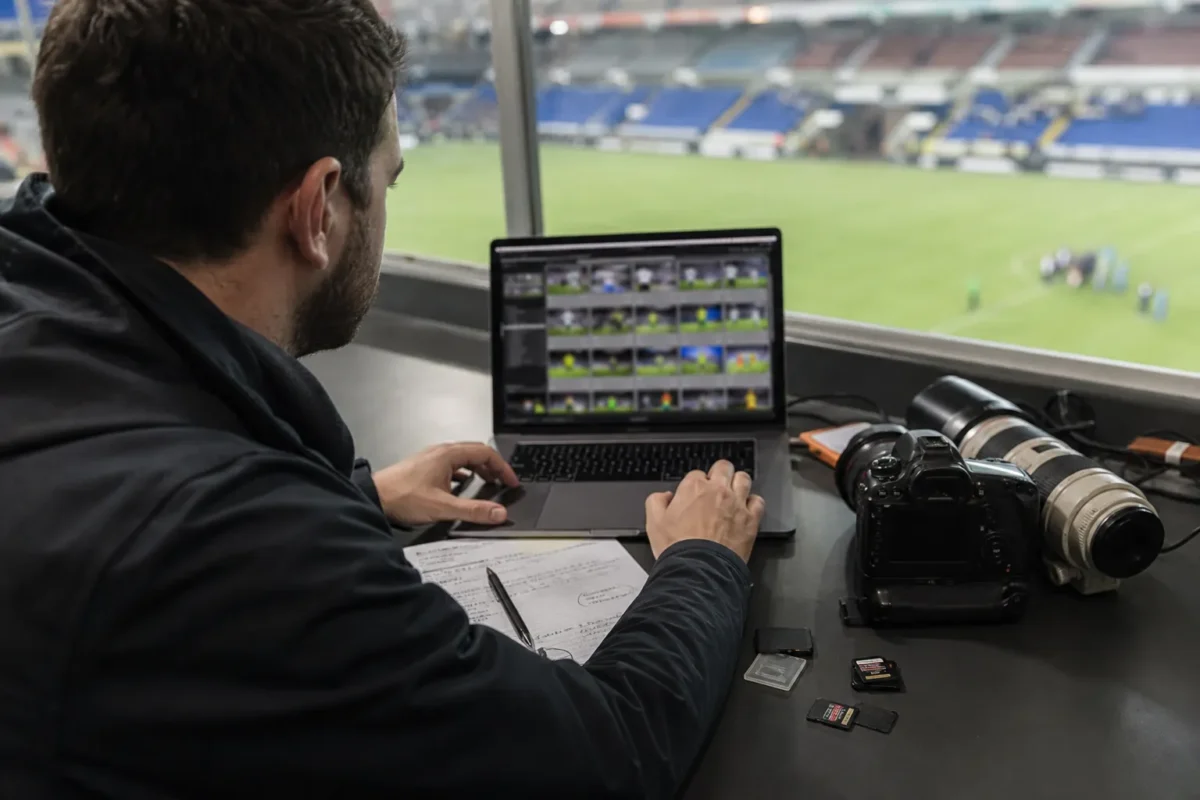
The shoot does not end at the final whistle.
Football photography creates a heavy post-match workload. One game can leave you with hundreds or thousands of frames: repeated tackles, near-identical celebrations, missed focus, blocked faces, noisy night shots, and mixed lighting from different parts of the pitch.
This is where Evoto becomes more than a final editing tool. It can support the full football photography workflow: culling, batch consistency, noise cleanup, color matching, and final delivery.


Powerful AI Photo Editor
Step 1: Cull Repeated Bursts Faster
The first bottleneck is selection.
Football photographers often shoot in bursts because the difference between a strong frame and a weak one can be less than a second. The ball may be visible in one frame and hidden in the next. A player’s face may be clean in one shot and blocked in another. A celebration may peak for only one frame.
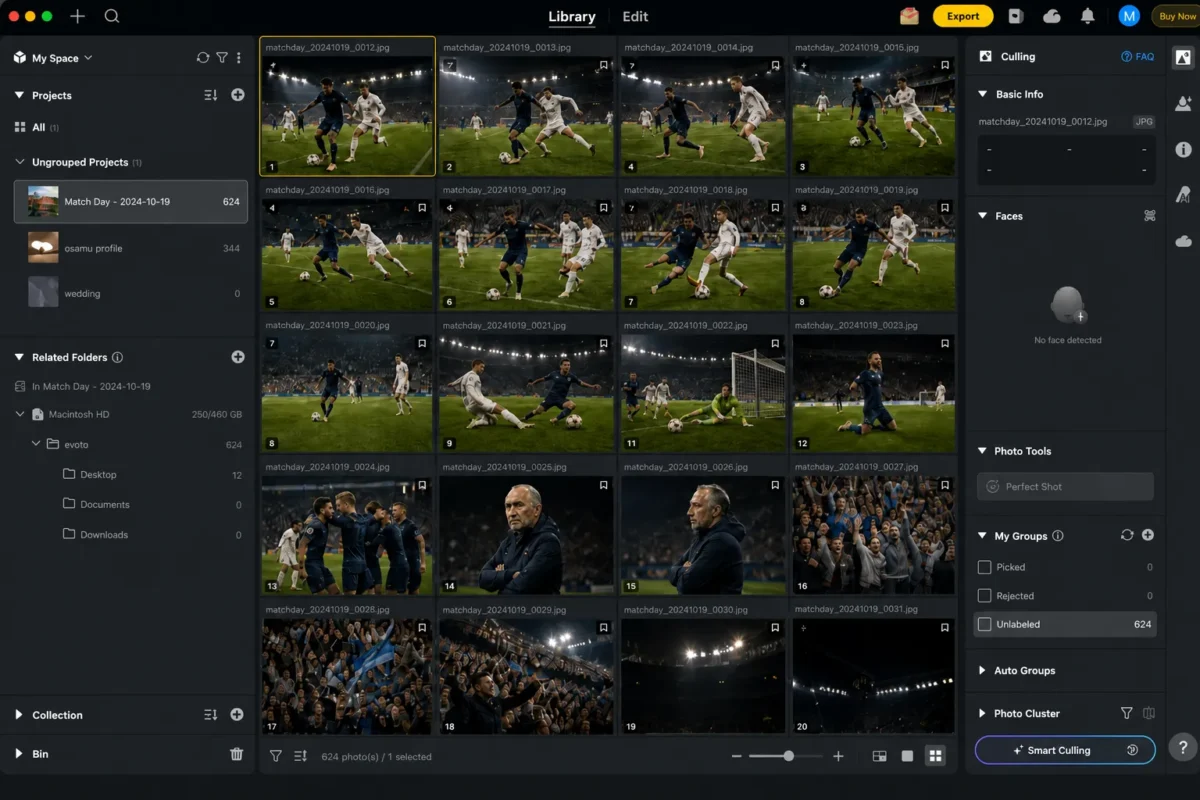
Use Evoto AI Culling to speed up the first pass. It helps reduce the manual load of sorting through soft images, weak duplicates, and technically flawed frames so you can focus on the editorial decision: which photo actually tells the match story?
Look for:
- clean ball placement
- readable faces
- sharp action
- strong body shape
- clear emotion
- fewer background distractions
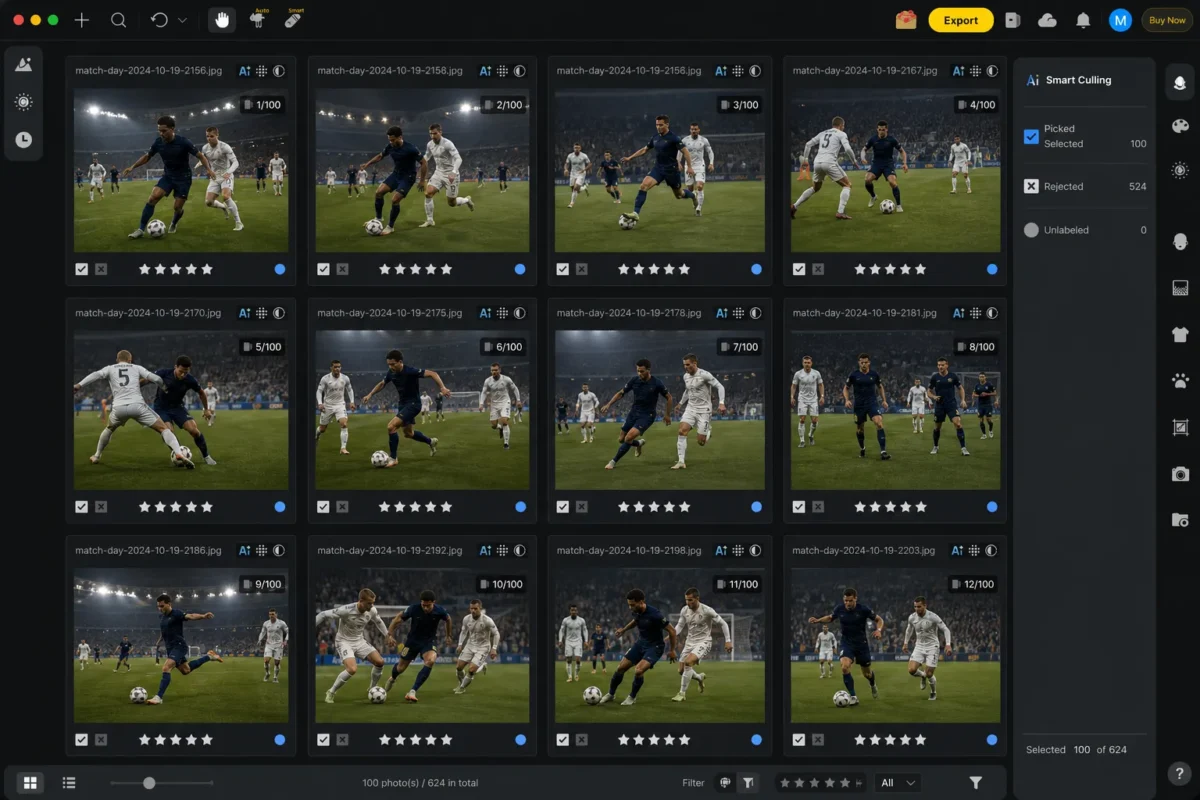
The tool helps narrow the field, but the final call still belongs to the photographer.
Step 2: Fix Night-Game Noise Without Losing Detail
Night football can look dramatic, but it often brings high ISO noise.
Floodlights, fast shutter speeds, and long lenses can force you into higher ISO values. That noise can be especially visible in dark kits, shadowed faces, blurred backgrounds, and night skies.
Use Evoto AI Image Denoiser when the files need cleanup but still need to feel real. The goal is not to make football images glossy or artificial. The goal is to reduce grain while keeping player detail, kit texture, grass, and atmosphere believable.
This is especially useful for:
- night matches
- indoor stadiums
- rainy games
- cropped telephoto shots
- underexposed action frames
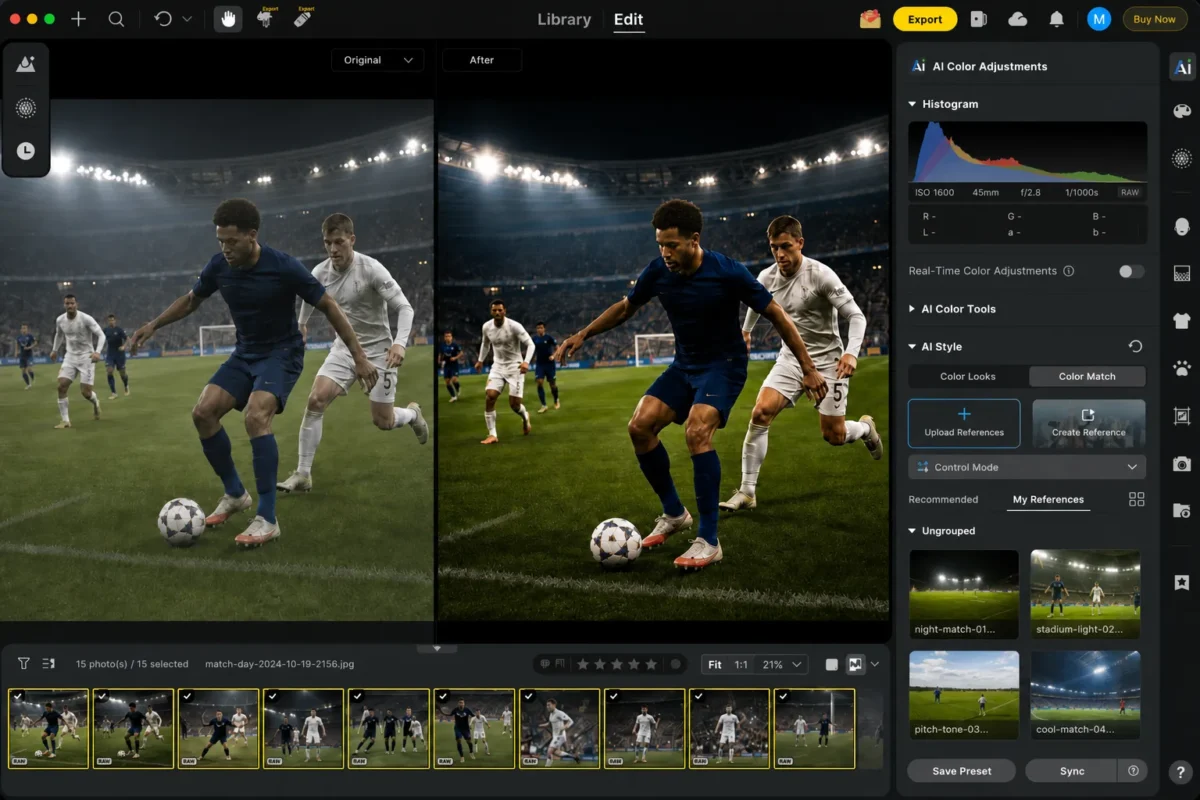
Step 3: Match Color Across the Final Set
Once the technical cleanup is done, focus on color.
Football galleries need believable grass, accurate kit colors, natural skin tones, and consistent contrast. If one image feels warm, another feels green, and another feels flat, the final set looks rushed.
Use Evoto AI Color Match when you want the final edit to feel visually connected. It can help align color across different lighting zones so the gallery reads as one match-day story.
For sports-specific editing ideas, Evoto’s blog on editing NFL photos is also a useful reference because it covers action-photo needs like color, contrast, sharpening, cropping, and noise reduction.
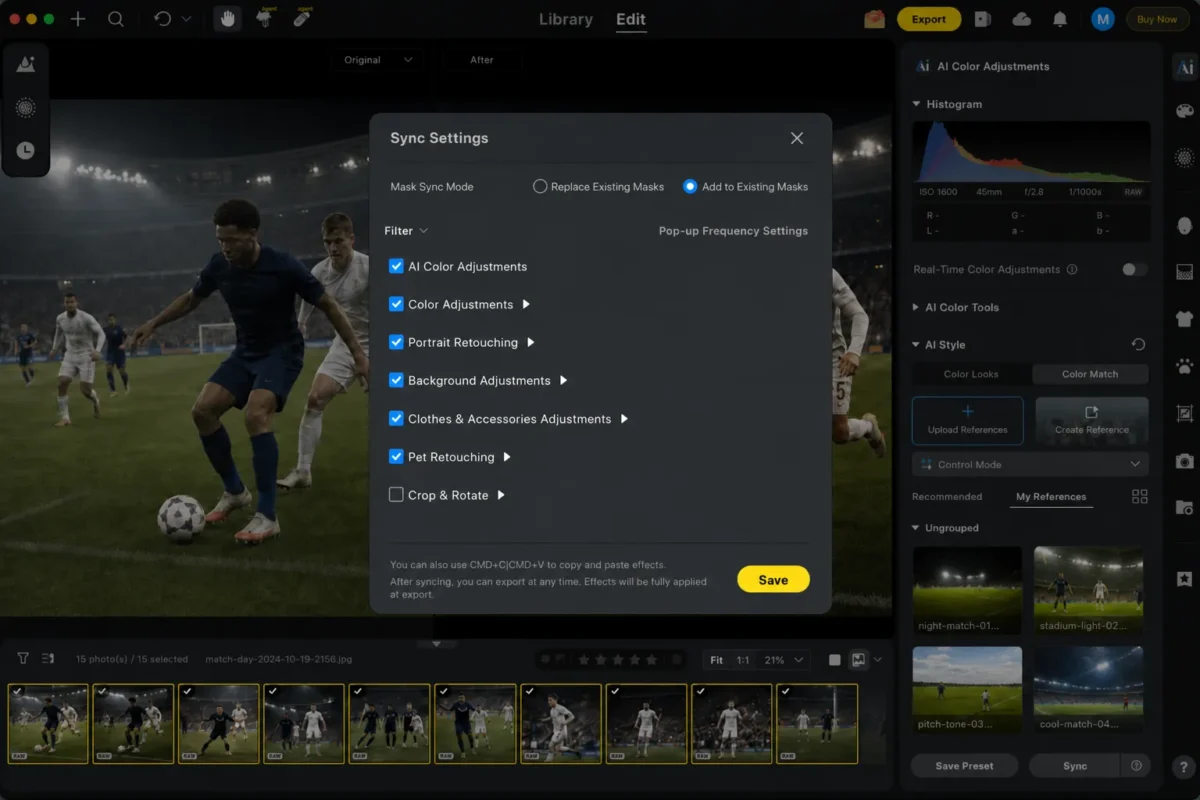
Step 4: Build a Consistent Match-Day Edit
After culling, the next challenge is consistency.
Football matches rarely give you one clean lighting condition. One side of the pitch may be in sun, another in shadow. Night games can create color shifts from floodlights. Rain can lower contrast. High ISO files may need extra care.
Use Evoto Batch Edits to apply consistent adjustments across groups of images. This is useful when you need the final delivery to feel like one coherent match story instead of separate pockets of light and color.
Step 5: Deliver a Tight Story, Not a Storage Dump
The final delivery should not include every technically usable frame.
A strong football photography set should move like a story:
- pre-match atmosphere
- early pressure
- key tackles or saves
- the defining goal or missed chance
- player reactions
- fans and culture
- final whistle
- one strong closing image
Evoto helps most when it shortens the distance between capture and delivery. With faster culling, cleaner batch edits, better noise control, and more consistent color, you can spend less time fighting the folder and more time choosing the images that define the match.
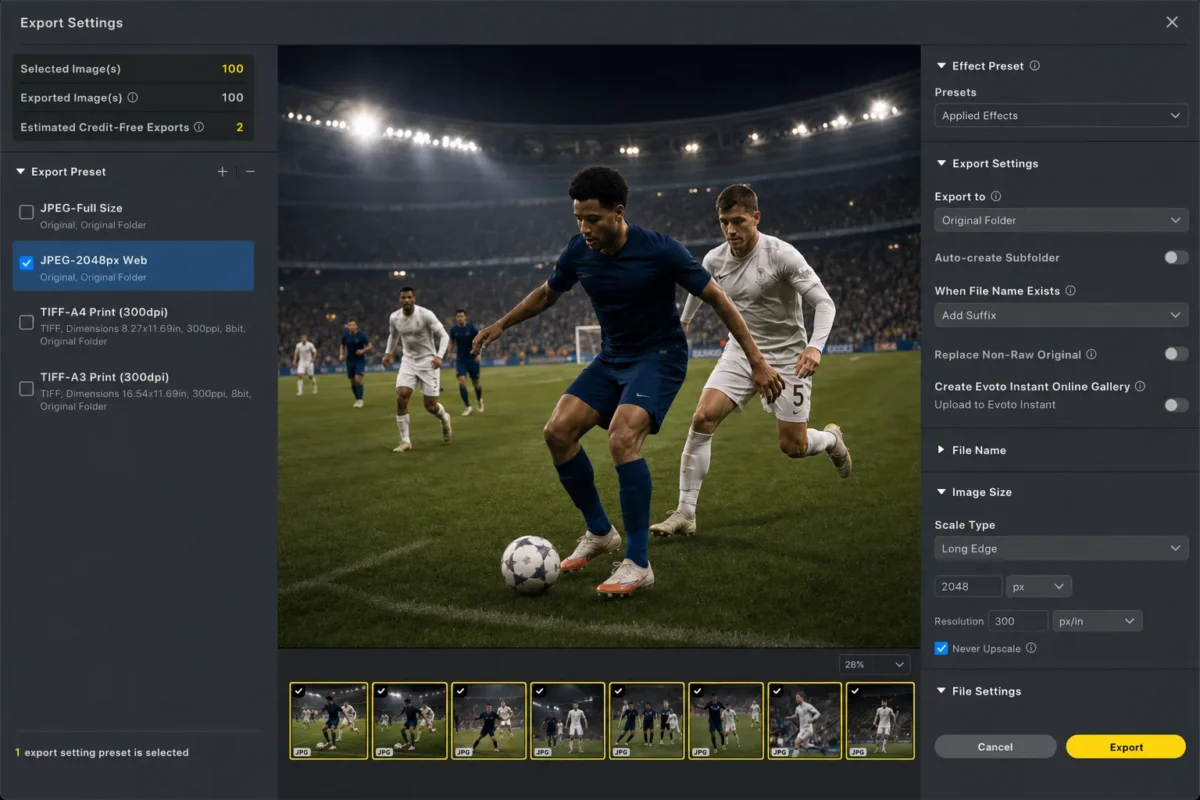
Football photography is fast on the pitch, but the post-match workflow needs to be just as disciplined. The stronger your Evoto workflow is, the faster you can turn a high-volume match folder into a polished, story-led gallery.
Final Thoughts
Football photography is a full workflow, not just a camera setting.
Before the match, you prepare the story. During the match, you choose your position, watch the action, and stay alert for emotion. After the match, you make the hard decisions: what to keep, what to remove, how to keep the edit consistent, and how to deliver a set that feels complete.
The best football images usually come from photographers who understand both sides of the job. They know how to anticipate the moment, and they know how to finish the work after the whistle.
That is where a faster, cleaner workflow matters. With the right culling, color consistency, and delivery process, football photography becomes less about surviving the image volume and more about telling the match clearly.
Try Evoto AI Photo Editor
Retouch photos with Evoto AI and make your photos best! Available on Windows, MacOS and iPadOS.