

Framing can make a good subject easier to read. It can also make a busy photo feel even more crowded.
That is the part photographers have to control.
In the field, framing is not just about finding a window, doorway, branch, or shadow and placing it around a subject. It is about deciding what the viewer should notice first, then using the edges of the scene to guide attention there.
When framing works, the photo feels intentional. The subject has space. The scene has depth. The viewer knows where to look.
When framing fails, the frame becomes the subject. Branches cut through faces. Doorways swallow the person. Foreground blur becomes a distraction. The photo looks designed, but not clear.
This guide breaks down how framing in photography works, when to use it, when to skip it, and how to finish framed images cleanly in post.
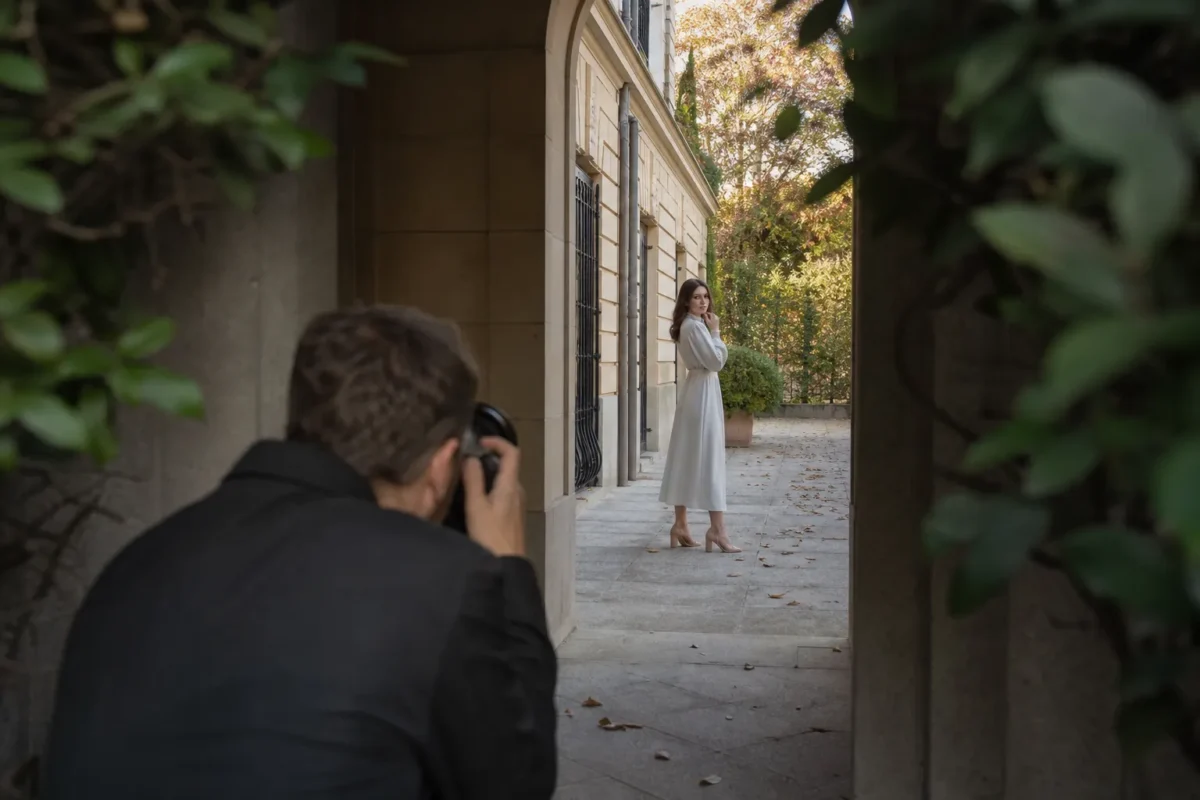
What Is Framing in Photography?
Framing in photography is a composition technique where you use parts of the scene to create a visual border around your subject.
That border can be obvious. A window. A doorway. An arch. A mirror. A car window. A bridge opening.
It can also be subtle. Tree branches near the lens. A dark wall around a lit subject. A reflection. Curtains at the edge of the frame. Negative space that holds the subject in place.
The point is not to decorate the photo. The point is to direct the viewer’s eye.
A strong frame does at least one of these jobs:
- separates the subject from a busy background
- adds depth by creating foreground, middle ground, and background
- gives the scene more context
- strengthens mood through shape, shadow, or color
- makes the composition feel more deliberate
Framing is different from cropping. Cropping happens later when you adjust the edges of an image. Framing happens before you press the shutter. You choose your camera position, lens, distance, height, and angle so the surroundings support the subject from the start.
Cropping can refine a framed photo. It should not be the only reason the composition works.
Start With the Subject, Not the Frame
The most common framing mistake is starting with the frame.
You see an archway, a line of trees, or a bright window and immediately try to put someone inside it. Sometimes that works. Often it creates a photo where the frame is stronger than the subject.
Start with a simpler question:
What should the viewer look at first?
That answer controls the rest of the composition.
If the subject is a couple walking through a city street, the frame might be a doorway that gives the scene structure. If the subject is a child running through a garden, blurred leaves near the lens might add energy and depth. If the subject is a dancer in a beam of light, shadow can become the frame.
The frame should make the subject clearer. If it competes with the subject, blocks the face, or pulls the eye to the edge, it is not helping.
Common Types of Framing in Photography
There are many ways to frame a photo, but most useful frames fall into a few practical groups.
Natural Framing
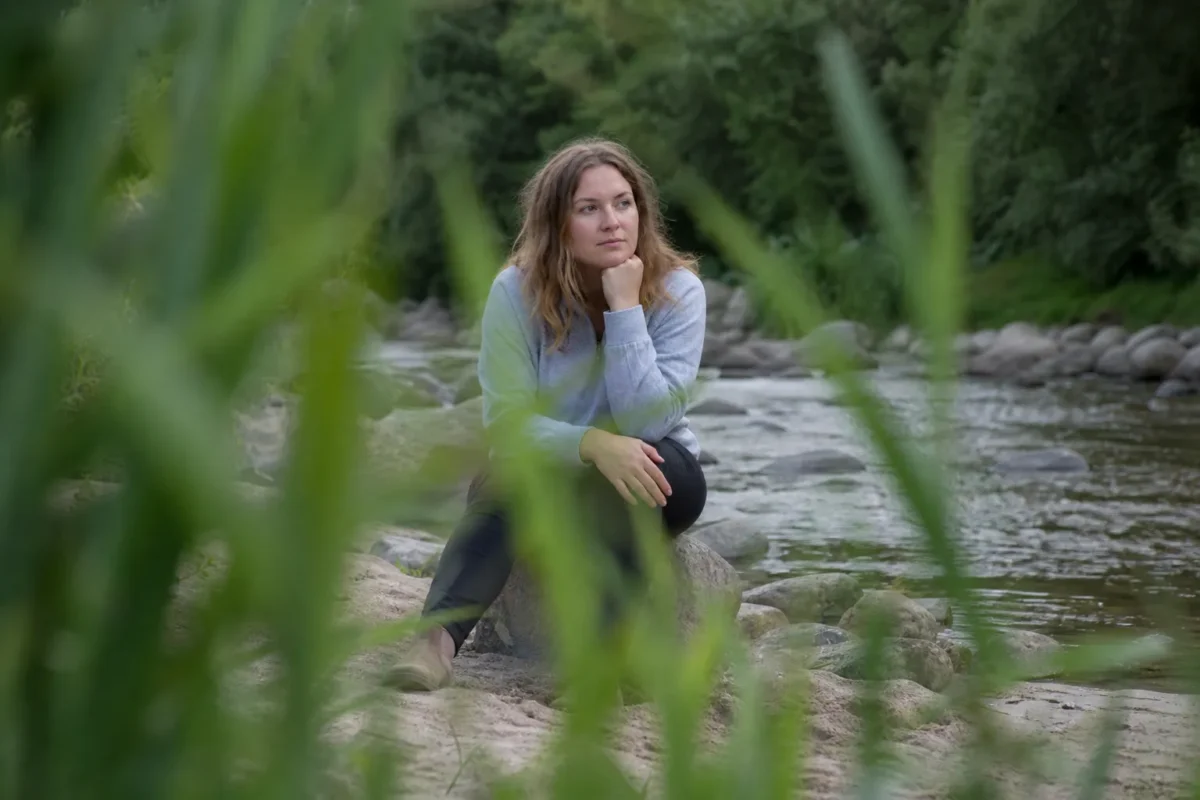
Natural framing uses elements like branches, leaves, flowers, tall grass, rocks, cave openings, hills, or reflections.
This type of framing works well for outdoor portraits, travel photography, engagement sessions, family photography, landscapes, and documentary-style work.
The key is distance.
If the natural frame is close to your lens, it can blur into a soft edge. This works well when you want depth without drawing too much attention to the frame itself. If the frame is farther away, it may stay sharper and become a more obvious part of the composition.
Use natural framing when the scene needs layering. Avoid it when the branches or leaves become brighter, sharper, or more visually important than the subject.
Architectural Framing
Architectural framing uses man-made shapes: doors, windows, archways, hallways, staircases, railings, bridges, fences, and tunnels.
These frames are usually cleaner and more geometric than natural frames. They can add order to a busy scene, especially in street photography, travel photography, real estate-adjacent lifestyle work, editorial portraits, and wedding-day environments.
Architecture also gives you strong lines. A doorway can isolate a subject. A hallway can pull the eye inward. An arch can create symmetry. A window can show both the subject and the world around them.
The risk is stiffness. If the subject is too centered, too small, or too static, architectural framing can feel like a design exercise instead of a lived moment.
Give the subject a reason to be there. Let them move, look, lean, enter, exit, or interact with the space.

Foreground Framing
Foreground framing happens when you place something between the lens and the subject.
That might be flowers, glass, fabric, a shoulder, a curtain, a doorway edge, a table setting, or another person in the scene.
This is one of the fastest ways to add depth. It can also make the viewer feel like they are looking into a moment instead of standing outside it.
Use foreground framing carefully. A little blur can feel immersive. Too much blur can look like a mistake, especially if it covers the subject’s face, hands, or important gesture.
For portraits, try a longer focal length and a wide aperture. Let the foreground fall soft while the eyes stay sharp. For documentary work, stop down slightly if the frame itself adds useful context.
Light and Shadow Framing
Light can frame a subject without any physical border.
A person standing in a pool of window light. A face surrounded by shadow. A performer under a spotlight. A bride in a bright doorway with a darker room around her. A product lit against a darker table.
In these cases, contrast becomes the frame.
This works because the eye usually goes to the brightest readable part of the image first. If the subject is brighter, cleaner, or warmer than the surrounding area, the viewer naturally lands there.
Be careful with exposure. If the frame is too dark, you may lose context. If the background is too bright, the subject may no longer feel framed.
Meter for the subject first. Let the edges support the subject instead of fighting it.

Frame Within a Frame
A frame within a frame is the most literal version of framing.
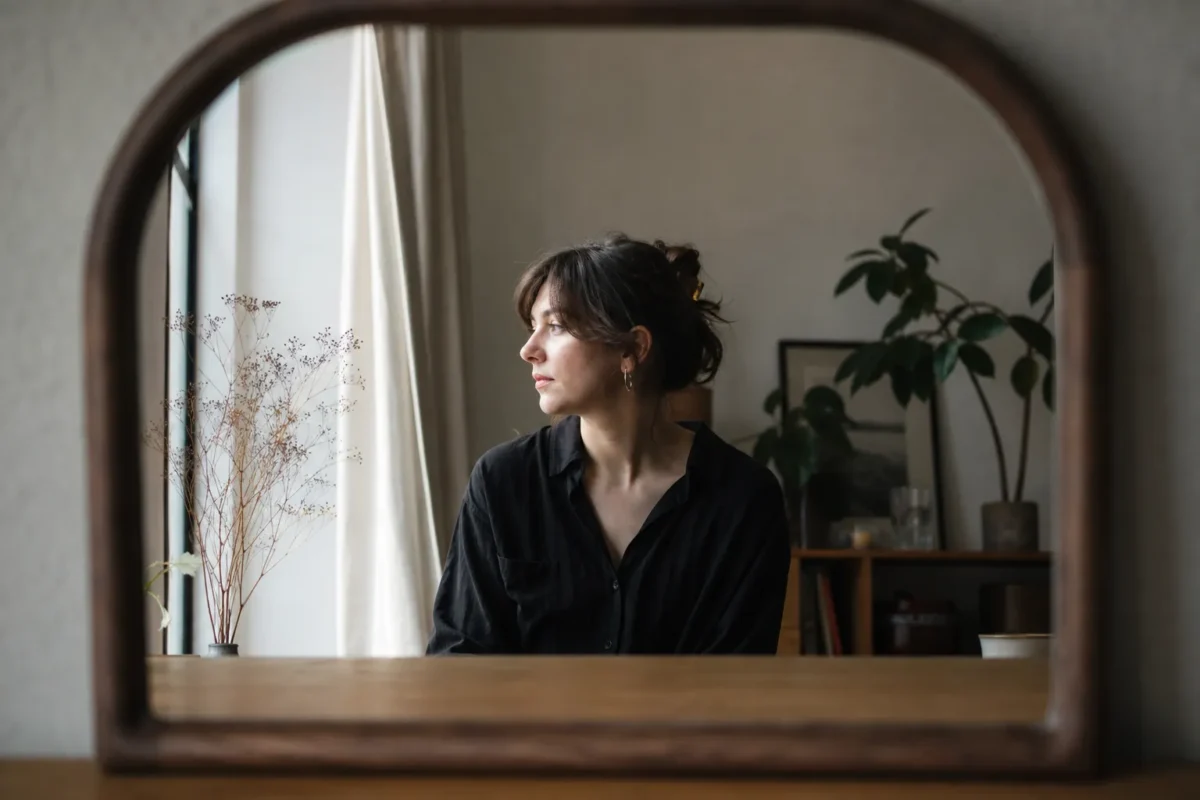
You photograph the subject through another shape inside the scene: a window, mirror, doorway, car windshield, phone screen, arch, or reflection.
This can be powerful because it creates a clear visual container. It also adds story. The viewer understands that the subject exists inside a real environment, not just in front of a background.
The strongest frame-within-a-frame photos usually keep the subject readable and the frame simple. If the frame has too many lines, textures, reflections, or bright highlights, it can take over the photo.
How to Use Framing in the Field
Good framing usually comes from movement, not from zooming.
Before you take the photo, slow down and work through the scene.
First, choose the subject. Decide whether the main point is a face, gesture, shape, product, landscape detail, or relationship between people.
Then scan the edges of the scene. Look for anything that could guide attention inward: a doorway, tree line, shadow edge, curtain, mirror, wall, foreground object, or patch of negative space.
Next, move your body. Step left. Step right. Crouch. Raise the camera. Move closer. Back up. Small changes matter because framing elements often line up only from one position.
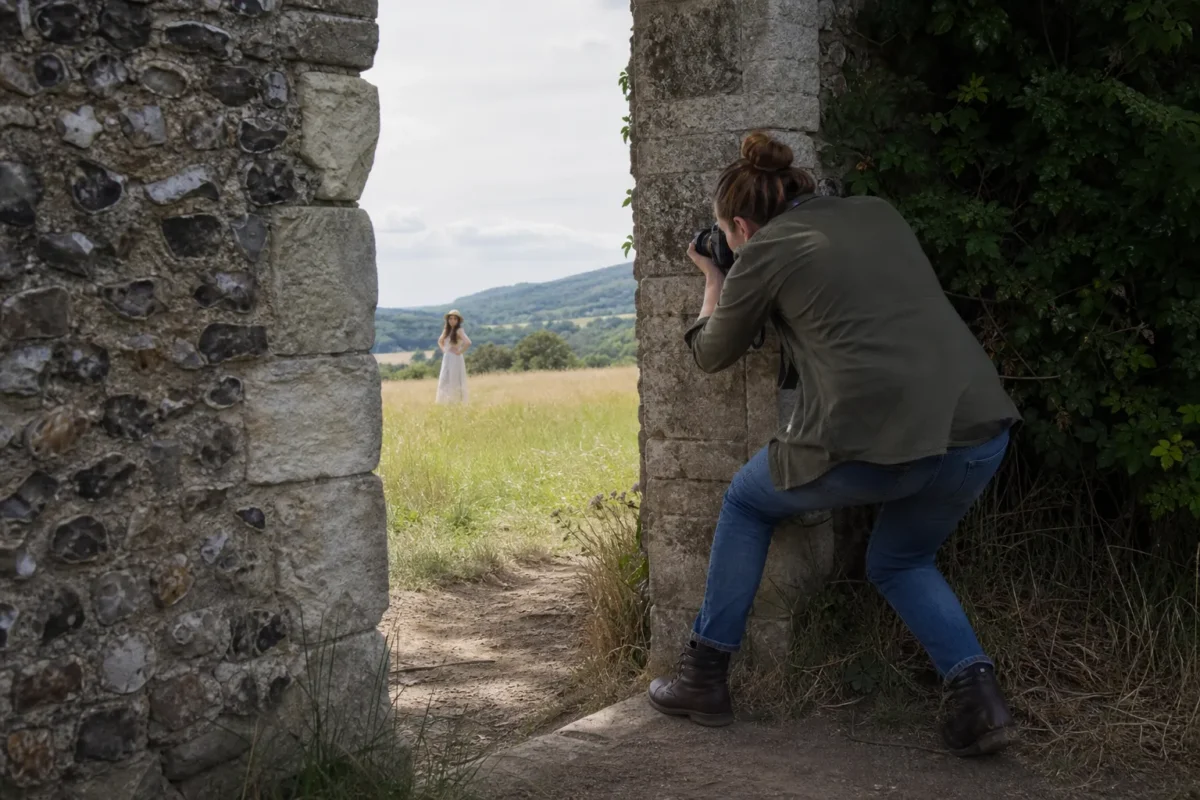
After that, check the edges. This is where framed photos often fail. Look for branches cutting through heads, bright corners, uneven gaps, tilted doorways, awkward mergers, and foreground objects that cover key details.
Finally, decide how sharp the frame should be.
A sharp frame works when the frame adds context. A soft frame works when the frame is there for depth, mood, or separation. Aperture, focal length, subject distance, and foreground distance all affect that choice.
Camera Settings That Help Framing Work
There are no universal camera settings for framing in photography, but a few decisions come up often.
Use a wide aperture when the frame should feel soft and atmospheric. This is useful for leaves, flowers, curtains, glass, or any foreground element that could become distracting if it were sharp.
Use a smaller aperture when the frame carries important context. Doorways, arches, windows, and environmental frames often need enough detail to be readable.
Choose focal length based on how much space you want to show.
A wide lens can exaggerate the frame and make the viewer feel physically inside the scene. This works well for architecture, travel, interiors, and environmental portraits, but it can distort people if you get too close.
A longer lens compresses the scene and can turn foreground elements into soft shapes. This works well for portraits, weddings, events, and outdoor details where you want separation.
For exposure, protect the subject. If the frame is darker, that is usually fine. If the subject is underexposed because the frame is bright, the photo may lose its focus.
Framing Mistakes to Avoid
The biggest mistake is letting the frame overpower the subject.
If the first thing you notice is the doorway, the branch, the window, or the foreground blur, the frame is probably too loud. Make it darker, softer, simpler, or farther from the subject.
Another mistake is filling every edge. A frame does not have to surround the subject completely. Partial frames can feel more natural. Negative space often makes the subject easier to read.

Avoid blocking important details. Do not let foreground elements cover eyes, hands, expressions, product labels, or key gestures unless the obstruction is clearly intentional.
Watch for edge tension. If the subject is too close to the frame, the photo can feel cramped. Leave breathing room unless the tightness is part of the mood.
Do not force framing into every scene. Some photos need clean space, not another layer. If the frame does not add focus, depth, context, or mood, skip it.
How Framing Changes by Photography Genre
Framing works differently depending on what you shoot.
In portrait photography, framing should keep attention on the face, posture, and expression. Use doorways, windows, mirrors, curtains, foliage, or light falloff, but keep the eyes readable.
In wedding and event photography, framing can help clean up chaotic spaces. Shoot through doorways, guests, floral arrangements, glass, or architectural features, but do not block important moments just to make the frame look clever.
In travel and street photography, framing gives context. A market stall, train window, archway, alley, or reflection can tell the viewer where the subject is and why the environment matters.
In landscape photography, framing can add scale. Trees, rocks, cave openings, tent doors, or foreground plants can turn a flat scene into a layered composition.
In product and brand photography, framing can guide the eye toward the product while still showing lifestyle context. Use hands, table edges, fabric, packaging, props, or light shapes, but keep the product clean and readable.

How to Finish Framed Images in Post
Framing should begin in camera, but post-processing often decides whether the final image feels clean.
The pressure usually appears after the shoot. You have several framed options, but the edges are messy. One version has the best expression. Another has the cleanest doorway. Another has better light. If the job involves a full gallery, you also need the edits to feel consistent across many images.

Start by culling for clarity, not cleverness. Choose the frames where the subject is strongest and the frame supports the image. Reject images where the frame blocks the face, creates clutter, or makes the viewer work too hard.
Then refine the crop. Cropping is not the same as framing, but it can tighten the final read. Straighten architectural lines. Remove slivers of bright distraction. Give the subject enough space inside the frame.
After that, clean the edges. A strong framed photo often fails because of one small distraction near the border. This is where a tool like Evoto Object Removal can support the workflow by helping simplify background and edge distractions without turning the image into a different scene.
Color also matters. If the frame is too warm, too green, or too saturated compared with the subject, the viewer may notice the frame first. Use color to separate the subject and keep the frame quieter. For photographers who need a consistent look across a set, Evoto Photo Filters can help create a cleaner starting direction before final hand adjustments.
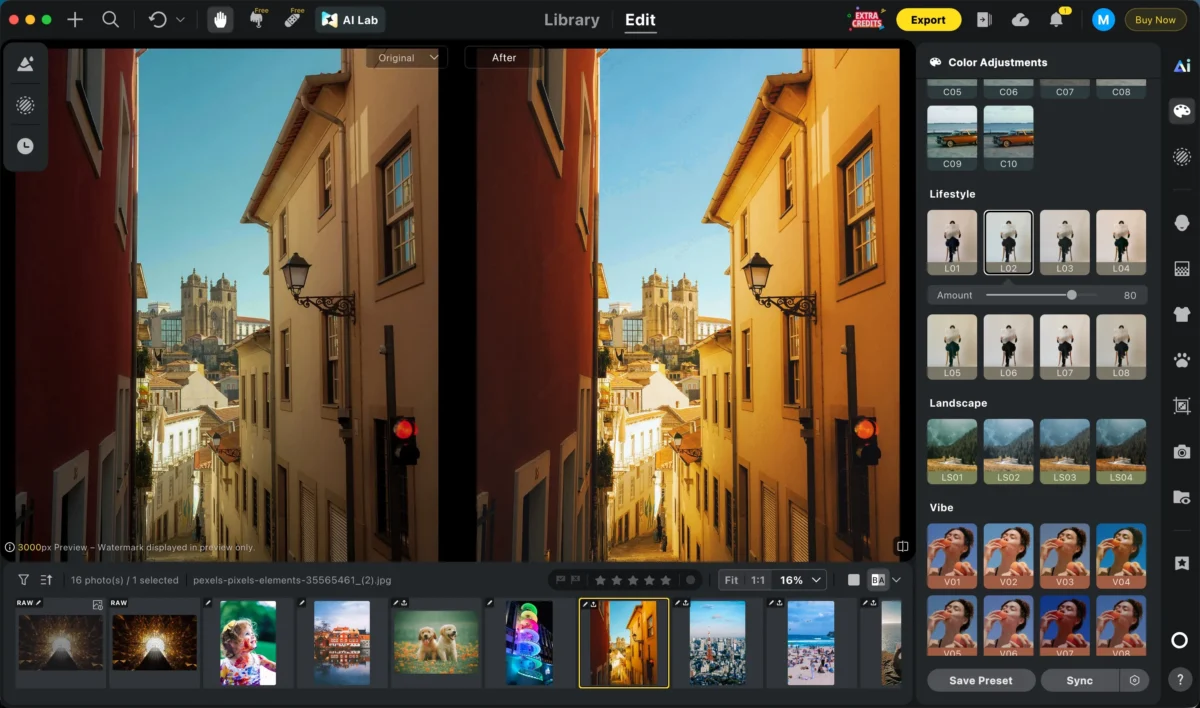
For larger galleries, consistency becomes the real bottleneck. A framed image from a doorway, a window-lit portrait, and a foliage foreground shot may all need to live in the same delivery. Evoto Batch Edits can help apply a coherent editing direction across similar files so the final gallery does not feel like separate experiments.
If you need more control over local brightness or color, Evoto’s guide to local adjustment is also useful because many framing problems are local problems: a bright edge, a dark face, a distracting corner, or a foreground element that needs to sit back.
The goal is not to rescue weak framing. The goal is to protect strong framing from small distractions that appeared in the real shoot.


Powerful AI Photo Editor
Quick Field Checklist for Better Framing
Before you press the shutter, ask:
- What should the viewer notice first?
- Does the frame guide attention toward that subject?
- Is the subject brighter, sharper, cleaner, or more readable than the frame?
- Are any branches, edges, shadows, or foreground elements blocking key details?
- Does the frame add depth, context, mood, or scale?
- Would the photo be stronger with less frame and more negative space?
After the shoot, ask:
- Is this the clearest framed version, or just the most obvious one?
- Do the edges support the subject?
- Does the crop improve the frame without making it feel cramped?
- Does the color treatment keep attention on the subject?
- Does the image still feel natural?
Final Thoughts
Framing in photography is simple in theory, but demanding in practice.
You are not just putting a border around a subject. You are deciding how the viewer enters the photo, where their eye lands, and how much of the surrounding scene should matter.
The best frames are supportive. They give the subject focus. They add depth without clutter. They bring context without stealing attention.
Start with the subject. Move your feet. Watch the edges. Leave breathing room. Then use post-processing to clean and support the frame, not to fake one that was never there.
When you do that, framing stops feeling like a trick and starts becoming part of how you see.
Try Evoto AI Photo Editor
Retouch photos with Evoto AI and make your photos best! Available on Windows, MacOS and iPadOS.