Jason Douglas
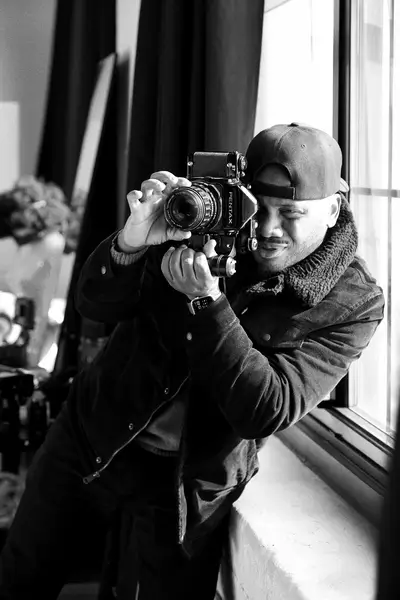
Jason Douglas was born in Georgetown, Guyana, where he spent the first 14 years of his life before moving to New York City. He currently lives and works in New York, where he discovered photography by accident in 2012. Since then, he has made it his primary focus, striving to create work that is clear, uncompromising, and deeply evocative. While he explores various styles, black-and-white photography remains his favorite genre.
The Simple Truth
In a world of endless complexity, Jason Douglas seeks the simple truth.His life has been a bridge between two distinct worlds.
- The first was his childhood in Guyana, where he was raised primarily by his grandmother while his parents worked. During those years, he was given the freedom to explore the natural world on his own terms.
- The second is in New York City, a dense, structured metropolis built on concrete and ambition. This contrast forged his artistic voice. He found it not in nuance, but in reduction. In the clean, uncompromising power of black and white.
For Douglas, photography is an act of simplification; it is a way to distill the raw emotion of a moment into its most essential form.
This pursuit of simplicity is the thread that runs through his entire story. It’s what led him, an artist who values intuition over technicality, to a fractured workflow that threatened his creative control. And it’s what ultimately led him to Evoto, the tool that removed the complexity and allowed his singular, simple vision to be realized entirely on his own terms.
Black and White Photography: A Direct Path
Douglas’s path was never about elaborate plans. It was about direct action. Growing up in Guyana, life was immediate and hands-on. When he moved to New York, he carried that spirit with him. He was drawn to the city’s luxury and grit, yet he sought to capture it with the same freedom he had always known. His journey into photography actually began with a t-shirt. He wanted to create a brand featuring tees printed with original photographic work. To get the exact images he envisioned, his solution was simple: pick up a camera and shoot them himself.
That directness became his signature. As his work gained recognition from modeling agencies, his process remained intuitive. He is not a photographer who obsesses over settings. He is an artist who chases a feeling. However, as his career grew, a layer of complexity began to creep in. To keep up with demand, he started hiring retouchers. This introduced a barrier. His vision, conceived in a moment of pure intuition, was suddenly being filtered through someone else’s hands. The process was no longer simple.
“I’m not much of a technical photographer,” Douglas admits. “I’d just fiddle around with different things… Later on, I started hiring retouchers.”
The Workflow, Simplified
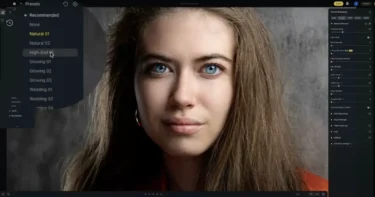
The discovery of Evoto was a major turning point. For an artist who works from the gut, Evoto’s intelligent automation felt less like software and more like an extension of his own creative instinct. It allowed him to reclaim the entire process, making it as direct and intuitive as his initial vision.
His workflow is now a case study in focused, creative efficiency. It begins with a clear principle:
“I generally have a rule to only correct things that need to be corrected.”
He starts with skin retouching. His goal is authenticity, not a plastic finish. He uses the Even Dodge and Burn slider with precision. It allows him to flawlessly smooth transitions in tone without erasing the skin’s natural texture and pores. It’s a tool that understands subtlety, giving him professional results without the hours of manual work.
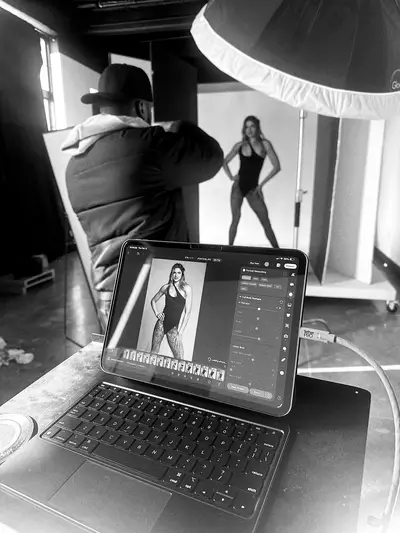
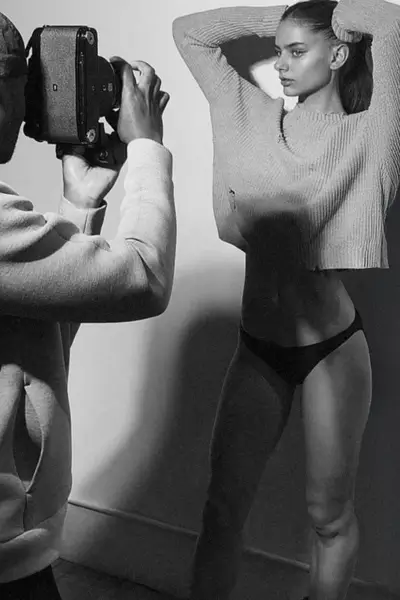
Next, his attention to hair and clothing. He cleans up hair by leaving the outer layer intact and removing only the flyaway strands from within. This creates a look that is both polished and natural. For clothing, he applies the Wrinkle Removal slider with the same deliberate restraint, softening creases to preserve the fabric’s character. His rule of moderation has only one exception: the Blemish Removal for clothes. It is the only slider he uses with absolute conviction, as he explains:
“I keep that slider on 100% at all times lol. That has honestly been one of my favorite features of Evoto. I use it on every image where the subject is wearing clothing. I can literally write an entire essay on this one feature because I love it so much.”
Finally, he tackles a persistent challenge for any studio photographer: the background. Evoto’s ability to instantly even out the lighting on his backdrop was a total “game changer.” A task that once required meticulous lighting adjustments or tedious post-production work is now accomplished in seconds. The technical problem is solved, simply and effectively.
The Freedom to Create
The most valuable asset returned to Jason Douglas was not a feature, but a resource: time and mental space. The hours he once spent managing retouchers or wrestling with complex tools are now his own again, reinvested into what truly matters. He now has the freedom to stay in the creative flow, experiment with new ideas, and to push his own boundaries.
“I’m starting to shoot color more, so I plan on exploring the color presets within Evoto.”
Ultimately, the purpose of a great tool is to become invisible. It should not add another layer between the artist and the art; instead, it should clear the path, connecting a moment of pure intuition to a final, tangible truth. For Jason Douglas, this is exactly what he has found: not a complex system to be managed, but a silent partner that operates at the speed of his own vision.
New to Evoto AI? Try for free for 7 days.