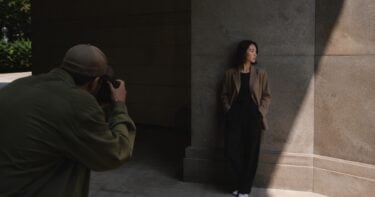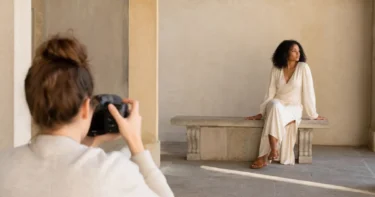
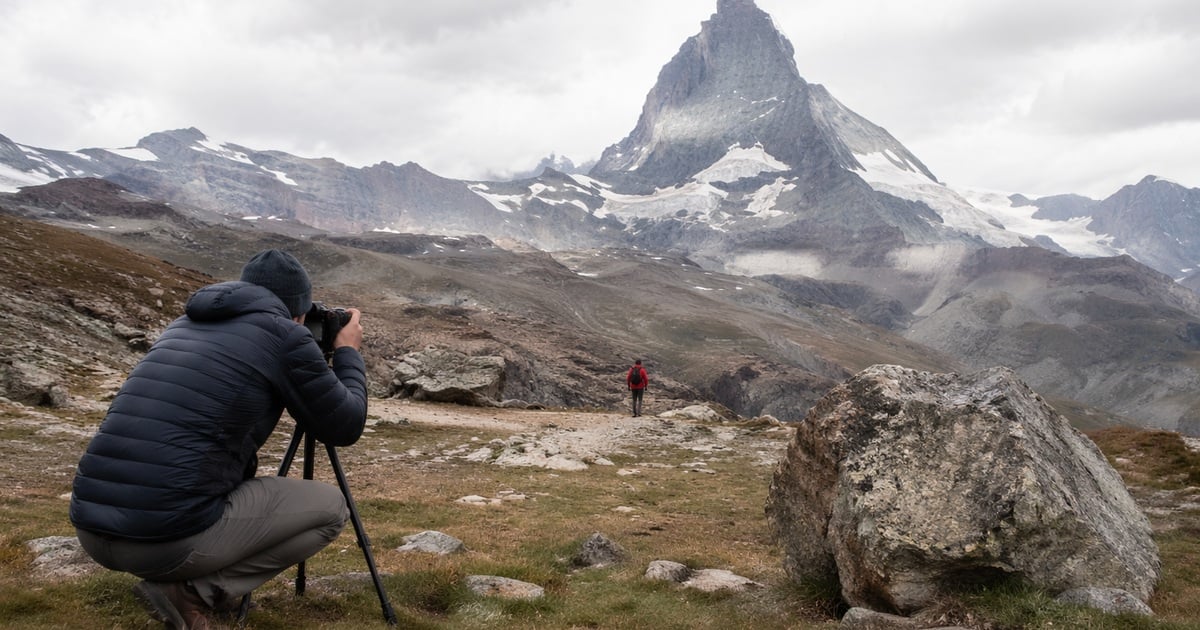
Some compositions feel connected before the viewer knows why. A foreground rock, a hiker, and a mountain peak pull the eye through the frame. Three people in a documentary image hold the scene together. A patch of light, a face, and a shadow edge create a quiet shape inside the photo. Nothing is labeled. Nothing looks forced. But the frame has structure.
That is often triangle composition.
Triangles in photography composition happen when three visual points form a connected shape inside the frame. The triangle can be obvious, like three rocks or three people. It can also be implied through light, shadow, subject placement, architecture, or negative space.
For working photographers, triangles are useful because they solve a practical problem: how to organize several elements without making the photo stiff. A triangle can create stability, depth, balance, and movement at the same time. It gives the viewer a route through the image instead of leaving every element floating on its own.

What Are Triangles in Photography Composition?
Triangles in photography composition are created when three visual points feel connected inside the frame.
Those points can be:
- three people
- three rocks
- three trees
- a subject, foreground element, and background element
- a face, hand, and patch of light
- a mountain peak and two lower foreground points
- a shadow shape, highlight, and subject
- two leading lines meeting near a subject
The triangle does not need to be perfect. It can be wide, narrow, tilted, implied, soft, or uneven. The important thing is that the viewer’s eye can move between the three points and feel a relationship.
This is what makes triangle composition different from simply having three objects in a photo. The points need to work together. If they guide attention, create structure, or support the subject, the triangle helps the composition. If they compete randomly, the frame may still feel messy.

Triangle Composition vs the Exposure Triangle
Triangle composition is not the exposure triangle.
The exposure triangle is about camera settings: aperture, shutter speed, and ISO. It helps you control exposure, motion, depth of field, and noise.
Triangle composition is about placement. It helps you organize visual elements inside the frame.
This distinction matters because photographers often hear “triangle” and think technical settings first. In composition, the triangle is visual. It is about where the eye moves, how points relate, and whether the frame feels structured. You can use triangle composition with any exposure settings.
The question is not: What aperture, shutter speed, and ISO did I use?
The question is: Do these three points help the viewer read the image?

Why Triangles Work So Well in Photos
Triangles work because they combine stability and movement. A triangle feels stable because it has a base and connected points. That can make a frame feel grounded. But it also creates movement because the viewer’s eye travels between the points.
This is why triangle composition is useful in so many genres:
- landscapes
- travel photography
- wedding coverage
- family portraits
- street photography
- architecture
- product photography
- editorial portraits
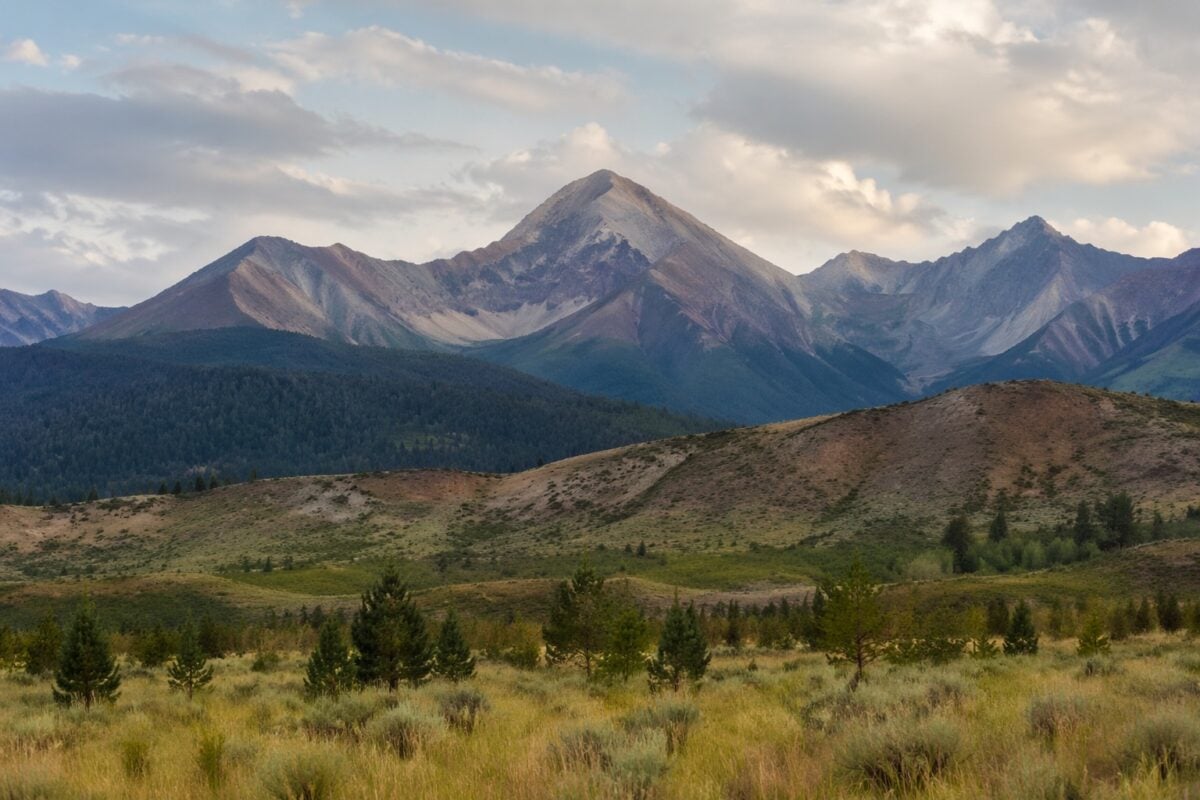
In a landscape, a foreground rock, hiker, and mountain peak can move the viewer from front to back. In a portrait, the face, hands, and background light can create subtle structure. In a wedding image, three people or three gestures can create emotional flow. In product photography, the product, prop, and shadow can create a controlled visual path.
Triangles also help when a scene has more than one important element. Instead of letting the elements compete, the triangle gives them a relationship.
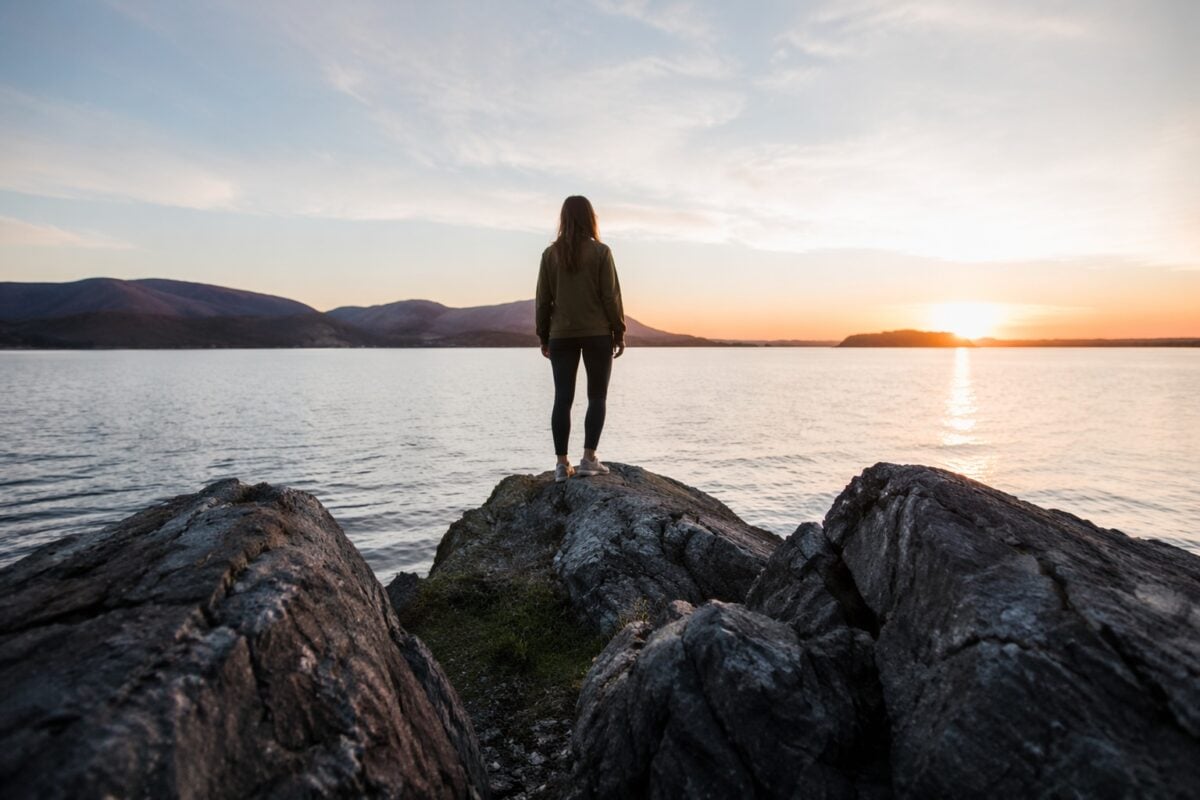
Start With a Clear Subject
Before looking for triangles, decide what the photo is about.
Triangle composition works best when one point is stronger than the others. That point may be the main subject. The other two points can support it, balance it, or guide the eye back toward it.
If all three points feel equally loud, the viewer may not know where to look first. That can work in abstract or pattern-driven images, but most working photography needs hierarchy. A portrait still needs the face. A landscape still needs an anchor. A product image still needs the product. A documentary image still needs the moment.
Ask: What is the strongest point in this triangle?
Then ask: Do the other two points support it?
If the answer is yes, the triangle has a job.
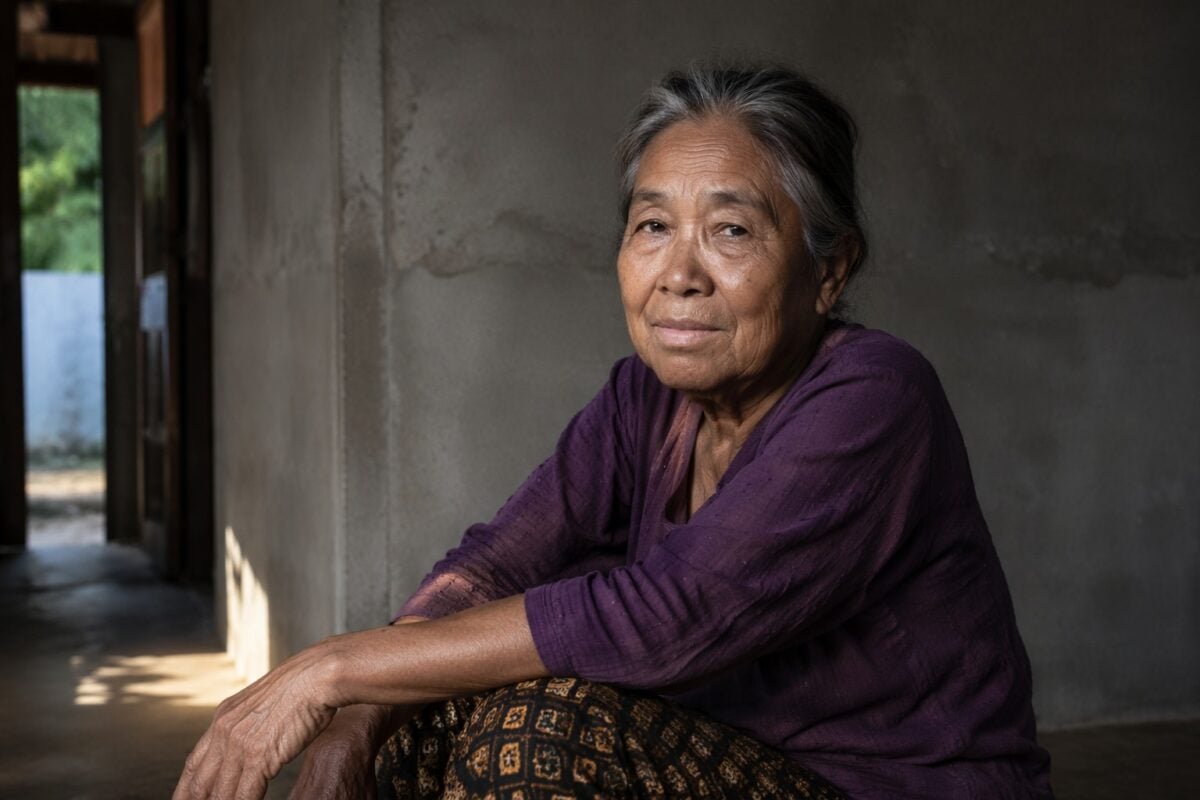
Use Three Points to Guide the Eye
The simplest way to use triangle composition is to find three points that connect. One point may sit close to the camera. One may sit in the middle ground. One may sit in the background. That arrangement creates a route through the photo.
Examples:
- foreground rock, hiker, mountain peak
- person, tree, patch of light
- hand, face, bouquet
- product, prop, shadow
- three people at different distances
- doorway, subject, window light
- road edge, figure, horizon point
The points do not need to be equal. One can be dominant. One can be subtle. One can simply complete the path.
This is the strength of triangles. They give structure without forcing every image into a rigid formula.

Find Natural Triangles in the Scene
Many triangles already exist before you move the camera.
Nature creates them constantly:
- mountain peaks
- trees
- rock formations
- valleys
- dunes
- river bends
- reflections
- foreground stones
- animal or human groupings
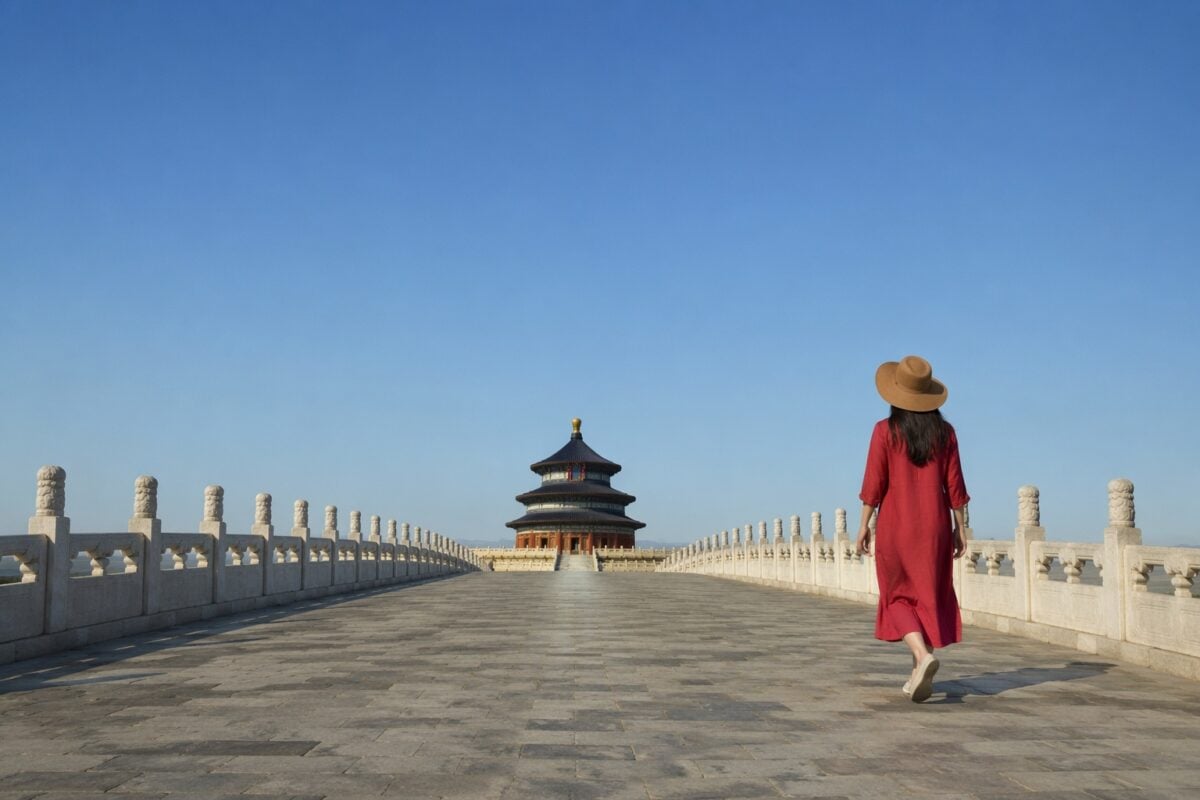
Architecture also creates triangles through roofs, staircases, shadows, arches, bridges, and converging lines.
The practical move is to slow down and scan the frame. Look for three points that almost connect. Then adjust your position. A small step left or right can align a foreground rock with a hiker and a mountain. A lower camera angle can turn a small foreground element into one point of the triangle. Backing up can reveal a third point that was hidden.
Triangle composition often comes from moving your feet. Not from adding more objects.
Build Triangles With People and Subjects
You can also build triangles through subject placement. This is useful when you are photographing people, events, families, weddings, or editorial work.
Three people naturally create a triangle if their heads, bodies, or gestures sit at different points in the frame. A couple and a parent at a wedding can create a documentary triangle. A child, parent, and shared gesture can create a family portrait structure. A model’s face, hand, and shoulder can form a subtle portrait triangle.
In posing, triangle composition should not feel stiff.
Use small direction: Turn your shoulder slightly;Bring that hand closer to your jacket;Look toward the light;Step half a pace behind them.
These micro-adjustments can create cleaner spacing between the points without making the subject look posed into a diagram.
The triangle should support the moment. It should not become the moment.

Use Light and Shadow to Create Triangles
Triangles do not have to be physical objects. Light and shadow can create them too.
A triangle of sunlight on a wall can become one point of the frame. A shadow edge can create a strong diagonal side. A bright face between two darker shapes can create a subtle triangular pull. A patch of window light, a hand, and a face can guide the viewer without adding extra objects.
This is especially useful in simple scenes.
If the location is plain, look at where the light falls. Ask whether the highlights and shadows create three connected points. A simple portrait near a window can become stronger when the face, hand, and light patch form a triangle.
Light is not only exposure. It is structure.

Use Triangles to Create Balance
Triangles help distribute visual weight.
A photo does not need matching elements on both sides to feel balanced. One strong point can be balanced by two quieter points. A large tree on one side can be balanced by a smaller person and a bright mountain peak. A face can be balanced by a hand and a background highlight.
This is especially useful for asymmetrical compositions. The image does not look mirrored, but it still feels organized. The viewer has multiple points to read, and those points connect instead of competing.
Use triangles when one side of the frame feels too heavy. Instead of centering the subject automatically, look for two supporting points that can hold the rest of the composition.

Use Triangles to Add Depth
Triangles can create depth when the three points sit at different distances from the camera.
A foreground element gives the viewer a starting point. A middle-ground subject gives the frame meaning. A background point gives the image distance. That front-to-back triangle is one of the strongest tools in landscape and travel photography.
For example:
- rock in the foreground
- hiker in the middle distance
- mountain peak in the background
The viewer’s eye moves through the layers instead of staying flat on the surface of the image.
This also works in interiors, street scenes, and wedding coverage. A foreground guest, middle-ground couple, and background light can create depth without making the photo feel cluttered. Depth works best when the layers have hierarchy.
Do not let every point become equally sharp, bright, and colorful unless that is the intention.
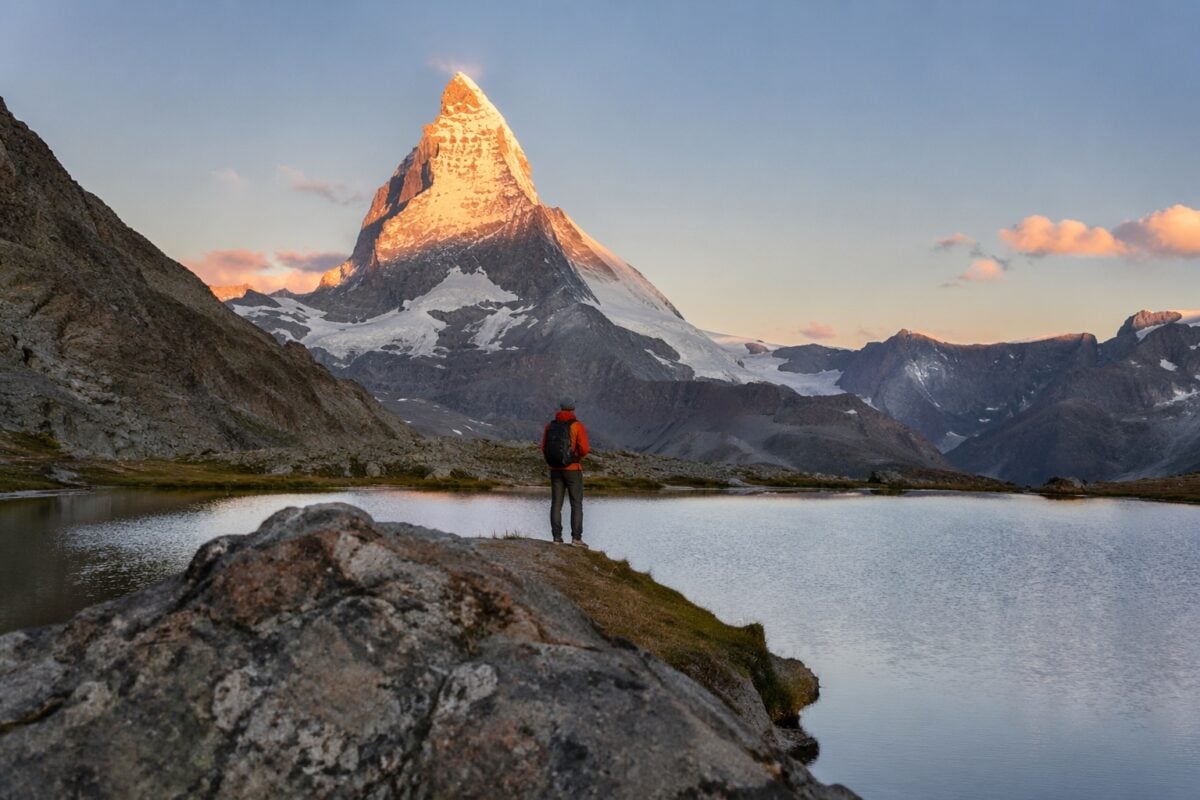
Use Triangles to Create Movement and Dynamic Tension
Triangles can also create dynamic tension.
The eye naturally moves between three points. If those points are angled, separated, or supported by diagonal lines, the frame feels more active.
This is different from a static centered composition. A triangle can move the viewer from left to right, foreground to background, or subject to supporting detail and back again. The photo can feel grounded but still alive.
Use this when a frame feels too still. Find a third point that creates a route. If you already have a subject and a strong background element, look for a foreground point. If you have a foreground shape and a subject, look for a light patch or distant shape that completes the triangle.
The tension should guide the eye, not scatter it.

What Is the Golden Triangle in Photography?
The golden triangle is a more structured composition guide based on diagonals and smaller triangular sections inside the frame.
It is useful when the scene already has strong diagonal movement: roads, rivers, staircases, shorelines, shadows, mountain ridges, or architectural lines.
Instead of placing the subject on a simple vertical or horizontal grid, the golden triangle encourages you to think in diagonal relationships. It can help you position visual weight along a diagonal and use the remaining triangular areas as supporting space.
Do not treat it as a law. Use it as a reading tool.
If the scene naturally has diagonals, the golden triangle can help refine the composition. If the scene does not fit, do not force it. A forced triangle usually looks worse than a simple, honest frame.
The broader lesson matters more: Use diagonal structure and connected points to move the eye with purpose.

How Triangles Work With Leading Lines
Leading lines often create the sides of a triangle.
Two road edges can meet near a subject. A riverbank and mountain ridge can point toward the same visual anchor. Stair rails can pull the eye up to a person. Shadows can create converging diagonals around a face or product. When leading lines and triangles work together, the line gives direction and the triangle gives structure.
This is useful because lines can sometimes pull too hard.
If a line leads out of the frame, the viewer leaves. If the line leads to a triangle of connected points, the eye has a reason to stay.
Use the line to enter the frame. Use the triangle to keep the viewer moving inside it.
How Triangles Work With Negative Space
Negative space makes triangles easier to read.
If the background is crowded, the three points can disappear into the scene. A clean sky, plain wall, fog, water, shadow, or soft background gives the viewer room to see the relationship between the points.
This does not mean every triangle composition needs to be minimal. It means the important points need enough separation.
A person, tree, and mountain peak can form a strong triangle if the space around them stays clean. Three people in a group portrait can form a triangle if their heads do not merge with background shapes. A product, prop, and shadow can form a clean commercial triangle if the surface is not too busy.
Use negative space to clarify the structure. Not to empty the frame for no reason.
Common Triangle Composition Mistakes
The first mistake is forcing the shape. If the scene does not naturally support three connected points, do not invent a triangle just to use the technique. A simple subject and clean background may be stronger.
The second mistake is making all three points equal. If every point carries the same visual weight, the viewer may not know what matters. Decide which point is the subject and which points are support.
The third mistake is using clutter as structure. Three random objects do not create a strong triangle. They need to guide the eye or support the subject.
The fourth mistake is ignoring spacing. If the three points overlap, merge, or sit too close together, the triangle loses clarity. Move your position, change your height, or wait for cleaner separation.
The fifth mistake is cropping away the structure. If the triangle depends on a foreground point or background point, do not crop it out later. Protect the relationship that makes the image work.
How to Refine Triangle Composition in Post-Production
The strongest triangle composition decisions happen in camera.
Post-production should refine the structure, not create it from nothing.
Start with the crop. Protect the three points. Remove weak edge space. Avoid cutting off the supporting point that gives the frame depth or balance. If the subject is too centered, a slight crop can strengthen the triangular relationship.
Then control tone. Lift the strongest point if the viewer needs help finding it. Reduce brightness in a competing area. Keep supporting points visible but secondary.
Then refine color. If one color is the subject, keep it clear. If a supporting point becomes too saturated, lower it. If the three points need to feel connected, keep the color treatment consistent enough that the frame reads as one image.
Finally, clean distractions. Remove small objects, edge marks, or background shapes that interrupt the eye path between the three points. Keep the edit believable. The viewer should see a stronger composition, not a rebuilt scene.
Where Evoto Fits in a Triangle Composition Workflow
Triangle composition often depends on small differences in attention.
One point may need a subtle lift. A supporting point may need to sit back. A background shape may need less color. A crop may need to protect all three points instead of over-tightening the frame.
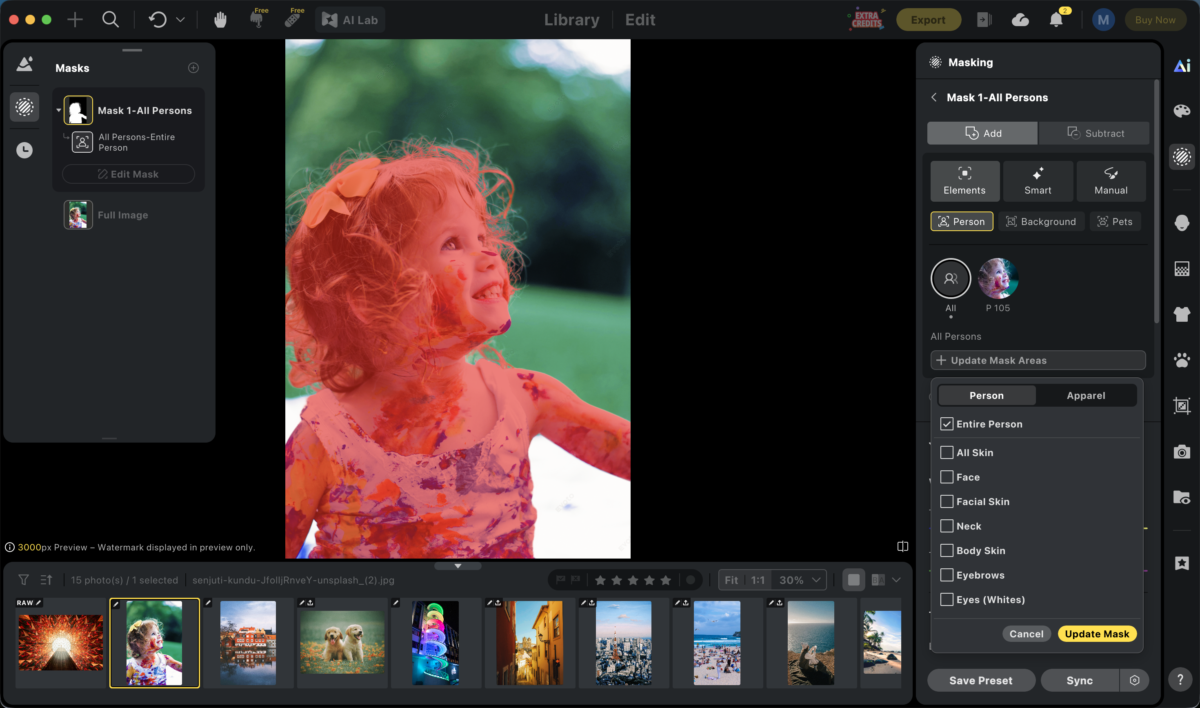
For selective control, Evoto AI Masking Editor can help isolate a subject, background, clothing area, or detail so the main point of the triangle stays strongest while supporting points remain quieter.
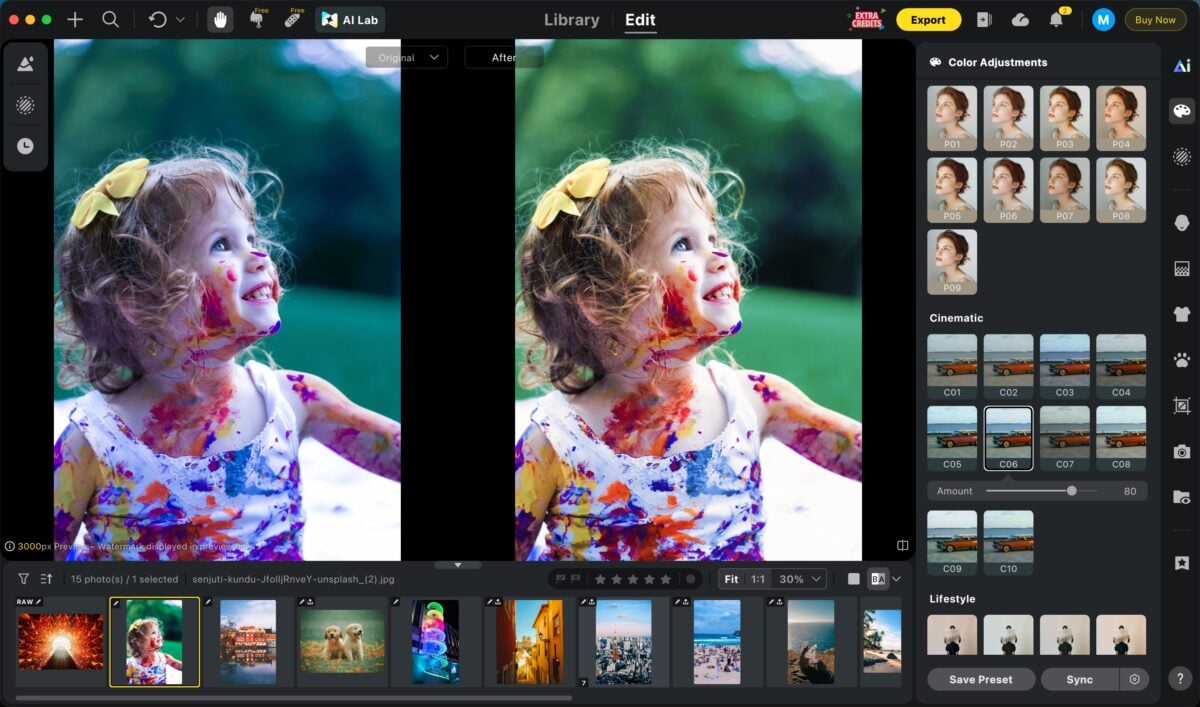
For triangle compositions that rely on tone and color separation, Evoto Photo Filters can provide a consistent starting direction while still allowing manual control over white balance, tone, HSL, and contrast.
For scenes with architecture, interiors, stairs, or converging lines, Evoto AI Perspective Correction can help keep structural lines believable so the triangle feels intentional rather than distorted.
Evoto’s guide to local adjustment is also useful when the fix is small: lift one point, reduce a distracting highlight, darken an edge, or soften a background area that competes with the subject.
The goal is simple.
Use editing to protect the relationship between the three points.
Do not use software to force a triangle that was never clear.
A Field Checklist for Triangle Composition
Before shooting, ask:
- What is the main subject?
- Can I see two supporting points?
- Do the three points guide the eye?
- Which point should be strongest?
- Are the points separated clearly?
- Does the triangle create balance, depth, movement, or all three?
- Would moving left, right, lower, or farther back clarify the shape?
- Is the triangle helping the photo or making it feel forced?
After shooting, ask:
- Does the crop protect all three points?
- Does one point overpower the subject?
- Does the viewer’s eye move through the triangle and return to the subject?
- Are there distractions breaking the path?
- Does the color treatment connect the frame?
- Does the image still feel natural?
This checklist keeps triangle composition practical. It turns a composition idea into a repeatable field decision.
Final Thoughts
Triangles in photography composition are not about drawing perfect shapes over every image. They are a way to create structure.
Three connected points can make a photo feel balanced, deep, and active. They can organize landscapes, portraits, weddings, products, architecture, and street scenes without making the composition feel stiff.
Start with the subject. Look for two supporting points. Move your feet until the relationship becomes clearer. Use light, shadow, lines, negative space, and scale to strengthen the shape.
Then edit with restraint. Protect the three-point relationship, reduce distractions, and keep the final image believable.
When a triangle supports the subject, the viewer does not need to notice the shape. They simply feel that the frame holds together.
FAQ
What are triangles in photography composition?
Triangles in photography composition happen when three visual points form a connected shape inside the frame. These points can be people, objects, light, shadows, lines, or areas of negative space.
How do you use triangle composition in photography?
Start with a clear subject, then find two supporting points that guide the viewer’s eye. Adjust your camera position so the three points feel connected and support the story of the photo.
What is the difference between triangle composition and the exposure triangle?
Triangle composition is about arranging visual elements in the frame. The exposure triangle is about aperture, shutter speed, and ISO. One controls visual structure. The other controls exposure.
What is the golden triangle in photography?
The golden triangle is a composition guide based on diagonal lines and triangular sections inside the frame. It works best when a scene already has strong diagonals, such as roads, rivers, shadows, staircases, or mountain ridges.
Why are triangles effective in photo composition?
Triangles are effective because they create stability, movement, balance, and depth. The viewer’s eye naturally moves between three connected points, which can make the photo feel more intentional.
Do triangles in photography have to be obvious?
No. Triangles can be subtle or implied. They do not need to look like a perfect geometric shape. The important thing is that the three points help guide the eye and support the subject.
Try Evoto AI Photo Editor
Retouch photos with Evoto AI and make your photos best! Available on Windows, MacOS and iPadOS.