

If you type best metering mode for portraits into a search bar, you are usually trying to stop one painful outcome: beautiful expression, ruined by gray skin or blown cheek highlights.
Portrait clients rarely complain about “matrix versus spot.” They complain about faces.
This guide is portrait-first: when wide averaging helps, when center weight stabilizes classic framing, and when spot metering saves skin in hard contrast. The common mistake is choosing a mode but skipping verification.
Working photographers rarely meter in a vacuum—you are also thinking about lens choice, time of day, and how motion will interact with exposure.
TL;DR
- There is no single best metering mode for portraits in every room—but there is a best decision rule: expose for the face you are paid to deliver.
- Start with wide pattern metering in soft, even light. Move to center-weighted when the subject stays centered. Use spot metering when contrast explodes (sunset, spotlight, dark suit against white wall).
- Always confirm with histogram and highlight warning, not the LCD brightness alone.
Shutter Speed: How It Changes Motion and Exposure in Real Photos is the right companion read when faces are sharp but frames still feel “wrong” because movement entered the triangle.
When you want gentler outdoor portrait light in the first place, bookmark Golden Hour Photography: Better Portraits Before the Light Disappears and bridal portrait photography under pressure for ideas that sit upstream of exposure decisions.
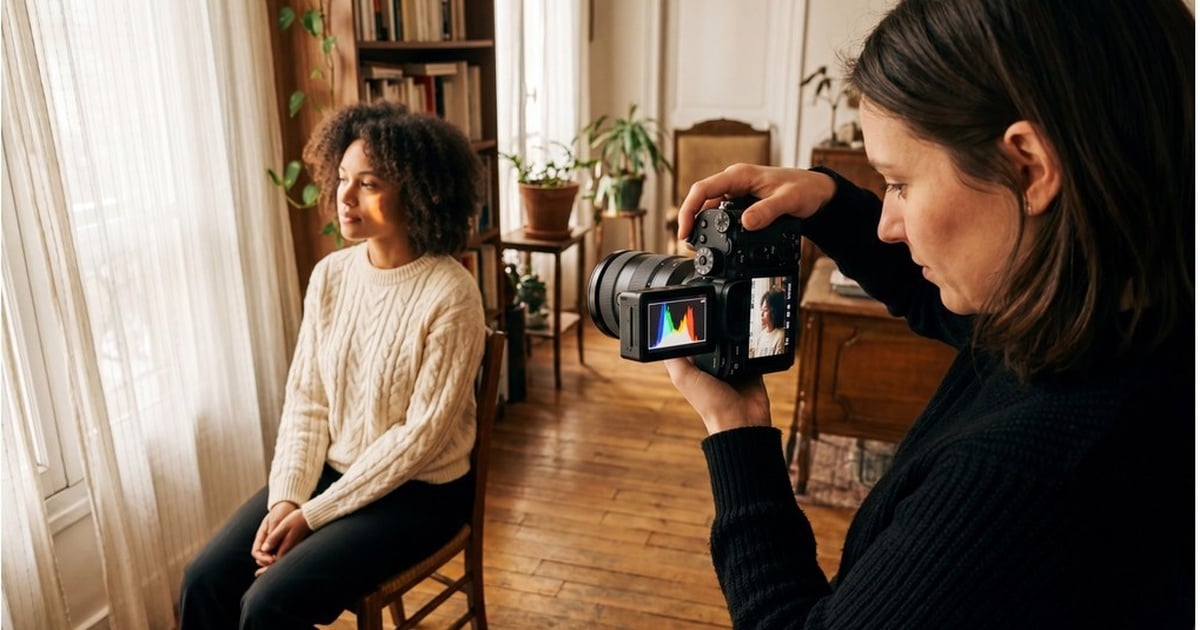
Start With the Face, Not the Metering Menu
The search phrase best metering mode for portraits is really asking: “Which weighting map keeps skin deliverable under this light?”
Brand names differ—Canon uses Evaluative, Nikon Matrix, Sony Multi—but the underlying question is the same: how much of the frame gets a vote when the camera guesses exposure?
Sections below follow light behavior, not marketing labels. Skip ahead if you already know you are heading into a reception cave. Read in order if you are building a default portrait workflow from scratch.
Later, when you match finals in software, AI Photo Editor works best when your RAW files arrive with intent—no slider replaces cheek highlights you never captured.
The Skin-First Rule (Why “Best” Depends on Light)
Portrait exposure is not a democracy. The face is the election.
The best metering choice for portraits really means: “Which weighting map keeps my priority skin tones where I can print and deliver?” In soft light, wide averaging often works. Shadows and highlights stay gentle. In hard light, a small sampling area can stop the sky from voting your subject into underexposure.
Use this one-line test before you touch menus: If I lose cheek detail, is the photo still deliverable?
If the answer is no, your metering strategy must protect highlights or midtones accordingly.
Once that priority is clear, the scenarios below are just different ways the world tries to distract your meter—window softness, sky brightness, DJ color, or a single hard spotlight.
From here on, the right portrait metering choice stops being an abstract search phrase and becomes a small set of repeatable lighting behaviors you can recognize on a real job.
Best Metering Mode for Portraits: Lighting Scenarios A–D
With skin-first priority clear, drill these lighting behaviors until they feel automatic. The four scenarios below are fixed building blocks. Real jobs mix them. Meter A through D cleanly, and mixed rooms feel like pattern recognition instead of panic.
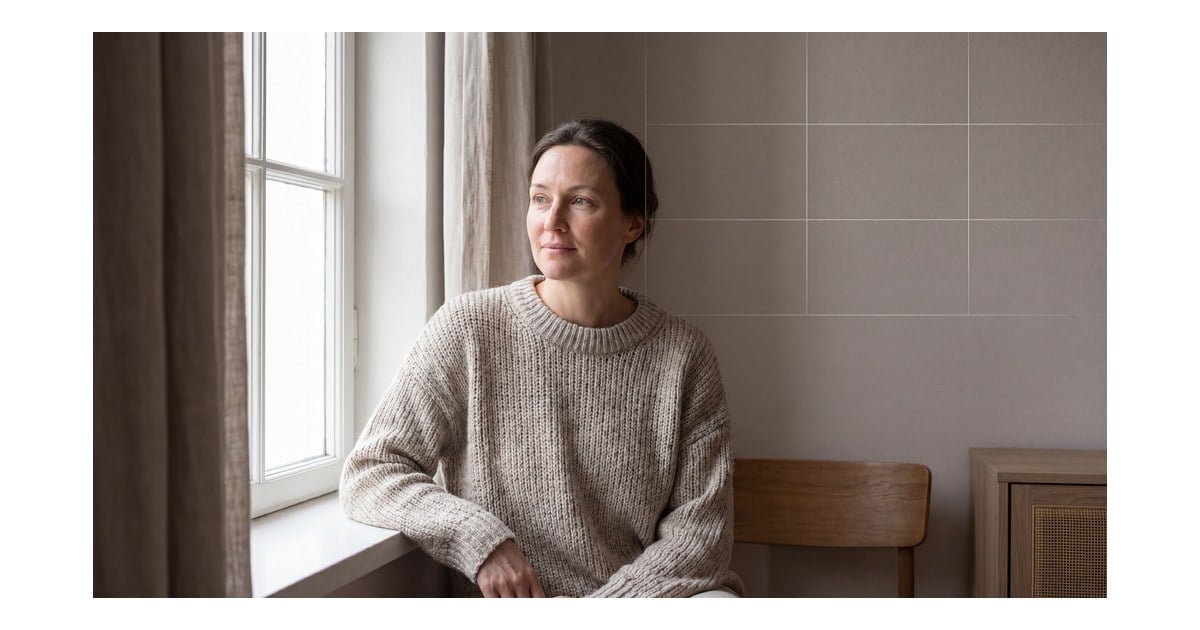
Scenario A: Soft Window Light and Big Softbox Work (the “Easy” Portrait)
Large windows, overcast bounce through sheers, or a 4×6 softbox at two meters all share the same meter-friendly trait: the transition from highlight to shadow on a cheek is long and forgiving.
The risk is not usually catastrophic clipping. It is flatness—a mushy midtone face with no shape.
What the meter is actually measuring: In evaluative / matrix / multi metering, the camera samples many zones. It tries to produce a “reasonable” whole-frame exposure. Here, “reasonable” often overlaps with “good skin,” because nothing in the frame is screaming for attention.
Where to start: Wide pattern metering (Evaluative / Matrix / Multi). Keep your subject’s face occupying a predictable fraction of the frame—roughly one-third to half for a classic bust portrait—so the averaging engine is not dominated by a white wall or a black jacket.
Concrete field example: Editorial headshot, 85mm, f/2.8, ISO 200, subject seated three feet from a north-facing window.
Meter reads 1/125 s at the suggested baseline; your histogram shows a gentle hill with no spike on the right edge. You are not fighting the meter—you are deciding whether to bias +0.3 EV for slightly brighter eyes or stay neutral for print headroom.
When to reconsider: If you introduce a white reflector close to the face, skin can jump faster than the background. That is not a failure of best metering mode for portraits logic; it is a change in scene reflectance.
Shoot a fresh test frame after any reflector or wardrobe shift.
Scenario B: Outdoor Backlight and Rim-Heavy Portraits
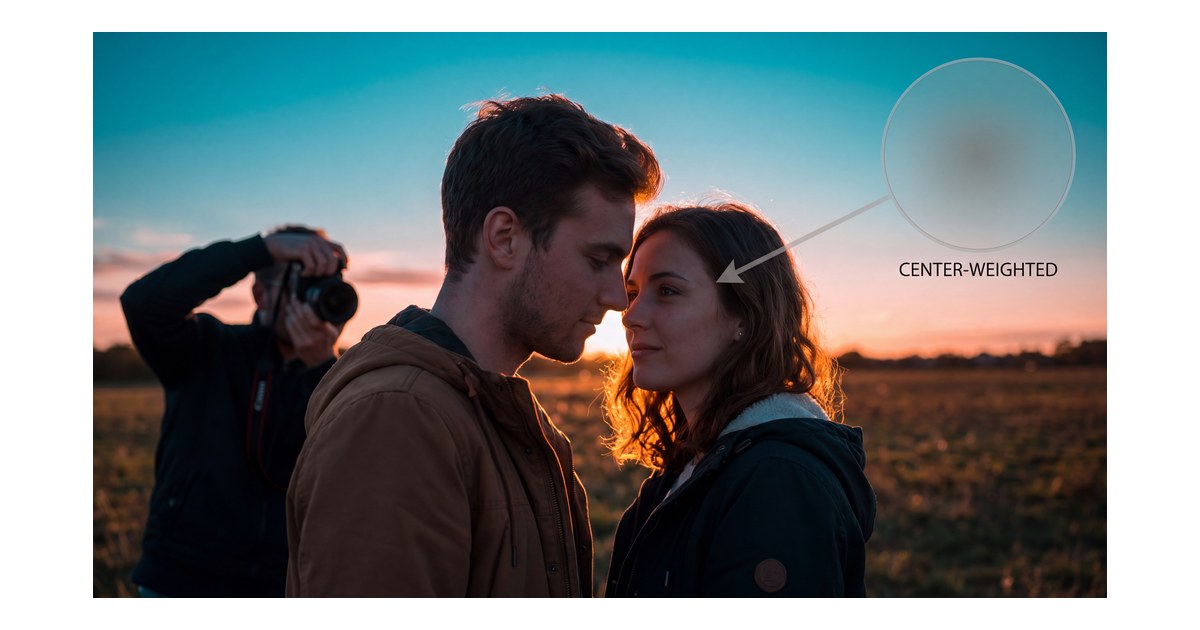
Sun behind the subject, bright sky, face mostly fill-lit or open-shadowed: beginners blame the lens. The meter is doing what you asked. It is averaging a bright world.
What goes wrong: Wide pattern metering often preserves sky detail at the expense of face luminance. The rear LCD looks fine because your eyes adapt; the histogram tells the truth.
A sequence that works on real jobs:
- Switch to center-weighted when the face stays in the middle third and you want the meter to care less about the sky strip.
- If the face still drifts dark, move to spot metering on a stable patch of skin—usually upper cheek between nose and orbital bone, not a specular nose bridge hit.
- Add exposure compensation in small steps. A backlit face often needs a positive bump, but the usable range depends on how bright the sky is, how much fill you have, and how your camera biases the scene.
Tiny real-world detail: If you are at 1/250 s to kill handheld shake and your ISO is already at a comfortable noise level, sometimes it is smarter to widen aperture a third of a stop than to chase +2 EV of compensation.
Otherwise backgrounds blow out faster than faces recover.
Scenario C: Reception Dance Floor (Speed Beats Chasing Perfection)
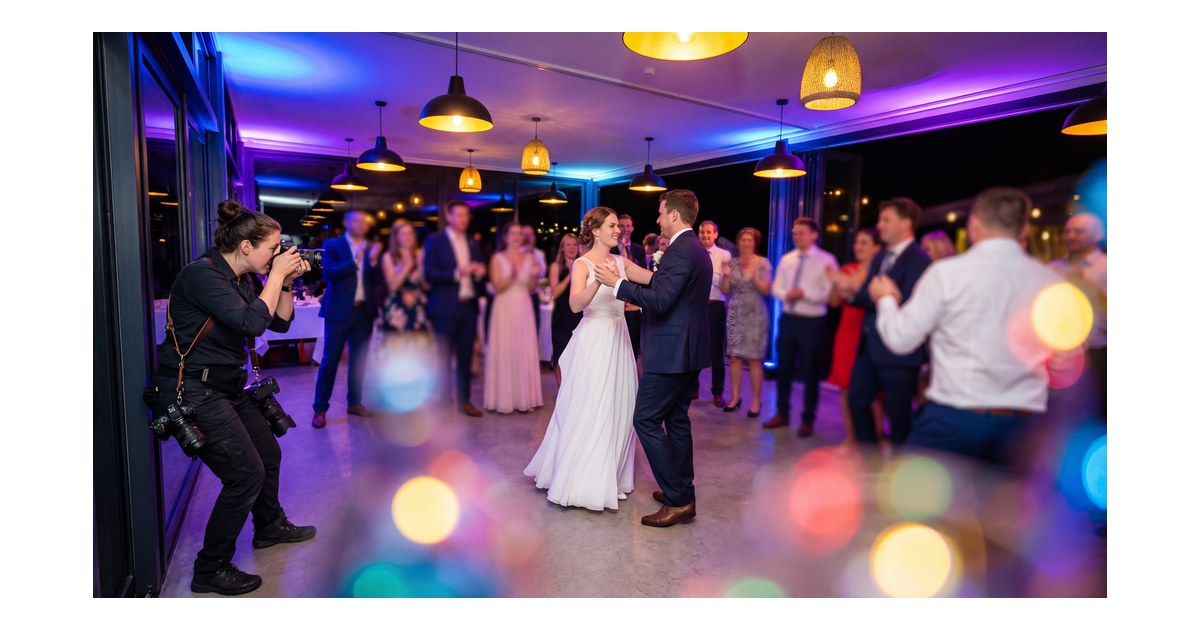
Mixed LEDs, spinning heads, and color that changes when someone hits a fog machine: your meter is not confused—it is reporting a moving target.
Field note: Spot metering can turn into a video game here. Your metering point may jump from a white shirt to a red uplight wall to a face in half shadow. Exposure roller-coasters even when poses are sharp.
What experienced shooters do: They pick wide pattern metering, lock a workable baseline for a song block or a toast segment, then ride compensation or ISO in predictable jumps when the lighting director changes scenes—not every frame.
They also lean on face detection exposure (if your body offers it) only after confirming it is not chasing LED reflections on glasses.
Concrete anchor: During the first dance, meter for skin in the dominant wash. Ignore the one rogue magenta beam unless it sits on the face for more than a few frames.
Consistency across a sequence matters more than nailing a single hero frame that does not match the rest. Best metering mode for portraits on a dance floor is really tempo: pick a lane, stay in it for the song, and reset when the lighting director changes scenes.
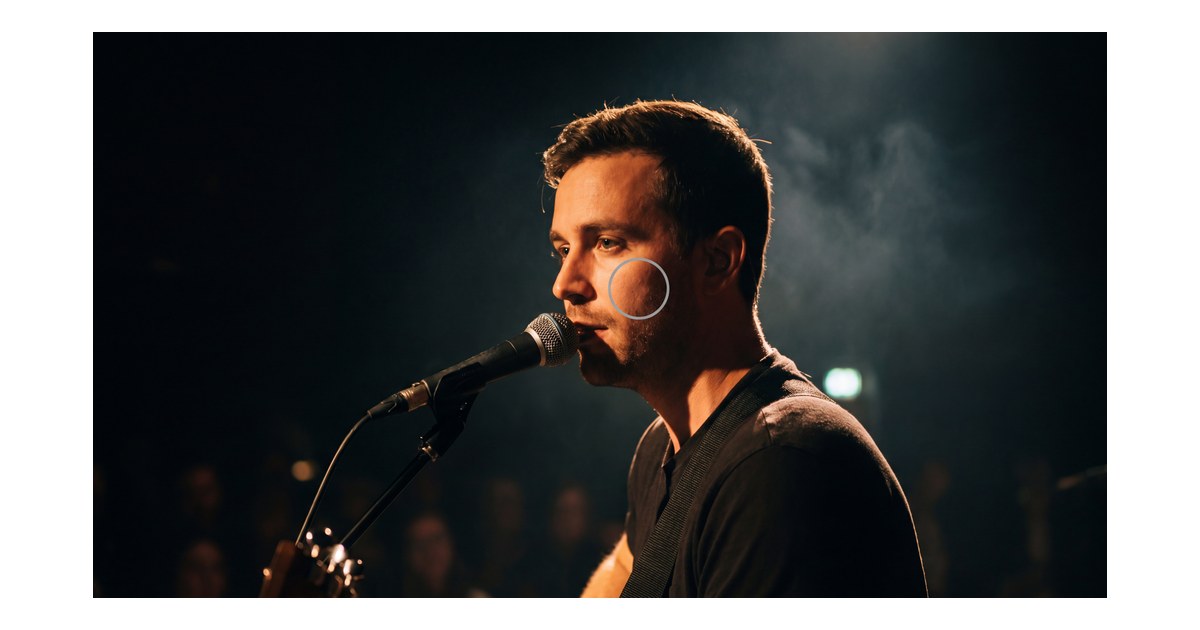
Scenario D: Stage, Spotlight, and High-Contrast Performance Looks
One bright pool of light, deep shadow everywhere else: wide averaging will try to lift shadows you may want lost in black. That flattens drama and can push skin highlights into clipping.
Start here: Spot metering on skin, ideally a midtone patch—not the brightest specular on a forehead.
On some cameras, spot metering can follow the selected AF point; on others it stays center or depends on a custom setting. Know which behavior your body uses before the curtain rises.
Locking exposure: In manual exposure, use the spot reading to set baseline shutter and aperture, then watch highlight alerts.
In aperture priority, use AE lock (often AE-L or half-press custom) after a stable reading so recomposing does not re-average the black pit around the performer.
Watch the wardrobe trap: If you accidentally park the spot on black velvet or a matte mic stand, the next frame can blow skin.
When that happens, it is not mystical meter failure—it is user aim.
Wedding Dress and Specular Highlights (When Fabric Competes With Skin)
Brides often combine two highlight risks: cheek speculars and satin “sparkle” along seams.
Your best metering mode for portraits decision becomes a tie-breaker question: which highlight fails first in the histogram—skin or fabric?
Work the problem in this order:
- Identify which surface is closer to clipping on the right edge of the histogram.
- Decide whether losing lace texture is more acceptable than losing a natural cheek rolloff.
- Choose a smaller metering area or compensation direction that protects the limiter.
Highlight warning overlays (sometimes called “blinkies” or “zebras,” depending on brand) are especially valuable here because satin can spike before skin does.
For a deeper read on keeping contrast strong without muddying shadows, see High Contrast Images: What Makes Them Strong, and How to Keep Them Clean.
Step-by-Step: Portrait Metering Workflow You Can Repeat
The steps below are written so you can execute them on Canon, Nikon, Sony, or Fujifilm bodies.
Menu paths differ, but the locations are similar:
- Metering mode usually lives under the shooting menu, on a drive-mode quick page, or on a physical dial (top LCD or Fn / Q menu).
- Exposure compensation is commonly the rear dial in aperture priority, or a dedicated +/- button plus a control dial.
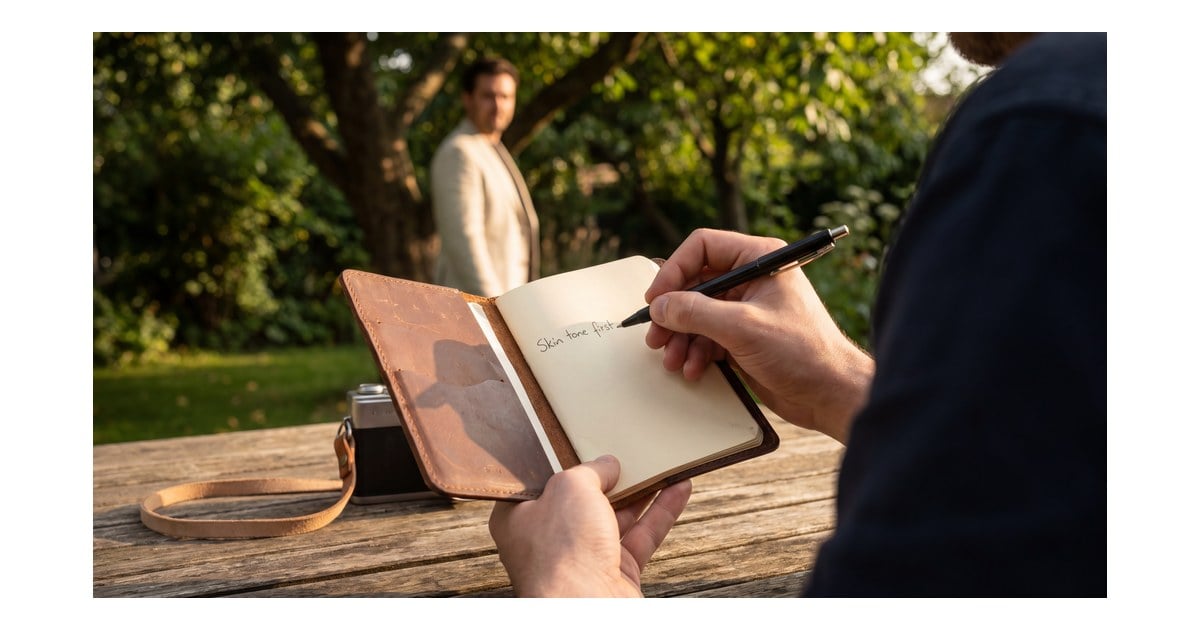
Step 1: State the Anchor Out Loud (One Sentence)
Examples: “Cheeks and eyes must stay clean for the album.” “The lace on the shoulder cannot clip.” “We can lift shadows in post, but we cannot invent cheek texture.”
If you work with an assistant, say the sentence to them—it prevents accidental mode changes mid-setup.
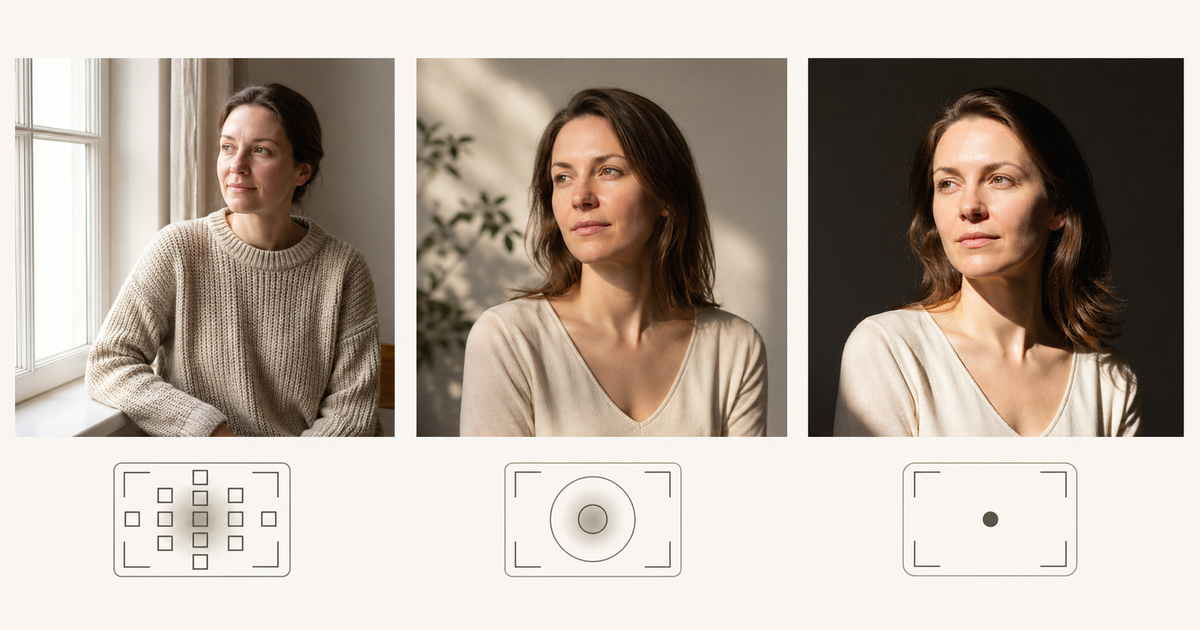
Step 2: Match the Mode to Contrast, Not Brand Loyalty
Use the table as a starting point, then adjust for your own grip and framing habits.
| Scene contrast | Typical starting mode | When to escalate |
|---|---|---|
| Soft, even light | Evaluative / Matrix / Multi | Subject suddenly backlit or reflector added |
| Centered classic pose | Center-weighted | Subject drifts to rule-of-thirds and sky dominates |
| Hard mix (sun + shadow, stage) | Spot on skin midtone | Spot aim unstable—return to center-weighted and compensate |
Step 3: Shoot a Test Frame, Then Trust the Histogram More Than the LCD
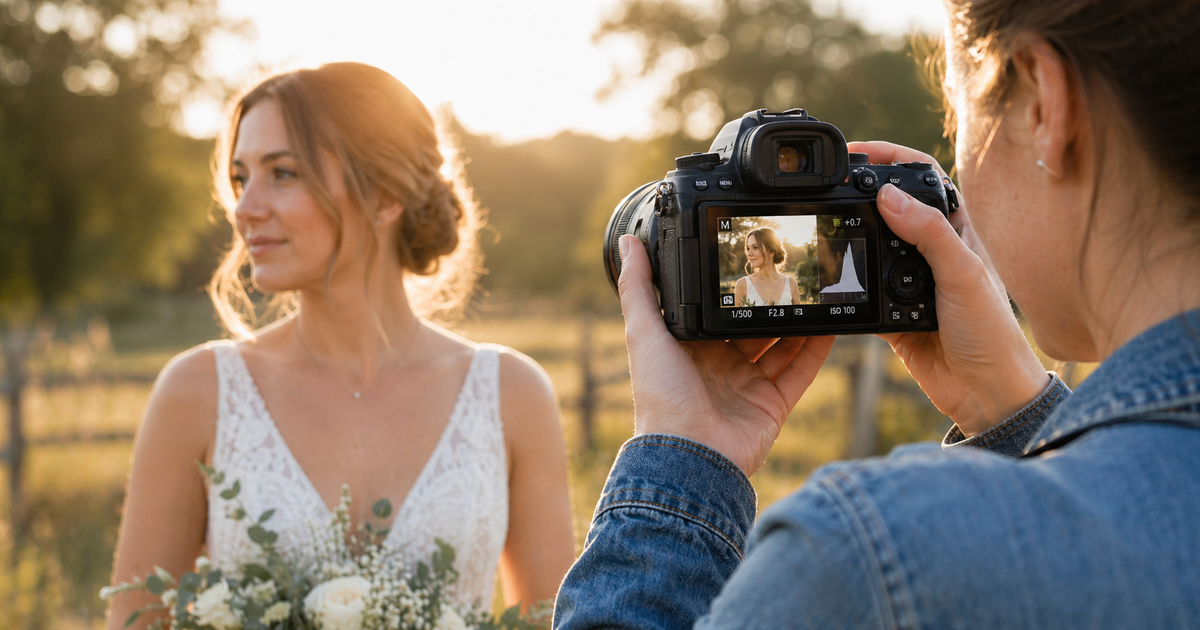
After you set aperture and ISO for your depth-of-field and noise comfort, take one throwaway frame.
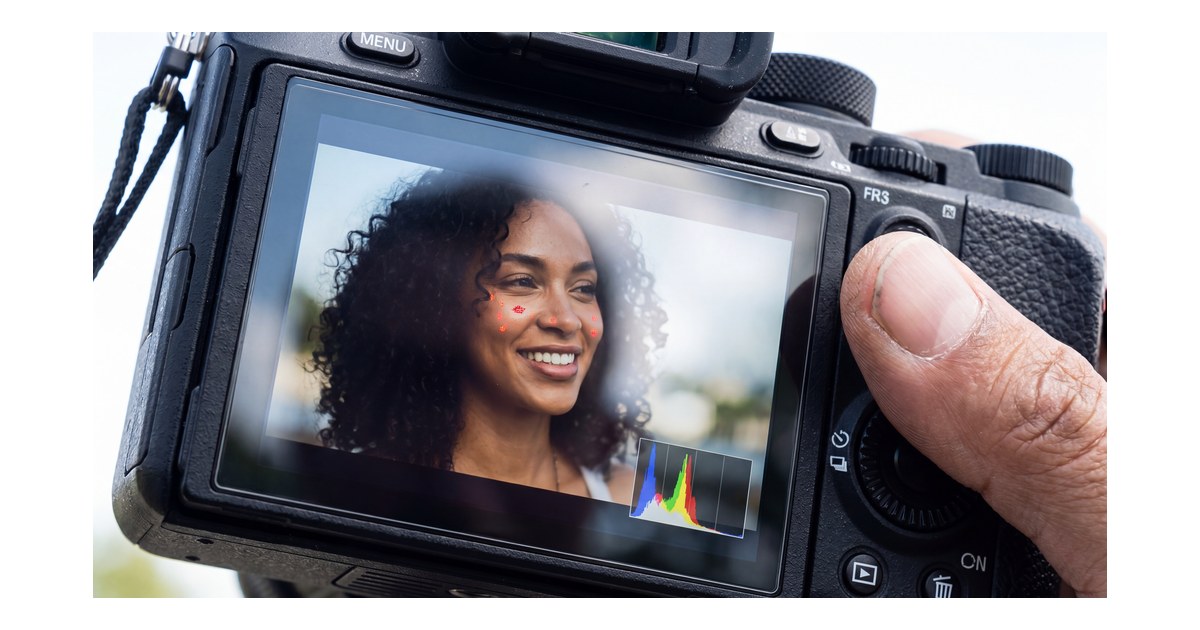
Open the RGB histogram (not brightness-only if your camera allows RGB). You are looking for a gap on the right for skin, or a controlled bump if you intentionally bias bright.
On many bodies, highlight alerts live in the same playback menu where you enable the histogram. Some map them to a custom button for chimping in bright sun.
For a neutral definition of what the graph means, see Histogram (photography).
Step 4: Move Exposure Compensation in 1/3-Stop Steps Until Skin Looks Human
This is where best metering mode for portraits meets muscle memory.
Jumping full stops on a paying client produces “which frame is real?” inconsistency—especially if you burst through moments.
Spin compensation in 0.3 EV clicks (most ILCs default that way). Watch the histogram shift, and stop when cheek transition looks three-dimensional, not plastic.
If you are already near your ISO ceiling, favor widening aperture slightly over stacking endless positive compensation—backgrounds change character faster than faces recover.
Step 5: Hold the Strategy Until Light Geometry Changes
Indoor to outdoor, sun to open shade, or a wardrobe change from matte jersey to sequins—these are reset events.
Nail one lighting block, then move on. Your future self culling the gallery will thank you for predictable color and density.
Three Traps Portrait Shooters Fall Into
These are not “theory failures”—they are rhythm failures.
None of them invalidate the best metering mode for portraits framework above; they just burn frames while you relearn what the meter already told you.
The wandering spot. Spot metering saves skin in hard light, but only if your aim point is stable. On a moving subject, return to center-weighted or wide pattern until you can park the spot on real skin long enough to meter.
Chimping on max-brightness LCD outdoors. Sunlight on a rear screen makes midtones look brighter than they are. Trust the histogram and highlight warnings before you declare victory.
Chasing perfection mid-dance-floor. Reception lighting changes faster than your creative director can call cues. Pick a strategy for the segment, accept “good enough” consistency, and fix hero frames in a calmer moment.
After Capture: Polish Without Undoing Your In-Camera Discipline
Metering saves you from unrecoverable highlights.
Editing helps you harmonize siblings across rooms and keep a weekend’s worth of frames feeling like one photographer—not three different exposure moods.
Back in AI Photo Editor, clarity comes first after you lock exposure: use AI Photo Sharpener, then add a subtle analog-style wrap when you want tactile consistency across a proof set with Add Grain to Photo.
Field rhythm and post-polish often share one desk. Prefer to install on phone or tablet first? Use download Evoto.


Powerful AI Photo Editor
Final Takeaway
Lock the decision chain, not a superstition:
- Start with a wide pattern or evaluative when the light is soft and even.
- Switch to center-weighted or spot when framing or contrast gives the background too much voting power.
- Verify with the histogram, highlight the warning, and small compensation moves before you trust the frame.
The real best metering mode for portraits is the one that keeps your subject’s skin believable under the light you actually have, then stays repeatable from first frame to final gallery.
FAQ
1. Is Spot Metering Better for Portraits Than Evaluative?
Sometimes in high contrast. In soft light, evaluative is often faster and calmer.
2. What Is the Safest Default for Wedding Portraits Outdoors?
Many photographers start wide pattern, then switch to center-weighted or spot when backlight intensifies.
3. Should I Expose for Skin or for the Dress?
Pick the element that fails first in your histogram. Many shooters protect cheek highlights, then lift dress detail carefully in post if needed.
4. Does AF Point Affect Metering?
Sometimes. On some cameras, spot metering can follow the selected AF point; on others it stays center or depends on a custom setting. Confirm your body behavior before the shoot.
5. How Do I Practice Without a Client?
Use a friend, a static pose, and one backlight setup. Cycle modes and compare histograms for ten minutes.
6. Can AI Editing Replace Correct Metering?
It can polish near misses, but it cannot always rebuild clipped skin highlights.