

Some photos feel off before you know why. The light is good. The subject is sharp. The location works. But the frame still feels like it is sliding, splitting in half, or giving attention to the wrong part of the scene.
Often, the problem is the horizon line. The horizon line in photography controls how the frame is divided. It decides whether the viewer reads the sky, the foreground, the subject, the reflection, or the overall balance first. A low horizon can make the sky feel huge. A high horizon can make the foreground feel important. A centered horizon can create calm symmetry when both halves of the image matter.
For working photographers, this is not just a landscape rule. Horizon lines appear in travel, architecture, real estate, weddings, environmental portraits, sports, street scenes, and any photo where strong horizontal edges shape the composition.
What Is the Horizon Line in Photography?
The horizon line is the visual line where the sky appears to meet land, water, buildings, trees, mountains, or another major plane in the scene.
In a landscape, it may be the true meeting point between earth and sky. In a beach photo, it may be the line between ocean and sky. In a city photo, it may be the skyline. In an interior, it may be a strong horizontal edge such as a wall, floor, window, table, or shelf.
That line matters because it divides the frame. It tells the viewer which part of the image has priority. It can make a photo feel open, grounded, calm, tense, balanced, or unstable. It also affects how other composition tools work. The rule of thirds often uses the horizon as one of its key placement decisions. Leading lines often depend on whether the horizon supports the path through the frame. Perspective becomes easier to read when horizontal and vertical relationships feel intentional.

A good horizon line helps the image feel controlled.
A weak one can make the whole photo feel undecided.
Why Horizon Placement Changes the Photo
Horizon placement changes visual weight. When the horizon sits low in the frame, the sky becomes dominant. The photo may feel more open, dramatic, quiet, isolated, or atmospheric. This works when the sky has real value: storm clouds, sunset color, fog, stars, birds, light rays, or clean negative space.
When the horizon sits high in the frame, the foreground becomes dominant. The viewer spends more time with land, water, street, field, rocks, flowers, texture, or leading lines below the horizon. This works when the lower part of the frame gives the image structure.
When the horizon sits in the center, the frame feels split. Sometimes that split feels static. Sometimes it feels powerful. Centered horizons often work best when both halves matter equally, especially with reflections, symmetry, calm water, minimalist landscapes, or graphic compositions.
The mistake is not putting the horizon in the middle.
The mistake is putting it there without a reason.
A horizon line should answer a practical question: What is this photo really about?
If the sky is the story, give it more room. If the foreground is the story, give it more room. If the relationship between sky and ground is the story, a centered or near-centered horizon may be exactly right.
Low Horizon: When the Sky Should Lead
A low horizon places more of the frame above the horizon line. Use it when the sky is visually stronger than the ground.
This can work in sunset scenes, stormy weather, cloud formations, starry skies, drone images, travel photographs, and portraits where a clean sky creates negative space around the subject. A low horizon can make a scene feel large. It can also make a person, tree, building, or animal feel small inside a bigger environment.
That can be useful when scale, isolation, weather, or openness is part of the story.
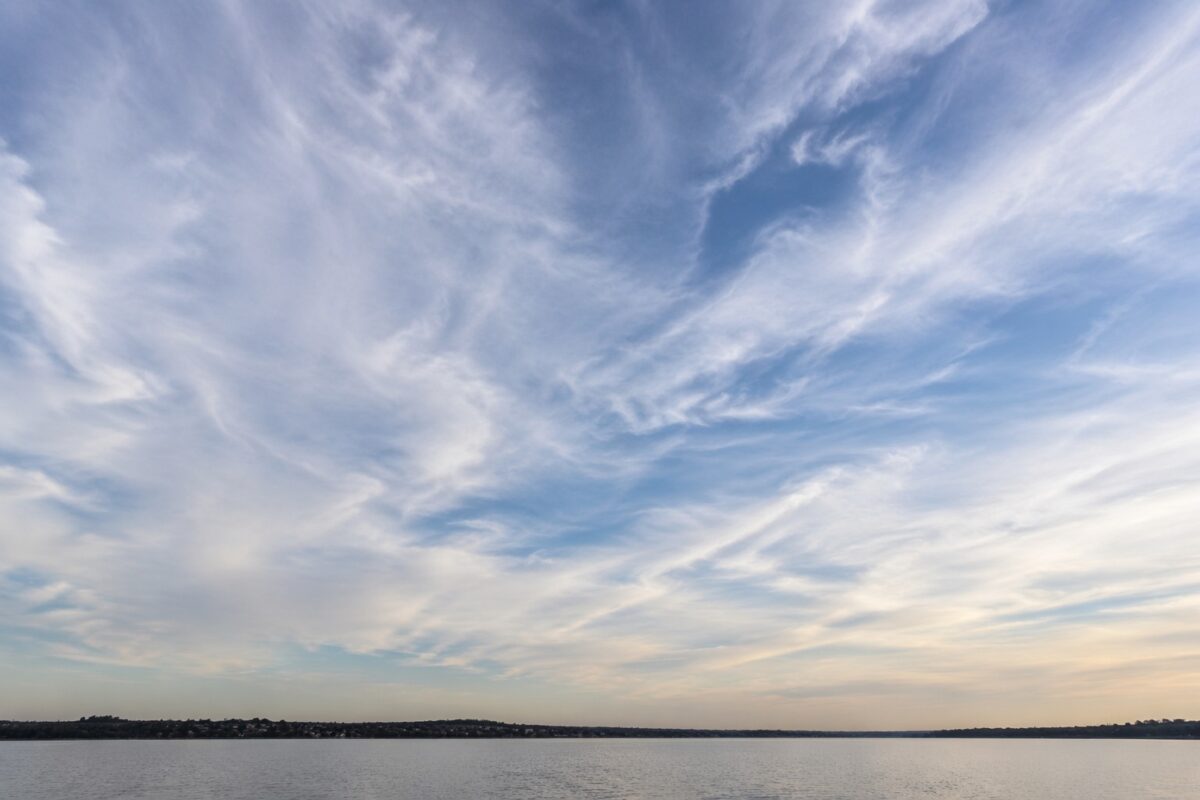
However, a low horizon does not automatically make a stronger photo.
If the sky is blank, dull, or overexposed, giving it most of the frame may weaken the image. A large empty sky works only when it supports the subject or creates the mood you want.
Before using a low horizon, ask:
- Is the sky more interesting than the foreground?
- Does the sky add mood, scale, or direction?
- Is there a subject strong enough to hold the frame?
- Does the open space feel intentional, or just empty?
If the sky has nothing to say, point the camera down.
High Horizon: When the Foreground Should Lead
A high horizon gives more space to the foreground.
This is useful when the ground, water, street, field, rocks, flowers, architecture, or path carries the strongest visual information. A high horizon works well when the foreground gives the viewer an entry point into the frame.
A road can lead into the distance. Rocks can create depth. Grass, sand, pavement, or water can add texture. A repeated foreground pattern can become the main structure of the composition.
This is common in landscape, travel, street, documentary, and architectural photography.

A high horizon can make the image feel more grounded. It can bring the viewer closer to the scene. It can also make the photo feel more physical because the eye spends more time on the surface below the horizon.
The risk is clutter. If the foreground is busy without a clear path, a high horizon may make the photo feel heavy. The viewer may not know where to look. In that case, move your position, simplify the foreground, use a stronger line, or choose a different horizon placement.
Before using a high horizon, ask:
- Is the foreground more important than the sky?
- Does the foreground guide the eye?
- Is there enough structure, texture, or subject interest below the horizon?
- Does the sky still support the frame, even if it gets less space?
A high horizon is strongest when the foreground has a job.
Centered Horizon: When the Split Is the Point
Many beginner composition guides warn against placing the horizon in the center. That advice is useful when it stops accidental, undecided compositions. But it should not become a rule you never break.
A centered horizon can work beautifully when the image depends on balance. Use a centered horizon for mirror reflections, calm lakes, symmetrical landscapes, minimalist compositions, graphic sky-and-ground divisions, or architectural scenes with strong horizontal order.
The centered horizon works best when the two halves of the frame feel connected. A reflection is the clearest example. The top and bottom halves are meant to speak to each other. Centering the horizon can make that relationship stronger.
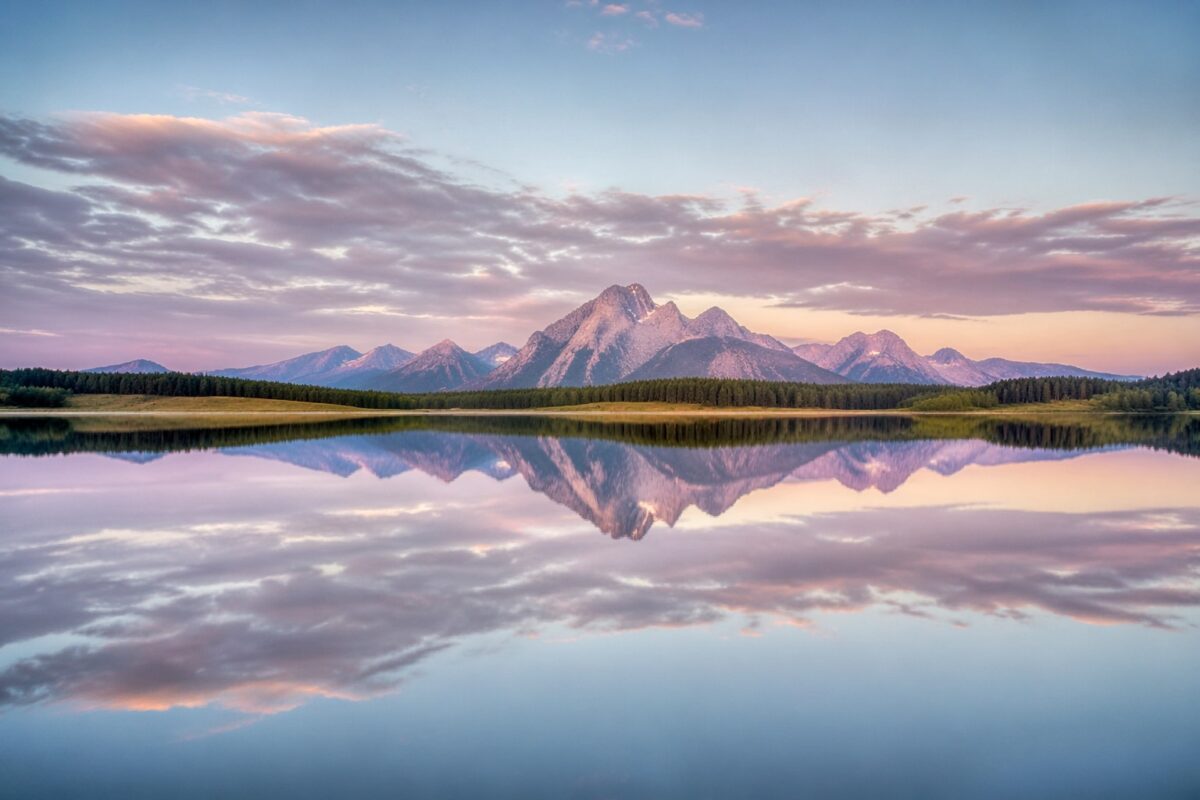
The danger is near-centering. A horizon that is almost centered but not quite can look careless. It may feel like the photographer did not decide whether the image should be balanced or asymmetrical. If you want symmetry, commit to it. If you want sky or foreground dominance, move the horizon clearly up or down.
Precision matters more when the composition is simple.
The fewer elements there are in the frame, the easier it is to notice small alignment problems.
Should the Horizon Always Be Straight?
Most of the time, yes.
A slightly tilted horizon usually looks like a mistake. Viewers may not consciously notice why the photo feels wrong, but they feel the imbalance. This is especially true with oceans, lakes, flat land, city skylines, interiors, and architectural lines.
A tilted horizon makes the image feel like it is sliding. That can pull attention away from the subject.

This does not mean every horizontal line in the real world is perfectly flat. Hills slope. Streets angle. Shorelines curve. Wide lenses bend edges. Buildings lean when photographed from below. Sometimes a photo may look level mathematically but still feel wrong visually because other strong lines are competing with the horizon.
The goal is not only technical alignment.
The goal is believable alignment.
Use the strongest visual reference in the frame. In a seascape, that is usually the waterline. In architecture, it may be a wall, column, floor, window, or central vertical line. In a portrait, it may be the background edge or the subject’s posture. In a stadium, it may be the field line or seating tier.
If you tilt the horizon on purpose, make the choice obvious. A slight accidental tilt looks careless. A strong Dutch angle can feel energetic, unstable, or dramatic when the subject supports it.
The viewer should understand that the tilt was a decision.
Horizon Lines in Different Types of Photography
Horizon placement changes by genre because each type of photo needs a different kind of control.
In landscape photography, the horizon often decides whether the image is about sky, foreground, or balance. A low horizon works for dramatic weather. A high horizon works for strong foreground detail. A centered horizon works for reflections and symmetry.
In travel photography, horizon lines help create scale and context. A person in a wide scene may need a low horizon to show sky and atmosphere, or a high horizon to show texture, road, market, beach, or terrain. The placement should support the sense of place.
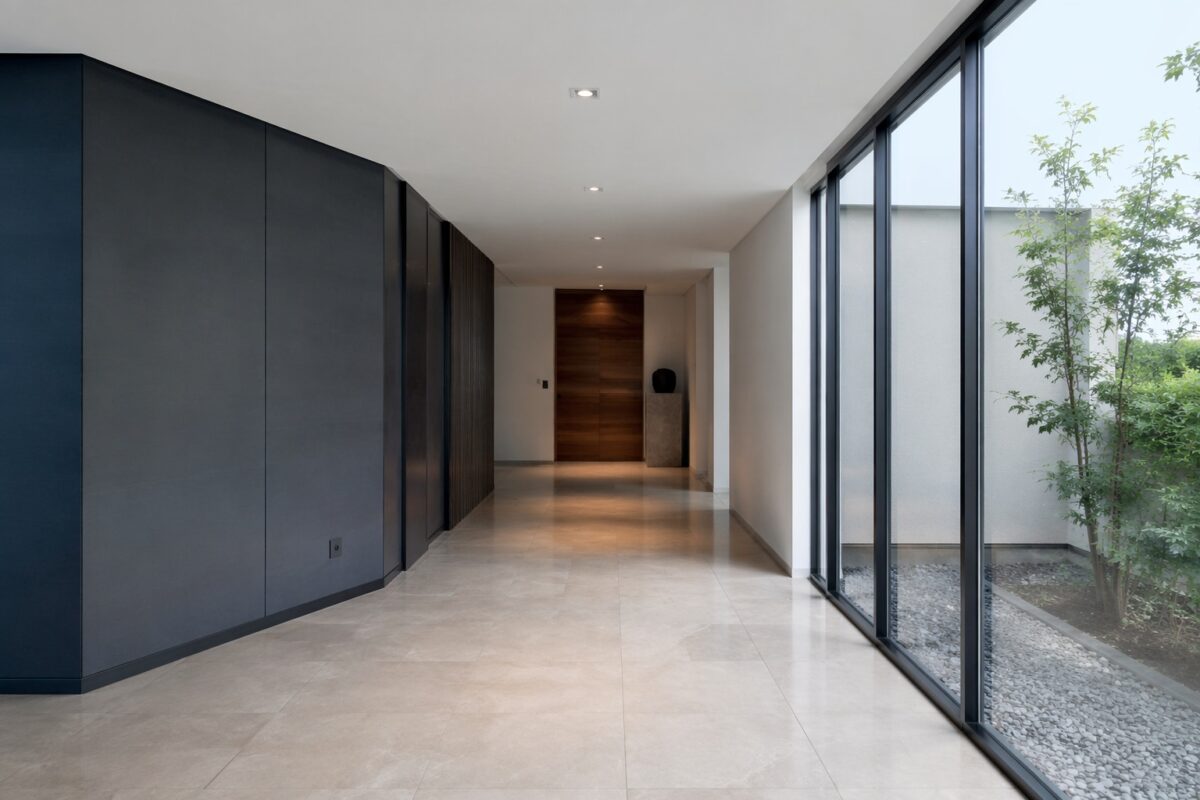
In architecture and real estate photography, the horizon line connects to perspective control. Crooked horizontal lines and leaning verticals can make a space feel unstable. Here, straightening and perspective correction are not just polish. They protect the structure of the image.
In wedding and event photography, horizon lines often appear in outdoor ceremonies, beach portraits, reception rooms, rooftops, and dance floors. A slanted background can distract from emotion, even when the moment is strong. Keep the line clean unless motion or energy is part of the frame.
In portraits, the horizon can cut through the subject awkwardly. A line through the neck, jaw, eyes, or head can create visual tension in the wrong place. Move your camera height, change your angle, or shift the subject so background lines do not slice through important facial or body areas.

In sports photography, field lines, track lanes, boards, nets, or stadium tiers often act like horizon lines. A slight tilt can make the frame feel messy unless speed or impact clearly justifies it. Clean alignment helps action photos feel more professional.
Common Horizon Line Mistakes
The first mistake is placing the horizon by habit. Many photographers default to the middle or the lower third without asking what the scene needs. The better habit is to decide what carries the image first: sky, foreground, subject, reflection, or shape.
The second mistake is using the rule of thirds too rigidly. The rule of thirds is a useful starting point. It often helps you avoid a dead split. But it is not the answer to every horizon problem. A horizon can sit very low, very high, centered, or even outside the frame if that makes the image stronger.
The third mistake is leaving the horizon almost centered. This often feels weaker than either a clear centered composition or a clear high/low horizon. Commit to the visual idea.
The fourth mistake is ignoring the tilt. A strong subject can still be weakened by a crooked waterline, skyline, floor, or wall. This is one of the fastest fixes to check before export.
The fifth mistake is letting the horizon cut through the subject. In portraits, weddings, sports, and lifestyle images, background lines can run through heads, necks, shoulders, or hands. The line may be level, but it still damages the composition. Move, lower the camera, raise the camera, or reframe.
The sixth mistake is correcting the horizon after every other edit. Straightening changes the crop. It can remove edge details, affect subject placement, and change the balance of the frame. Fix alignment early, then refine exposure, color, and cleanup.
How to Fix Horizon Line Problems in Post
The best horizon decisions happen in camera. Still, real shoots move quickly. Travel light changes. Wedding moments do not wait. Event coverage can be crowded. Landscapes may require fast framing before the sky changes.
Post-production can help when the composition is already close.
Start with straightening. If the image has a tilted horizon, waterline, skyline, or strong horizontal edge, correct it before detailed editing. Evoto’s AI Photo Straightener can help align crooked horizons and slanted scenes more quickly, especially when a small tilt is weakening an otherwise usable frame.
Next, check perspective. Horizon problems are sometimes connected to vertical distortion, especially in architecture, interiors, cityscapes, and travel photos. If buildings lean or walls feel skewed, simple rotation may not be enough. Evoto’s AI Perspective Correction can help correct perspective distortion and straighten key lines so the image feels more natural.
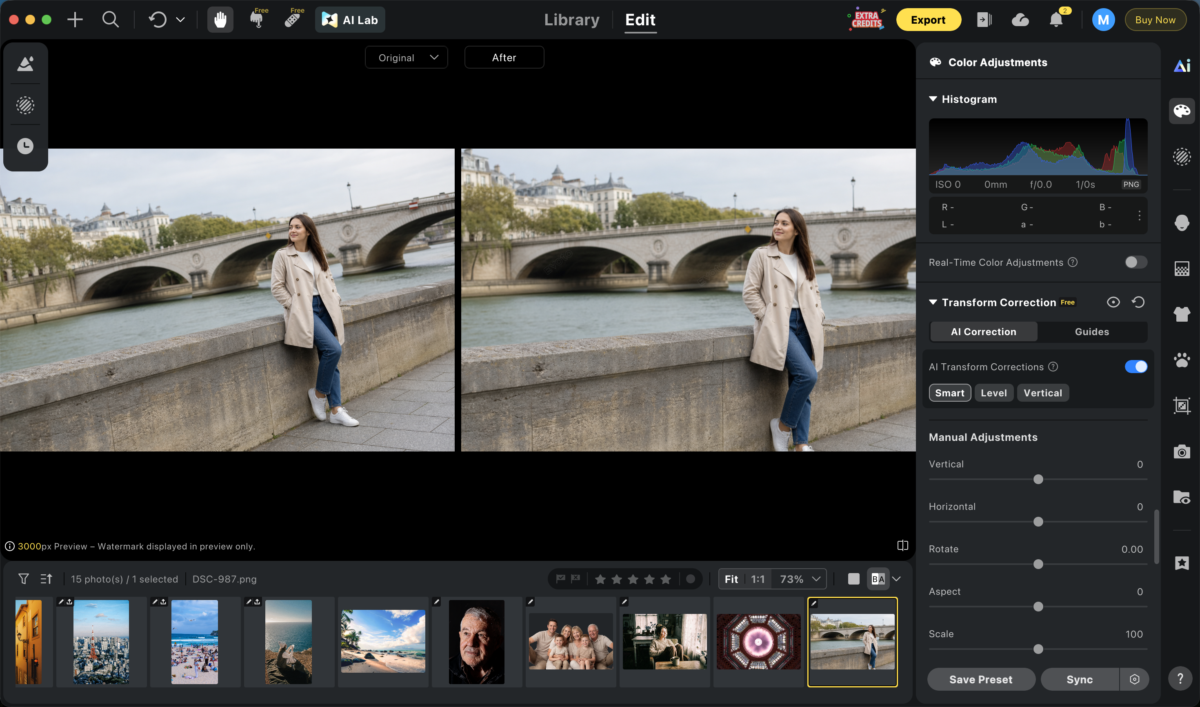
Then refine the crop. Straightening often trims the edges of the file, so the composition may need a second look. Use crop to decide whether the horizon should sit higher, lower, or closer to center. Evoto’s AI Crop Image can support faster framing when you need cleaner composition boundaries, consistent ratios, or batch-ready delivery.
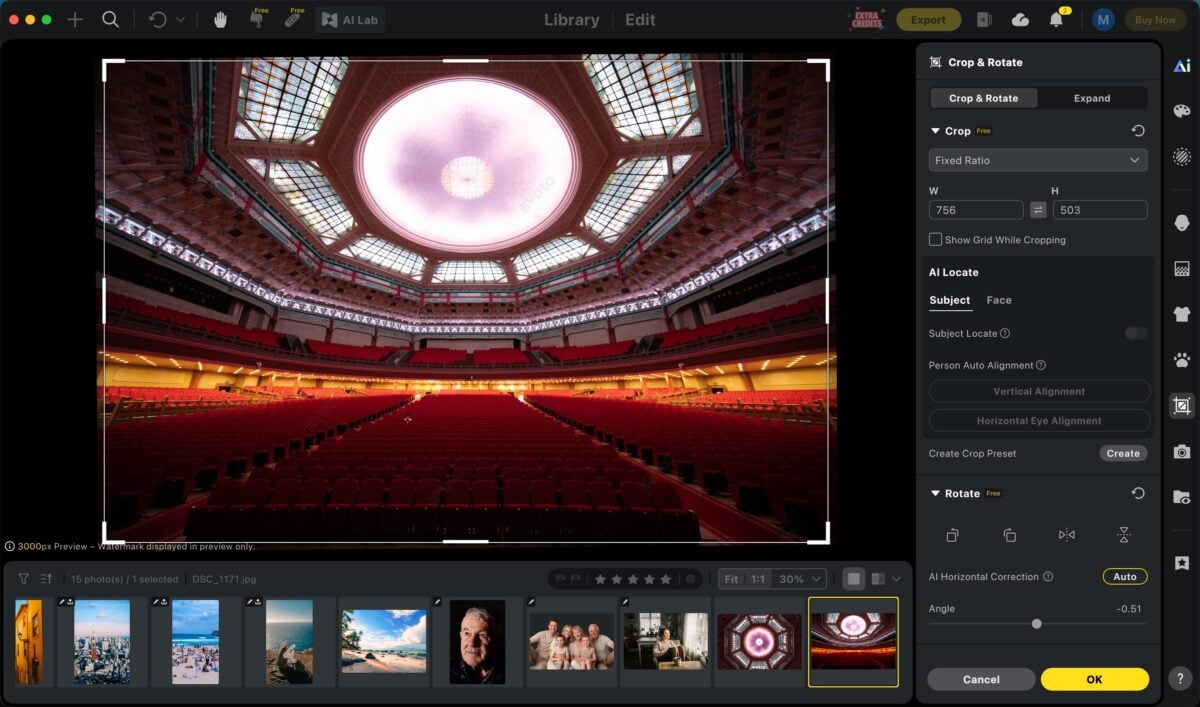
For a single hero image, take your time and judge the frame manually. For a large gallery, consistency matters. A set of travel images, sports photos, school portraits, real estate files, or wedding selects can feel uneven if some horizons are level and others drift. Fixing alignment early helps the whole delivery feel more professional.
The goal is not to make every image perfectly rigid.
The goal is to remove accidental instability.


Powerful AI Photo Editor
A Simple Horizon Line Checklist
Before you press the shutter, ask:
- What is more important: sky, foreground, subject, or reflection?
- Should the horizon be low, high, centered, or excluded?
- Does the horizon placement feel intentional?
- Is the horizon level?
- Are there vertical lines that also need attention?
- Is a background line cutting through the subject?
- Does the foreground have enough interest if the horizon is high?
- Does the sky have enough interest if the horizon is low?
- Would a small camera height change improve the division?
- If the horizon is tilted, is the tilt clearly intentional?
Before you export, ask:
- Did straightening change the crop?
- Did the crop weaken the subject placement?
- Are important edges cut awkwardly?
- Does the image still feel balanced after correction?
- Does the horizon support the story instead of distracting from it?
A horizon line is simple, but it affects the whole frame.
Treat it as a composition decision, not a background detail.
Final Thoughts
The horizon line in photography is one of the fastest ways to change how a photo feels.
Place it low when the sky needs to lead. Place it high when the foreground carries the story. Center it when balance, reflection, or symmetry is the point. Keep it level unless the tilt is clearly part of the image.
The rule of thirds can help, but it should not make the decision for you.
A stronger question is always: What should the viewer notice first?
Once you know that, the horizon becomes easier to place. It stops being a rule and becomes a tool for controlling space, weight, balance, and attention.
Try Evoto AI Photo Editor
Retouch photos with Evoto AI and make your photos best! Available on Windows, MacOS and iPadOS.