

Toddler photography is not difficult because toddlers are “bad at photos.”
It is difficult because toddlers are honest. They show you immediately when they are tired, overwhelmed, hungry, unsure, or finished with an idea. They do not care that the light is perfect. They do not understand why three adults are asking them to smile at the same time. They also do not hold a pose just because the photographer found a good background.
That honesty can be frustrating, but it is also what makes toddler portraits worth photographing.
The best toddler sessions are built around short windows, simple tasks, parent comfort, safe movement, and quick decisions.
Schedule Around the Toddler, Not Just the Light
Golden hour is not helpful if the toddler is already melting down.
With toddlers, the best time is usually when they are fed, rested, and least likely to need a nap. That may be early morning, after breakfast, or a short window before lunch. It may not be the prettiest light on paper.
Before booking, ask parents:
- When is your toddler usually happiest?
- When do they nap?
- Do they warm up slowly or quickly?
- Are they better at home or outdoors?
- Do snacks, toys, music, or quiet time help?
- Are there textures, sounds, or locations they dislike?
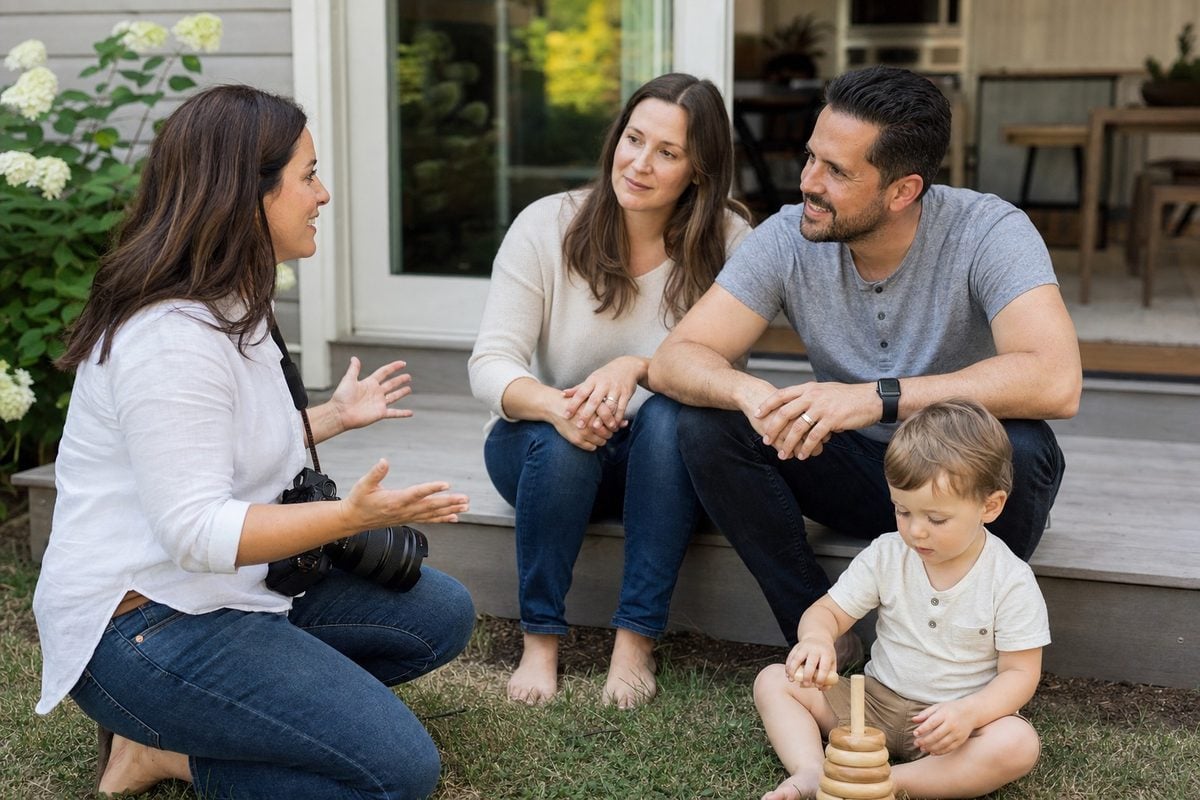
Once you know the child’s rhythm, choose the best light available inside that window. A shaded porch at 9 a.m. can outperform a golden field at 7 p.m. if the toddler is exhausted.
Start With Comfort
Toddlers usually need to feel safe before they can look natural.
Do not rush into solo portraits if the child is clinging to a parent. Start with connection: sitting in a lap, holding a hand, hiding against a shoulder, walking with a parent, or playing near someone familiar.
Good opening frames:
- toddler sitting on a parent’s lap
- parent holding both hands while the toddler stands
- toddler leaning into a hug
- parent walking slowly with the toddler
- toddler playing beside a parent instead of alone
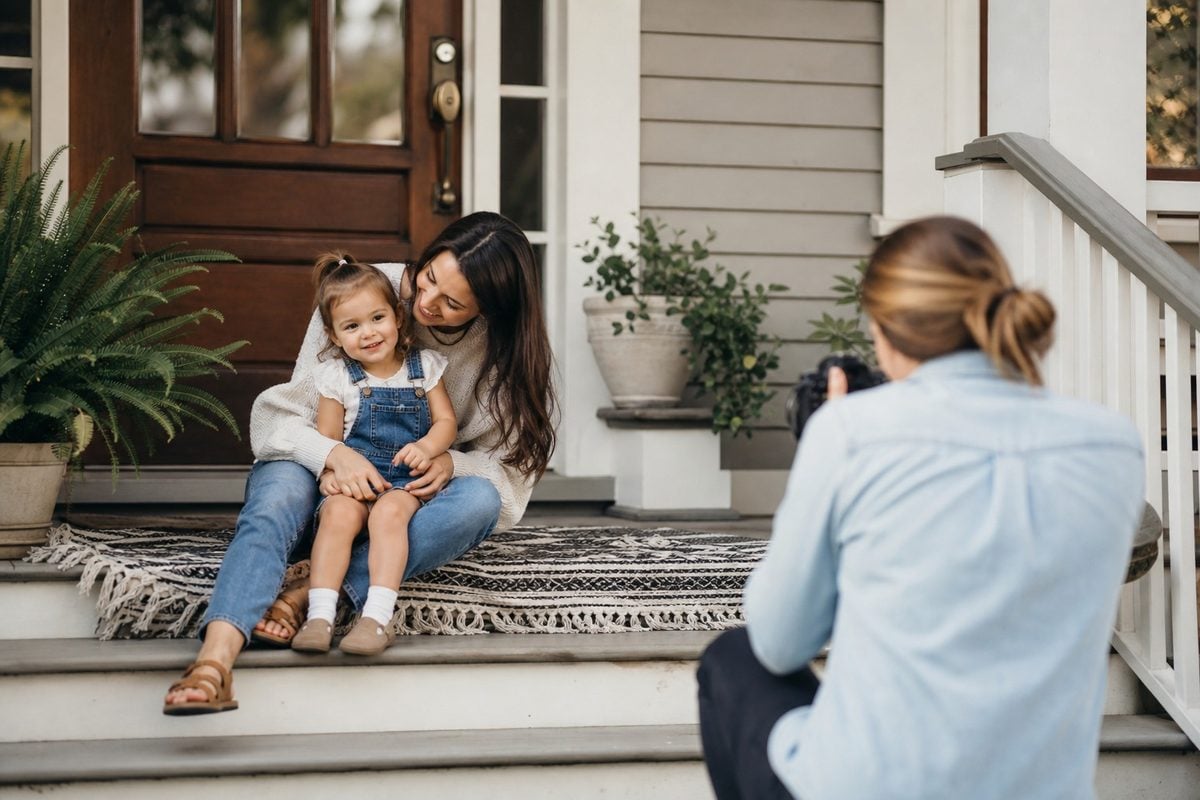
These images are not filler. They often become the frames parents love most because they show the child’s real need for connection at that age.
Capture the Safe Frame Before the Session Gets Loose
Toddlers can go from calm to done very quickly.
If you need one clean portrait, take it early. The safe frame can be simple: toddler seated on a step, standing by a parent, holding a small toy, or looking toward soft light. It does not need a perfect smile.
A usable safe frame should have:
- clean face light
- eyes visible
- simple hands
- no major background distractions
- natural expression
- enough sharpness for delivery
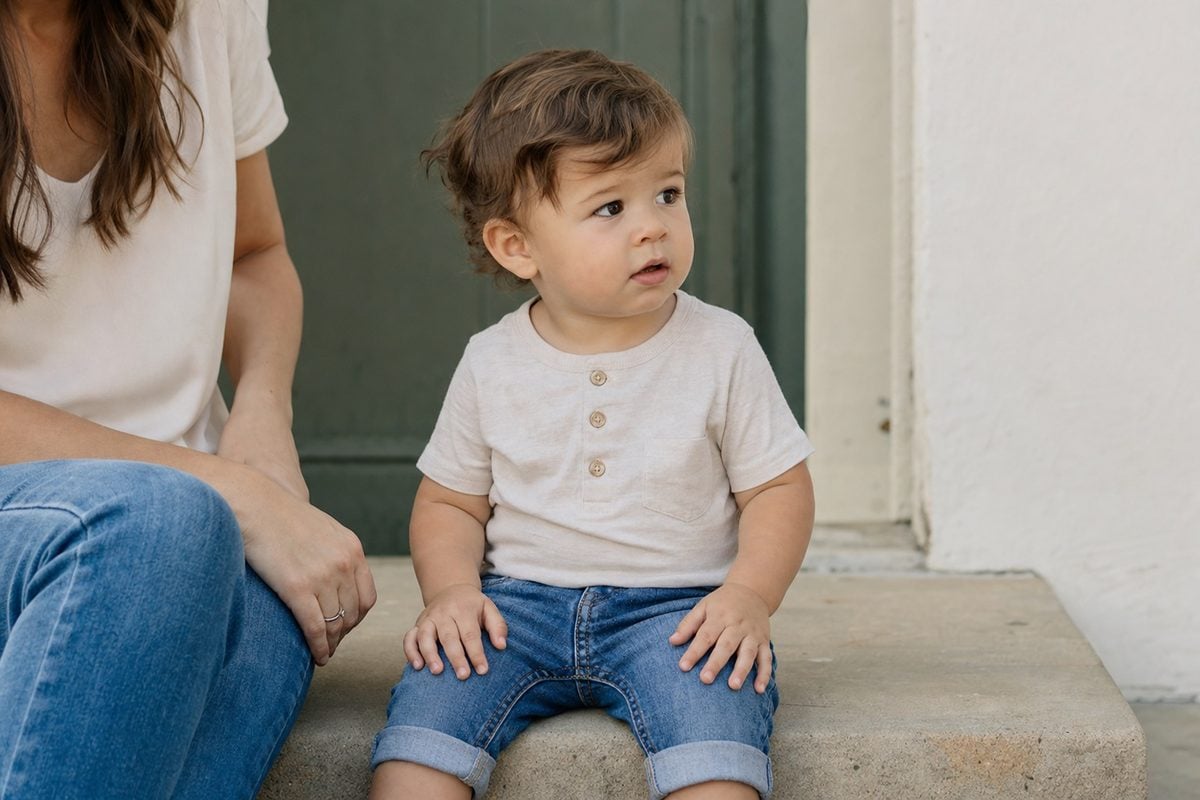
Once that frame exists, the rest of the session can loosen up. You can follow movement, let the toddler explore, and build a fuller story without worrying that the gallery has no anchor image.
Keep Prompts Tiny
Toddlers cannot process long posing instructions.
They respond better to one-step actions, sounds, and small games. The prompt should be something they understand immediately.
Useful toddler prompts:
- “Hold this.”
- “Walk to Mom.”
- “Can you find the flower?”
- “Touch the wall.”
- “Sit on this step.”
- “Run to Dad.”
- “Give the toy a hug.”
- “Look for the bird.”
- “Jump once.”
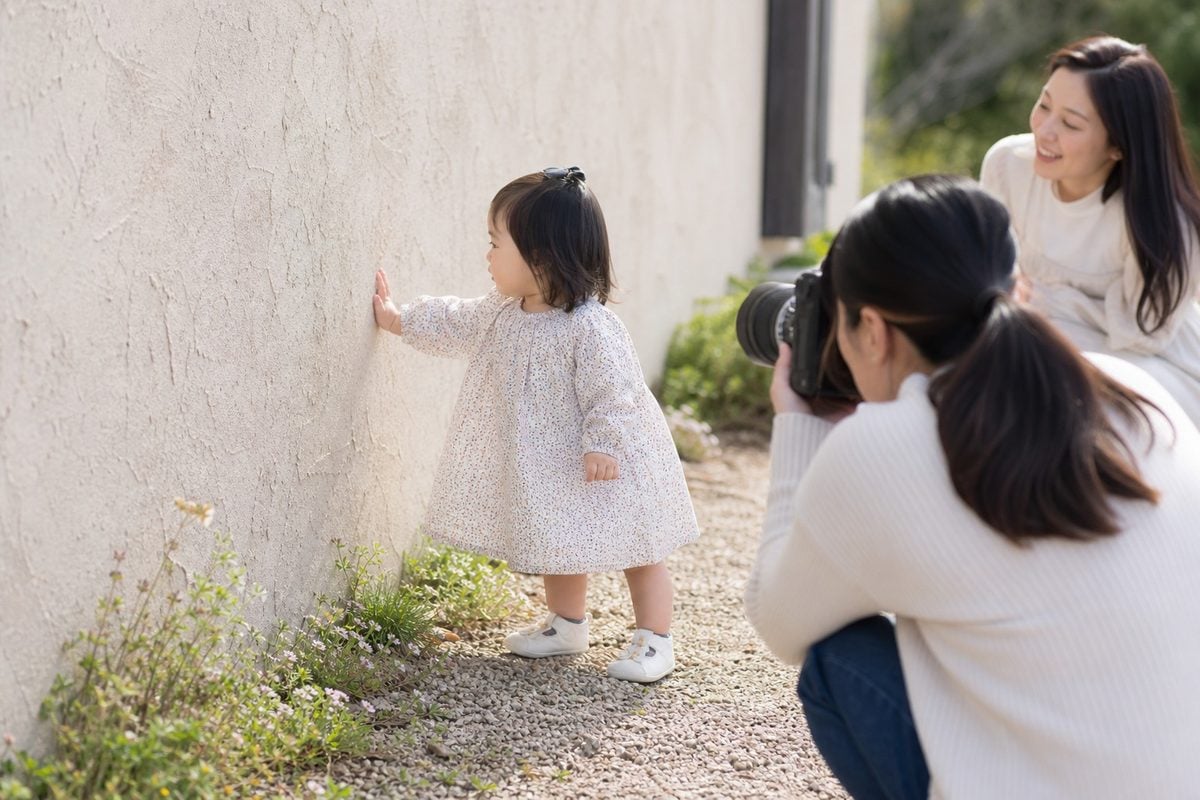
Say less than you think you need to. If the toddler does something unexpected but safe, photograph it before correcting it.
Use Familiar Objects Carefully
A favorite toy, snack, blanket, or book can help a toddler settle.
The problem starts when the object takes over the session. A toy that comforts the child is useful. A toy that blocks the face in every frame becomes a new problem.
Use familiar objects to:
- give hands something natural to do
- help the toddler stay in one spot briefly
- create a quiet reset
- start a small game
- make a shy toddler feel less exposed
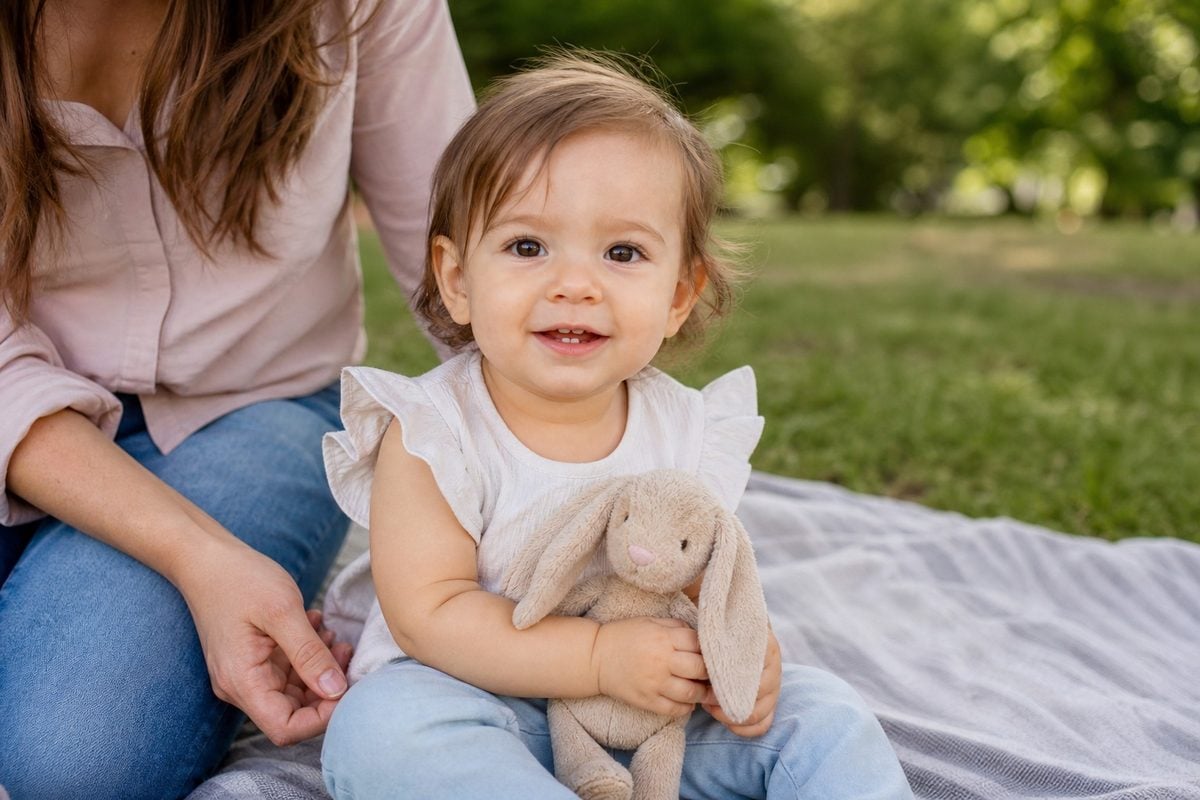
If parents bring a bright or distracting object, use it briefly, then trade it for a quieter activity once the toddler is more comfortable.
Stay Low and Close Enough
Toddler portraits often improve the moment the photographer lowers the camera.
Shooting from adult height can make toddlers look small in an unflattering way, especially outdoors. A lower angle brings the viewer into the child’s world and helps expressions feel more direct.
Try:
- kneeling near eye level
- sitting on the ground for seated poses
- using a longer lens for gentle separation
- moving closer for hands, feet, and face details
- stepping back only when the movement needs space
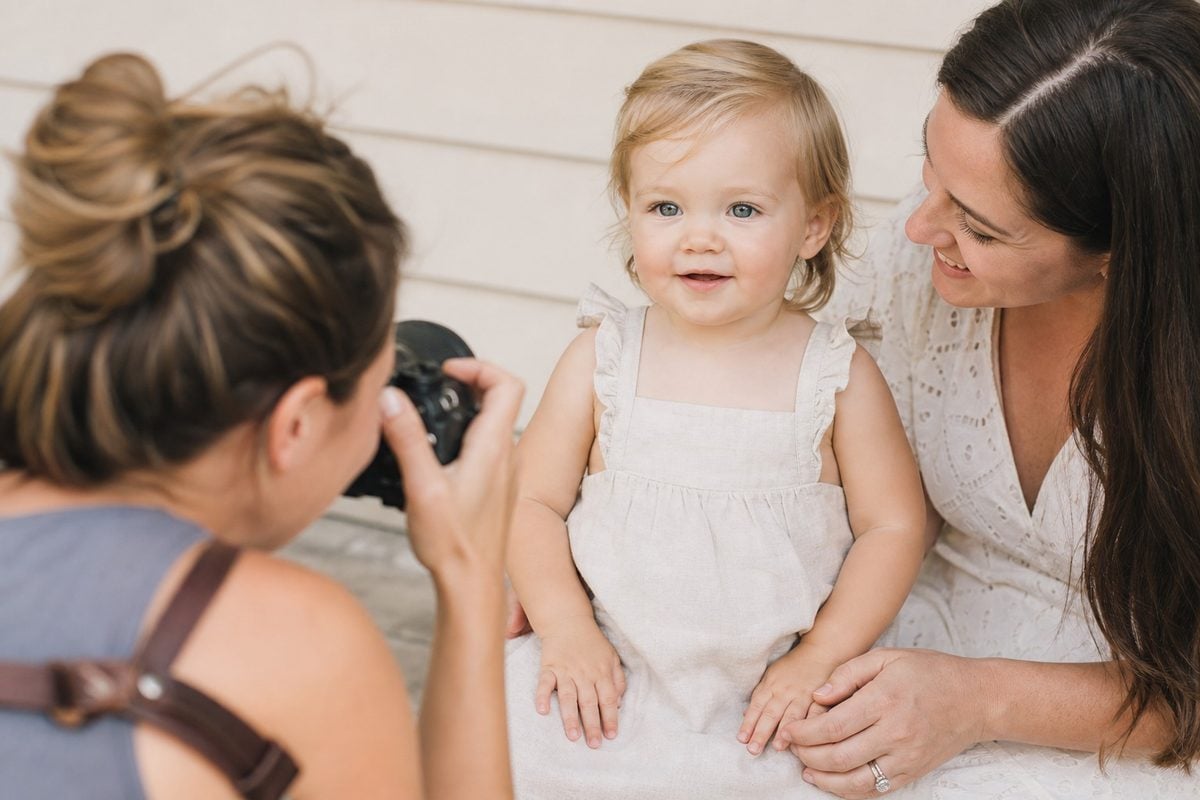
Stay aware of distortion. A wide lens too close to a toddler’s face can exaggerate features. Use a low angle with care, not as a gimmick.
Let Toddlers Move Safely
Most toddlers will not stay still for long, and that is fine.
The solution is not to remove movement. It is to give movement a safe place to happen. Choose a small area with soft light, a clean background, and no hazards. Then let the toddler walk, turn, sit, stand, and explore inside that zone.
Good toddler movement ideas:
- walking between parents
- running into a parent’s arms
- spinning slowly with help nearby
- picking up leaves or flowers
- climbing one low step with a parent close
- walking down a safe path
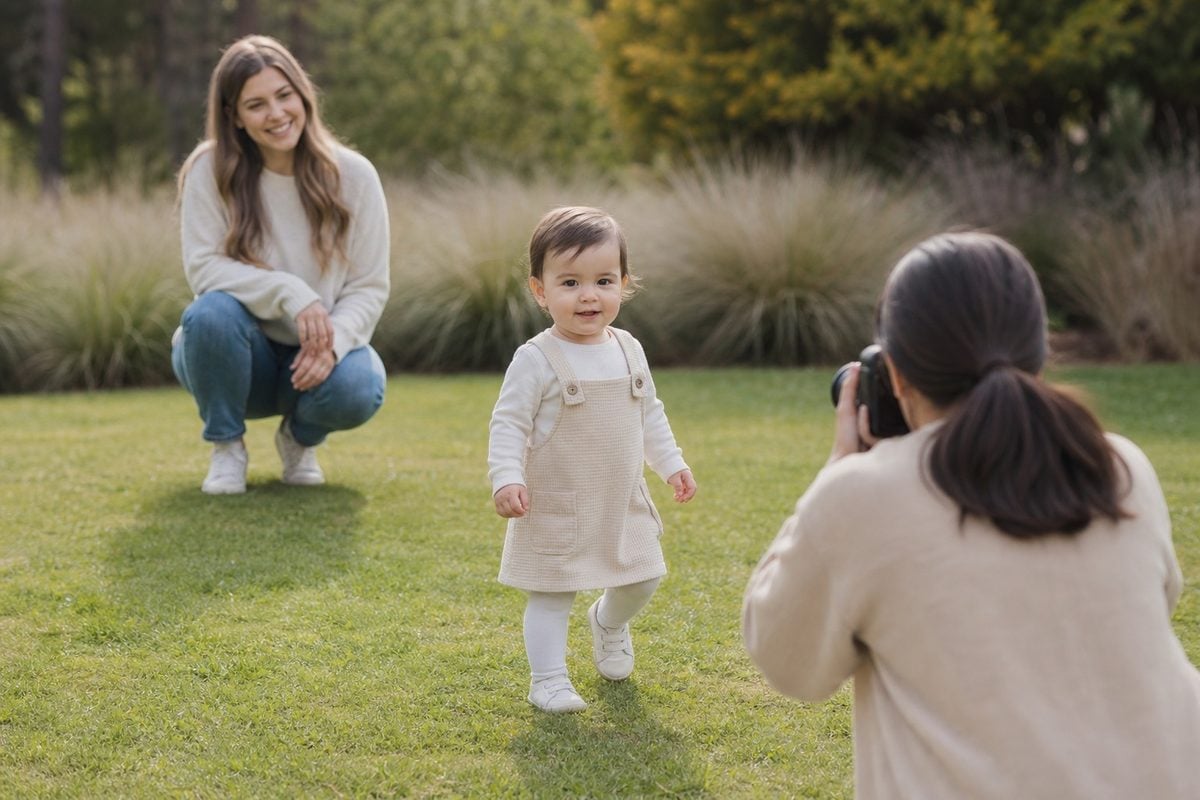
Avoid repeated jumps, fast running, or risky climbing. Toddlers do not always understand limits, and safety matters more than a dramatic frame.
Choose Light That Forgives Movement
Simple light is your friend with toddlers.
Open shade, porch shade, bright overcast light, or soft window light gives you more freedom to follow the child. Harsh sun creates squinting, dark eye sockets, blown highlights, and correction problems when the toddler will not pause for a second try.
Look for:
- even face light
- clear catchlights
- no patchy tree light
- no bright background pulling attention
- no heavy green cast from grass under the chin
- enough room for movement
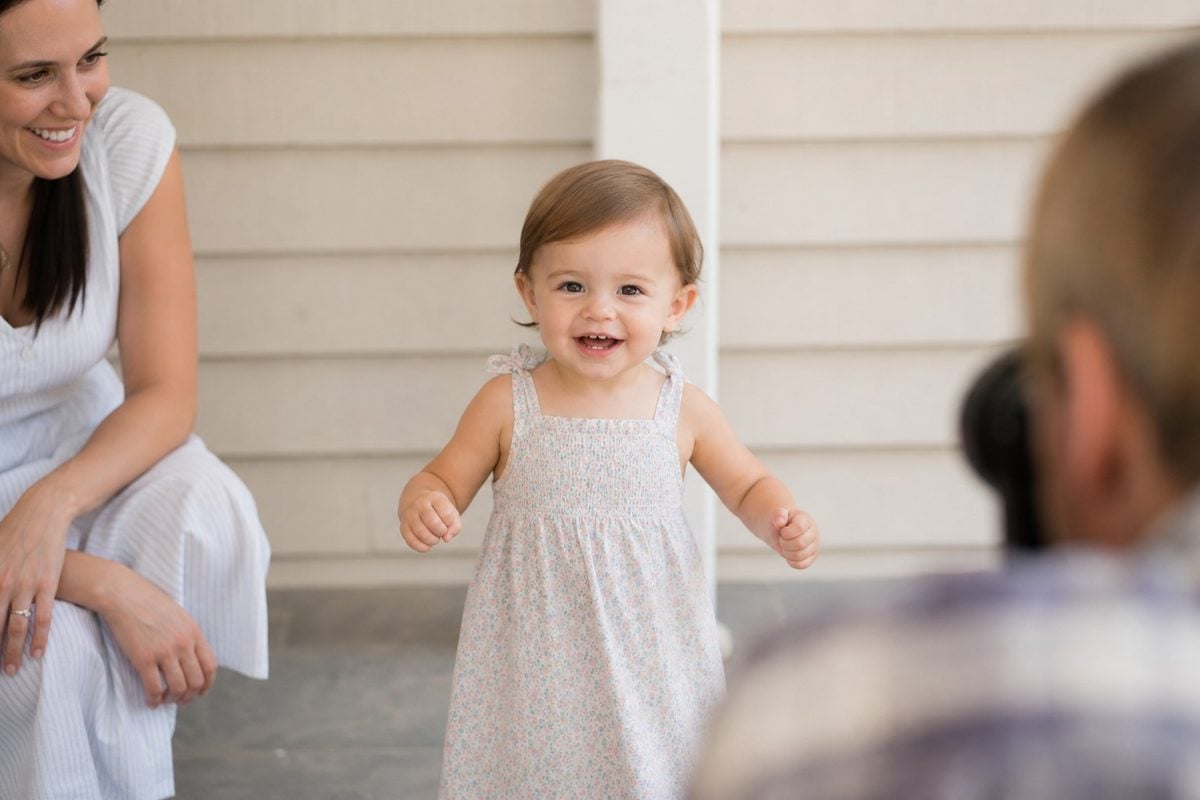
For more outdoor family lighting context, see Outdoor Family Photography: Practical Tips for Real Sessions, Real Light, and Real Kids.
Use Camera Settings for Sudden Motion
Toddlers move without warning.
They sit, stand, reach, turn, run, and fall into a parent’s lap in seconds. Your camera settings should be ready before the moment happens.
Practical settings:
- 1/500s or faster for walking
- 1/800s or faster for running or quick play
- continuous autofocus
- eye detection if it tracks reliably
- burst mode for short action peaks
- enough depth of field for small focus shifts
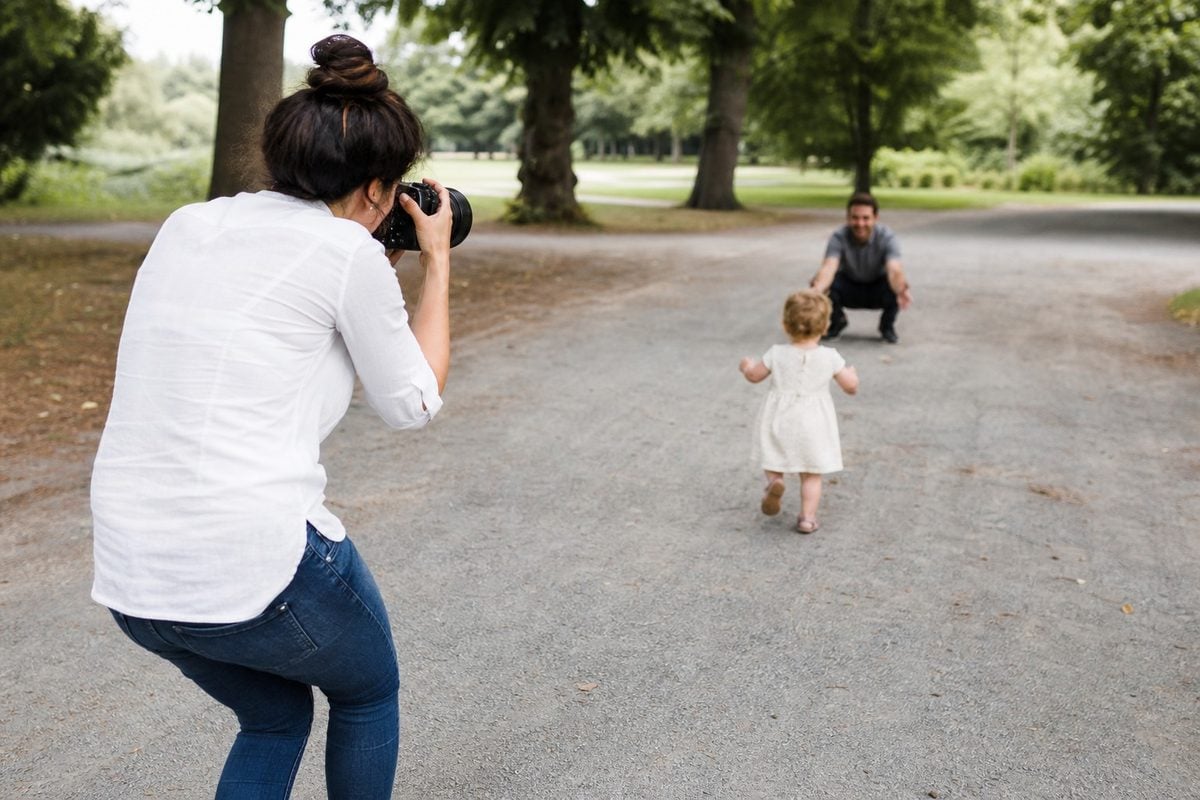
Use bursts in short, intentional moments. If you hold the shutter through everything, the culling process becomes much heavier than it needs to be.
Build a Toddler Gallery With Breathing Room
A toddler gallery should feel like a small story, not a pile of near-duplicates.
Mix the frames so parents see personality, connection, movement, and detail.
Aim for:
- clean solo portrait
- parent comfort frame
- walking or movement frame
- hands or toy detail
- quiet seated moment
- laugh or expressive candid
- wider environmental frame
- family or sibling connection
For pose-specific ideas that also work with older children, see Child Photography Poses That Look Natural.
Cull Before You Fall in Love With Every Almost
Toddler sessions create a lot of almost-perfect frames.
The expression is good, but the hand blocks the face. The movement is sweet, but focus missed. The parent connection is strong, but the toddler is mid-blink. The trick is not to keep every near miss.
Cull for:
- expression
- sharpness
- face visibility
- hand placement
- emotional connection
- variety
- whether the frame adds something new
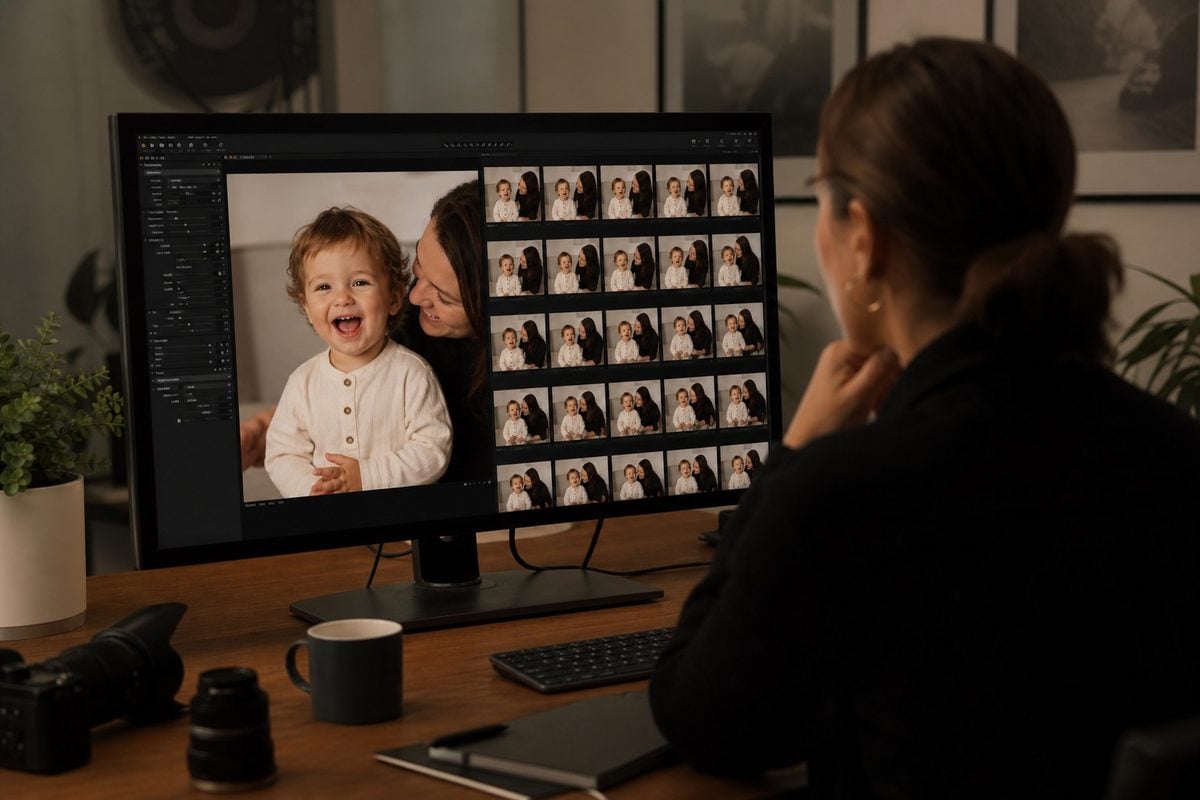
This is where Evoto fits into the workflow after the shoot. AI Culling can help reduce near-duplicates from quick toddler movement, while Photo Organizer keeps solo portraits, parent frames, details, and family moments easier to sort.


Powerful AI Photo Editor
Edit Toddler Photos Lightly
Toddler skin, eyes, and expressions should not look overprocessed.
Heavy retouching can make toddlers look older or unnatural. Strong presets can push skin too warm, too pink, or too green. A good toddler edit should feel clean, gentle, and believable.
Start with:
- exposure and white balance
- natural skin tone
- highlight recovery on cheeks and clothing
- small distraction cleanup
- color consistency across light changes
- very restrained skin finishing
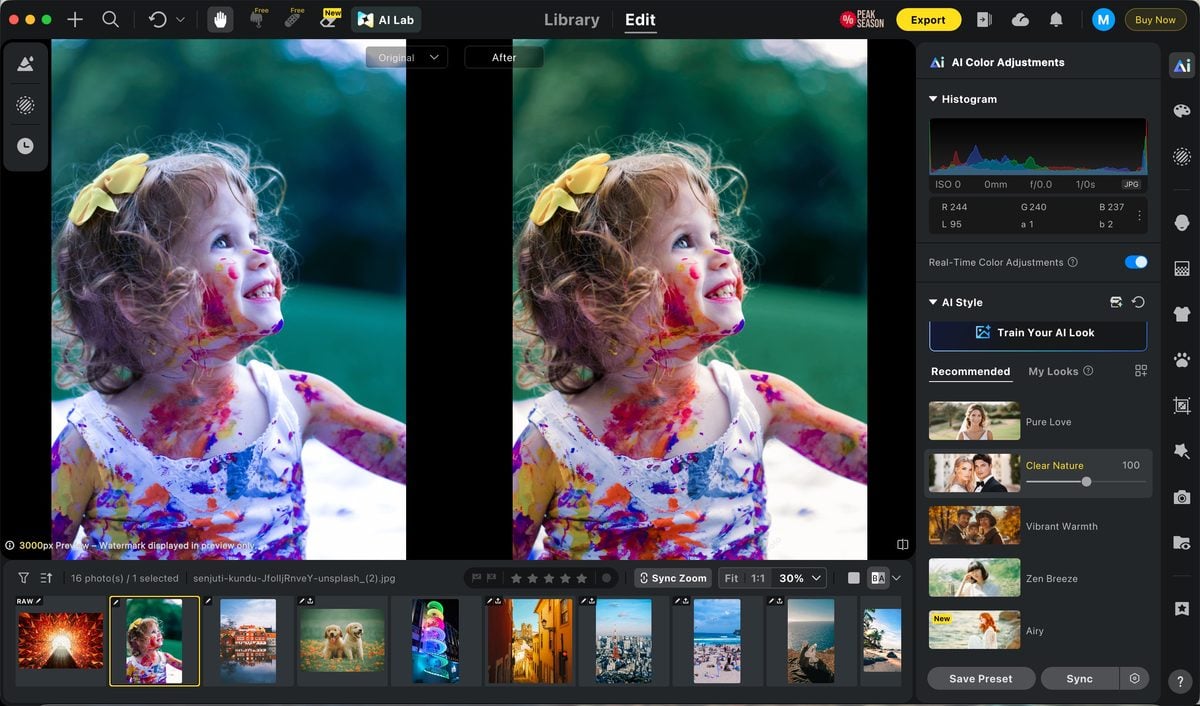
For toddler and family galleries, Portrait Retouching should stay subtle. Use it for temporary marks or small distractions, not to reshape the child’s face. If the session moves between porch shade, grass, indoor window light, and late afternoon outdoors, AI Color Match can help the selected set feel consistent.
Toddler Photography Checklist
Before the session:
- Is the time aligned with nap and meal schedules?
- Do parents know the session will move quickly?
- Is there a comfortable parent-start option?
- Is the location safe for walking and exploring?
- Are toys or snacks available for resets?
During the session:
- Start with comfort
- Capture the safe frame early
- Use one-step prompts
- Stay near toddler eye level
- Let movement happen safely
- Change activities before frustration builds
After the session:
- Cull near-duplicates first
- Keep emotional variety
- Protect natural skin tone
- Retouch lightly
- Match color across changing light
Final Thoughts
Toddler photography works best when the session respects the age.
Toddlers are not trying to ruin the shoot. They are reacting honestly to the room, the light, the adults, the timing, and their own energy. When the photographer builds around that reality, the session gets easier.
Keep the plan short. Start with comfort. Capture one safe frame early. Give tiny prompts. Let movement happen safely. Then edit with restraint so the final gallery still feels like the child parents know.
Try Evoto AI Photo Editor
Retouch photos with Evoto AI and make your photos best! Available on Windows, MacOS and iPadOS.