

The hardest part of child photography poses is that children can sense a fake pose immediately.
Ask a child to stand perfectly still, smile harder, lower one shoulder, tilt their chin, and hold it for too long, and the portrait usually falls apart. The face tightens. Hands get awkward. Parents start correcting from the side. The child stops looking like themselves.
Natural child portraits do not come from complicated posing. They come from simple structures that give kids somewhere to put their body, their hands, and their attention.
This guide is for photographers who want child photography poses that feel relaxed, believable, and useful across a full gallery.
Start With Structure, Not Stillness
Most kids do not struggle because a pose is too simple. They struggle because the instruction is too abstract.
“Stand naturally” means very little to a child. “Sit on this step and hold your bear in your lap” gives them a body position, a hand position, and a reason to stay there. That is the difference between forcing a pose and building one.
Useful structure can come from:
- a step
- a low wall
- a blanket
- a parent’s lap
- a doorway
- a chair
- a fence rail
- a favorite toy
- a path to walk along
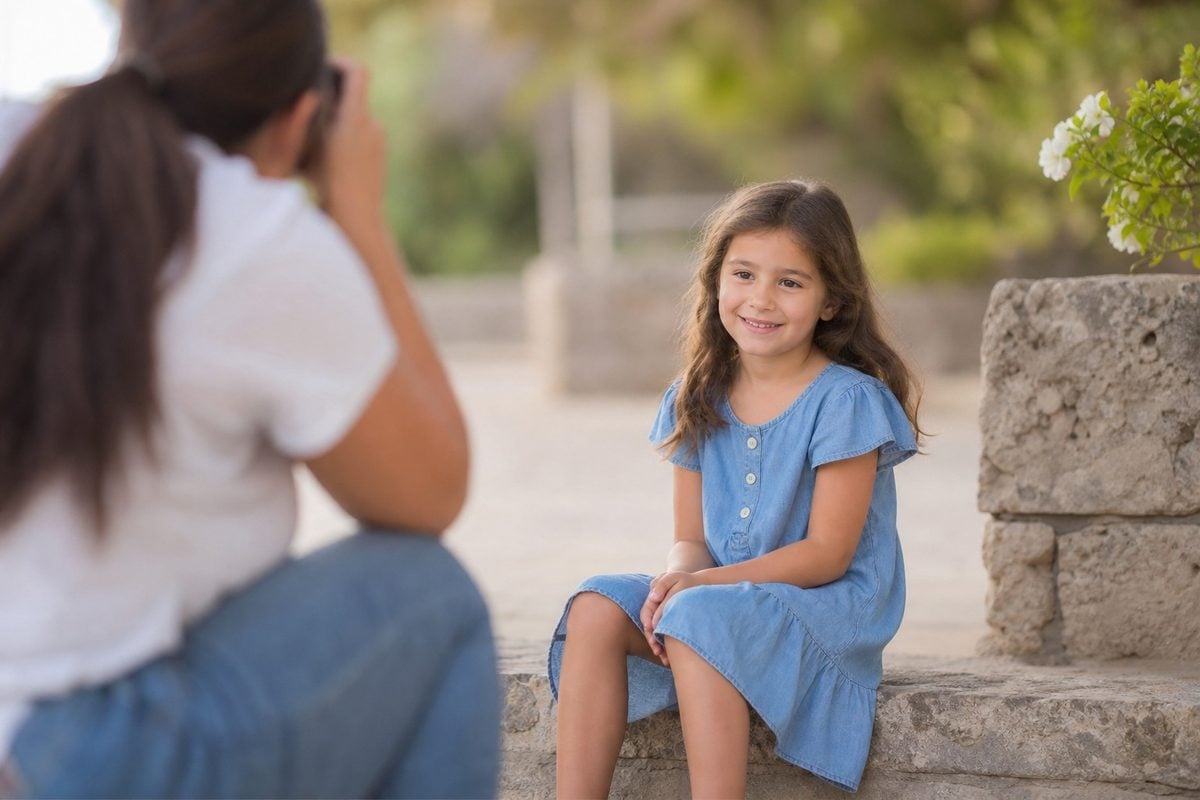
Structure should support the child, not trap them. If a pose needs constant correction, it is probably too complicated.
Use Sitting Poses for Younger Children
Sitting poses work well because they reduce how much a young child has to manage at once.
A toddler standing in place may walk away after two seconds. A toddler sitting on a step, blanket, or parent’s knee may give you just enough time to capture expression, hands, and eye contact before they move again.
Reliable sitting ideas:
- sitting on porch steps with knees relaxed
- sitting cross-legged on a neutral blanket
- sitting sideways on a low bench
- sitting in a parent’s lap
- sitting with a toy, book, flower, or snack
- sitting at the edge of a path with feet toward the camera
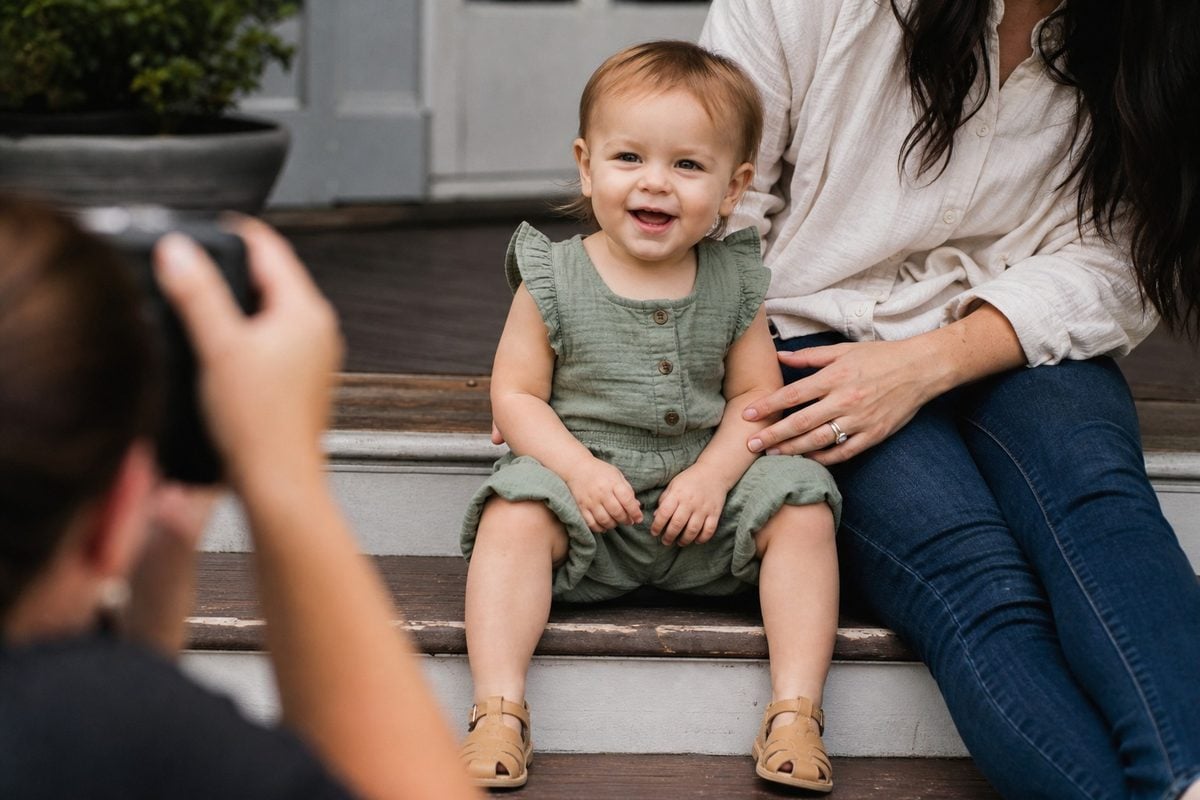
Avoid asking kids to fold perfectly or place every finger. Give them one natural hand task instead: hold the book, touch the blanket, hug the toy, or rest hands on knees.
Standing Poses Need Something to Do
Standing still is harder for children than it looks from behind the camera.
If a child is standing with no task, hands usually become the first problem. They pull at clothing, hide behind the back, make fists, or swing around until the body looks tense.
Give standing poses a small action:
- hold a parent’s hand
- lean lightly on a wall
- touch a fence rail
- hold a flower or small object
- put one hand in a pocket
- look over one shoulder
- walk toward a mark, then pause
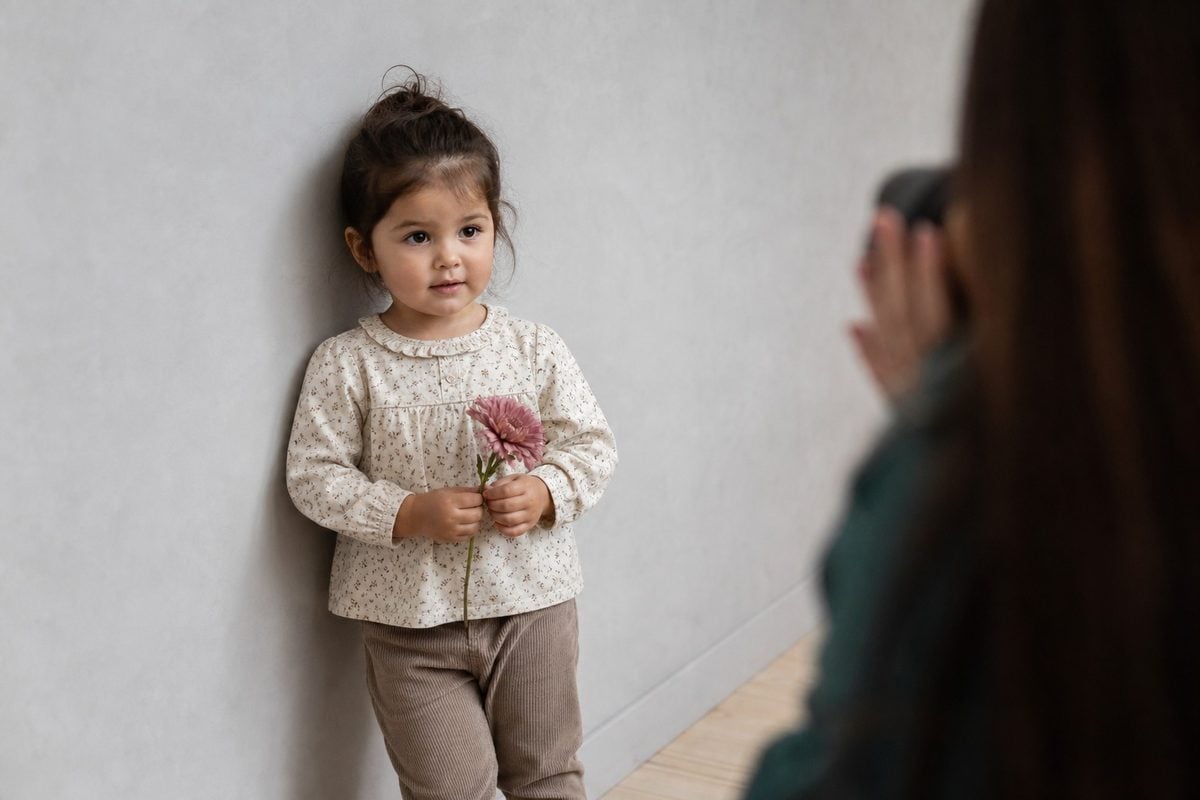
The goal is not to freeze the child. The goal is to give the pose enough shape that the child can stay comfortable for a few frames.
Use Movement to Loosen Stiff Kids
Movement is often the fastest way to loosen a stiff child portrait.
If a child starts looking overly posed, do not keep refining the same frame. Break the tension with a small action, then shoot the return moment. The best expression is often the second after the movement, not the movement itself.
Try prompts like:
- “Walk to me as slowly as you can.”
- “Spin once, then freeze.”
- “Run to Dad and stop right before the hug.”
- “Walk away, then look back.”
- “Jump on three, then show me your proud face.”
- “Hold the flower and take three tiny steps.”
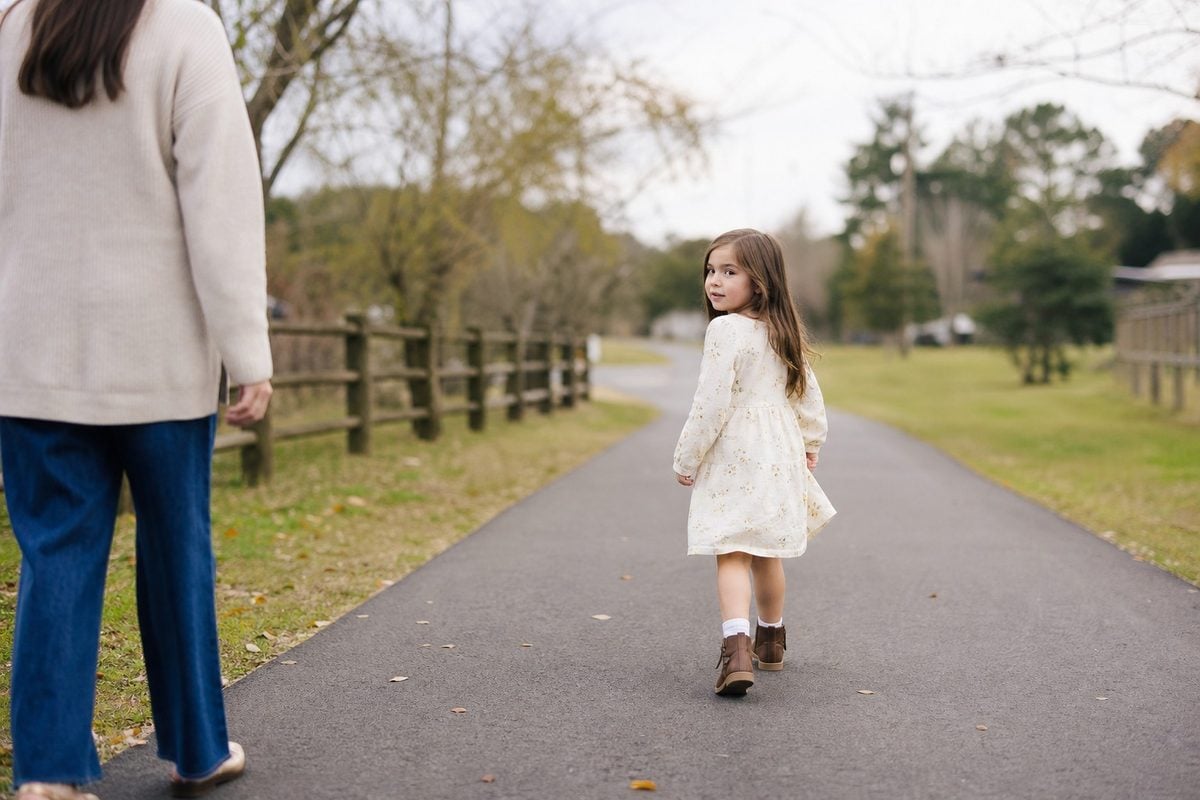
Bring Parents Into the Pose When Kids Need Comfort
Some children will not relax alone, especially at the start of a session.
Instead of pushing them into solo portraits too soon, use parents as part of the pose. Parent interaction gives the child somewhere safe to look, touch, hide, or reset. It also creates images parents often value more than a perfect solo portrait.
Parent-child pose ideas:
- child sitting in a parent’s lap
- parent holding both hands while the child stands
- forehead-to-forehead quiet frame
- parent lifting a younger child briefly
- child hiding behind a parent’s shoulder
- parent brushing hair away from the face
- walking hand-in-hand
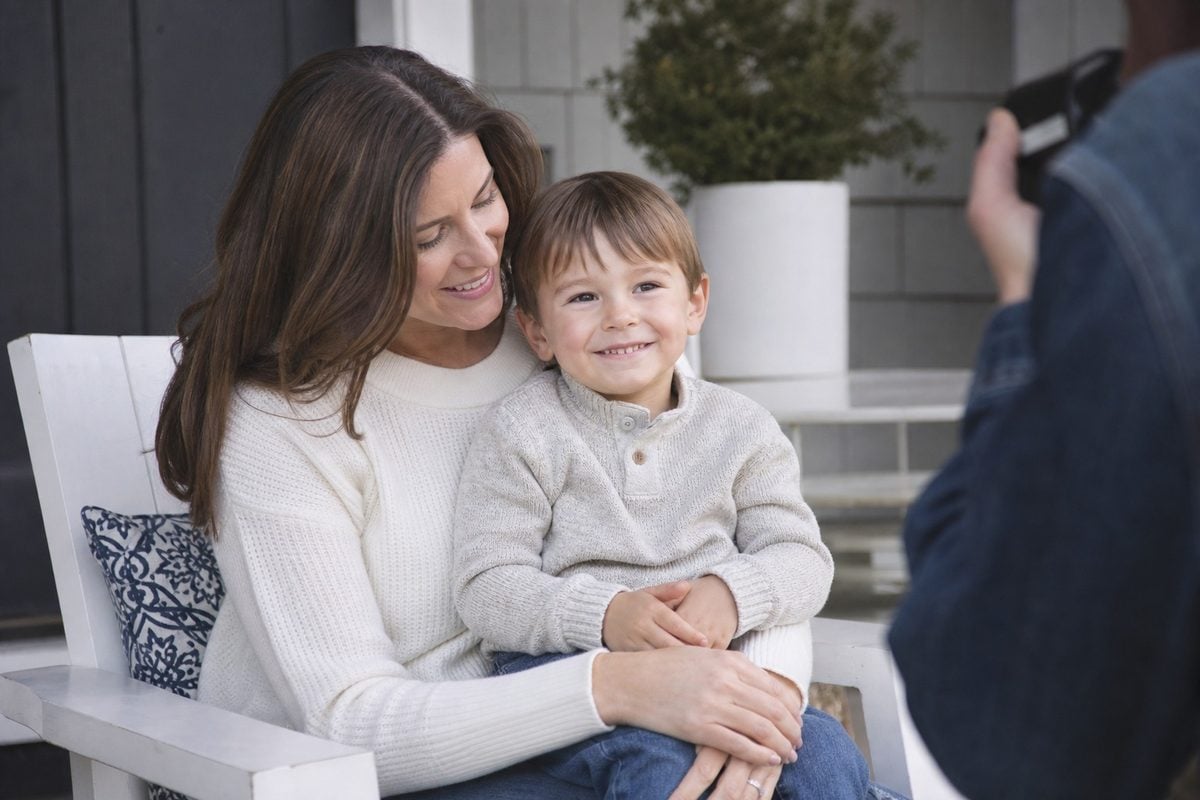
Ask parents to keep the interaction simple. Too much tickling, talking, or correcting can overwhelm the child. A quiet hug often photographs better than a loud attempt to force laughter.
Sibling Poses Should Prioritize Contact
Sibling photos rarely work because everyone is perfectly aligned.
They work because there is contact, rhythm, and a believable relationship. Younger siblings wiggle. Older siblings may feel awkward. One child may cooperate while the other refuses. Strong sibling posing gives them something shared to do.
Try:
- sit shoulder to shoulder
- walk hand-in-hand
- big sibling gives little sibling a quick squeeze
- whisper a silly secret
- hold the same book or toy
- sit back-to-back, then turn around
- race toward a parent together
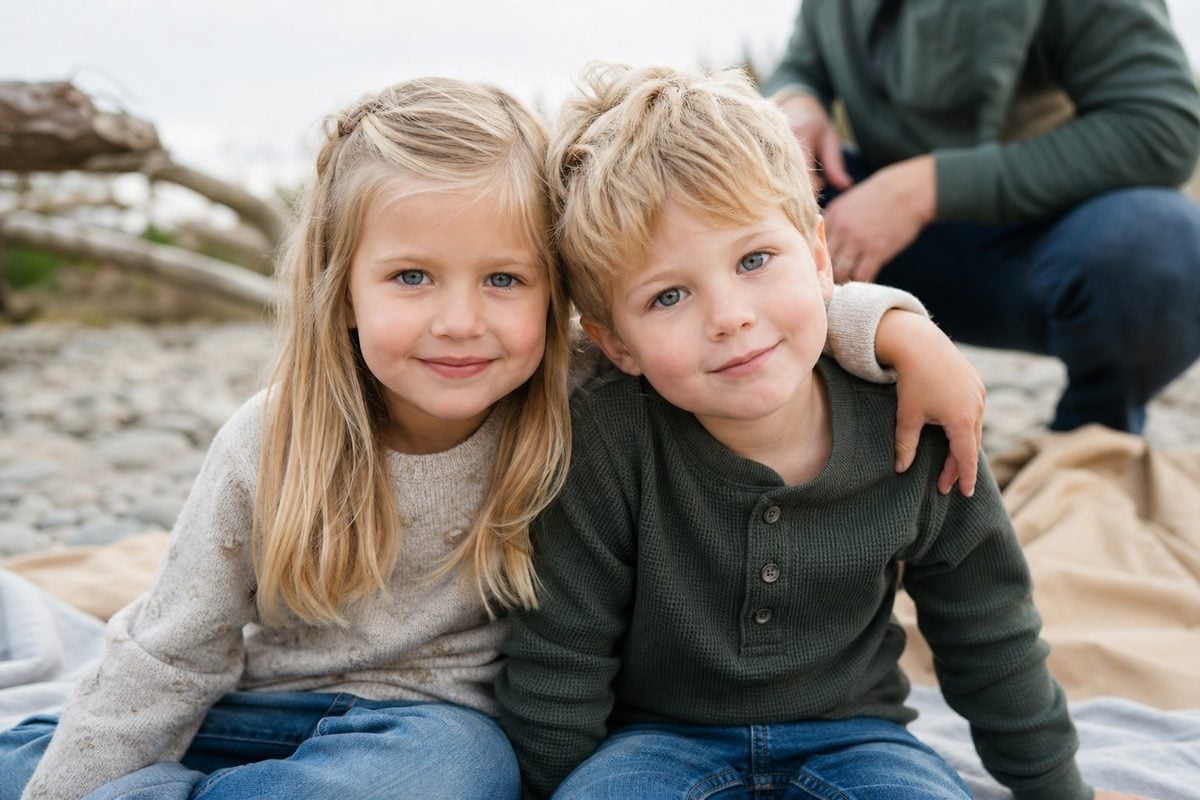
Do not overcorrect every hand and smile. If the connection feels real, small imperfections usually help the image.
Quiet Poses Matter Too
Not every child portrait needs running, laughing, or dramatic expression.
Quiet poses can be powerful, especially for shy children, older kids, or sessions where parents want something timeless. The key is to make stillness feel like rest, not obedience.
Good quiet prompts:
- “Hold your toy and look out toward the trees.”
- “Sit close and take a slow breath.”
- “Look at your hands for a second.”
- “Lean into Mom and close your eyes.”
- “Stand by the window and listen for birds.”
- “Look past my shoulder, not at the camera.”
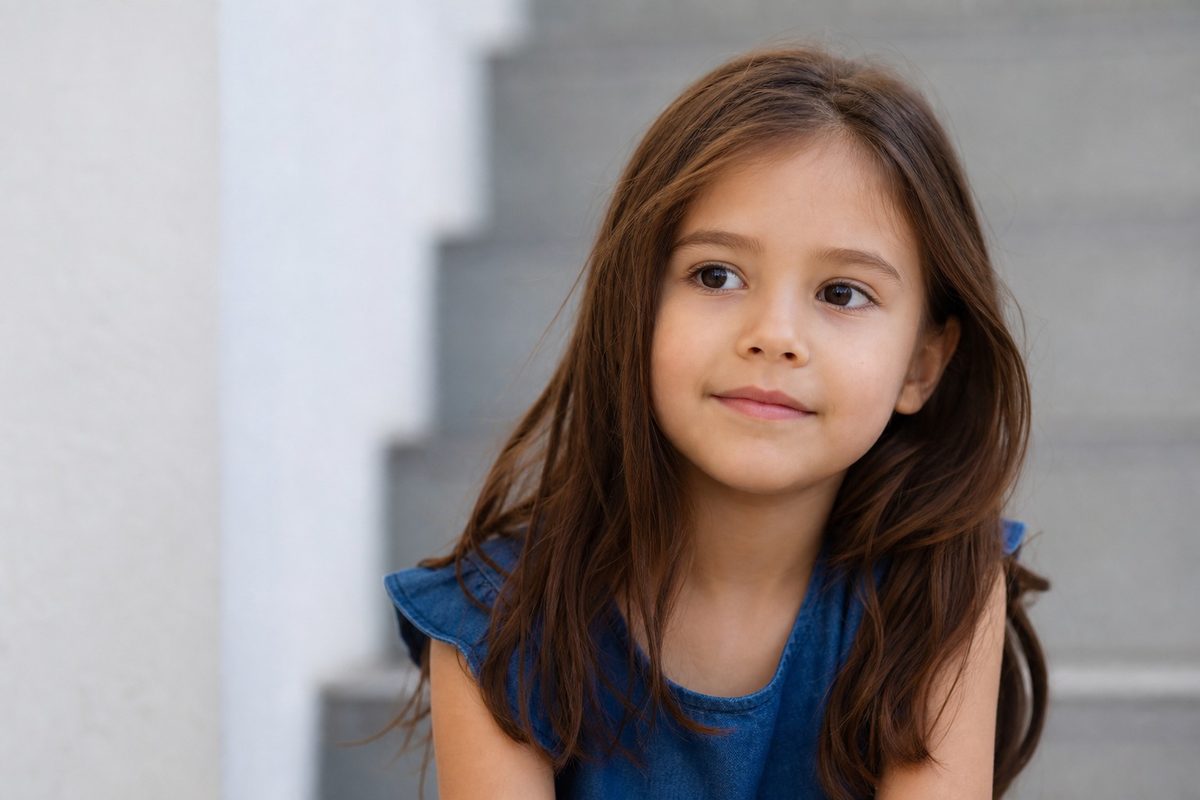
Quiet frames also give the gallery emotional range. If every image is laughter and motion, the set can feel noisy. A calm portrait gives the story somewhere to land.
Keep Hands Busy but Believable
Hands often decide whether a child pose looks natural or uncomfortable.
Children often do not know what to do with their hands on command. Instead of asking them to “relax your hands,” give them something specific and age-appropriate.
Natural hand tasks:
- hold a parent’s finger
- touch a sleeve or dress hem
- hold a book, flower, toy, or snack
- rest hands on knees
- tuck thumbs into pockets
- hold a sibling’s hand
- touch the edge of a blanket
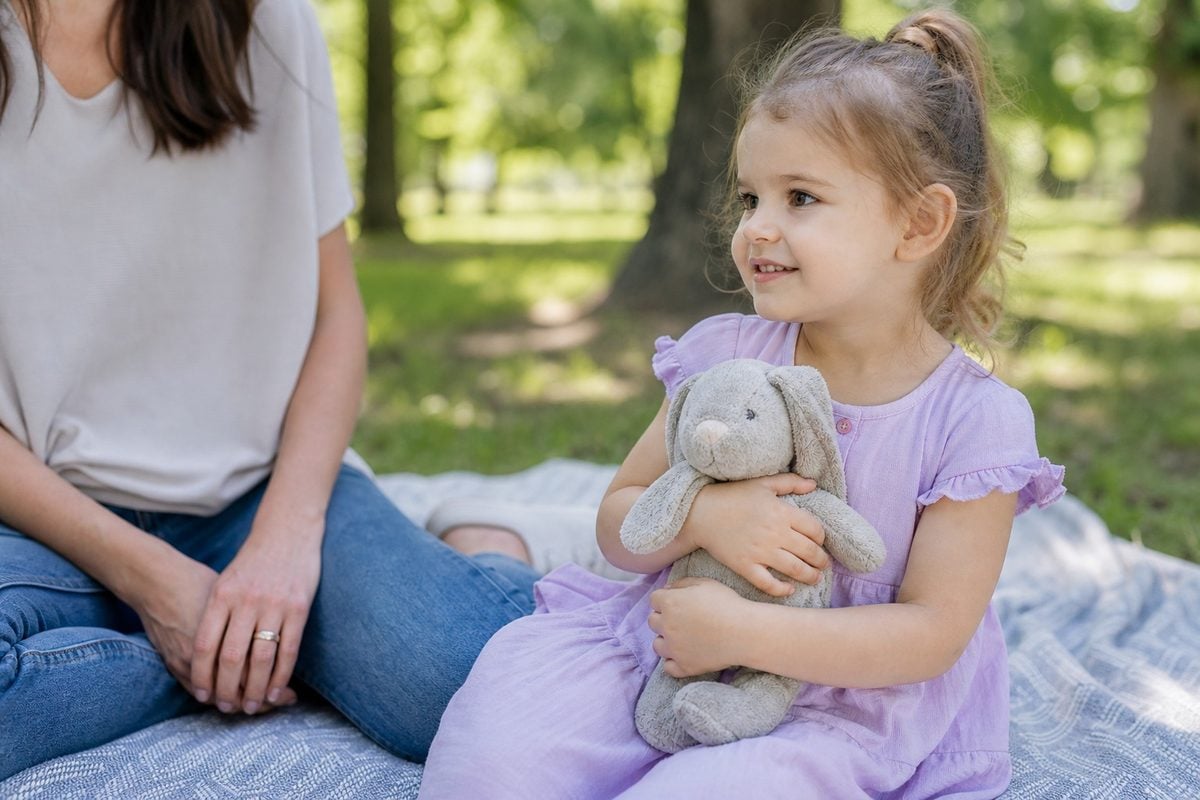
Avoid props that feel random. A toy or book works if it belongs to the child or supports the session story. A prop that exists only to fill the hands usually looks forced.
Build Poses Into a Full Gallery
One good child portrait is not the same as a strong client gallery.
The gallery needs variety: close, medium, wide, quiet, playful, solo, parent-connected, and detail frames. That variety keeps the final delivery from feeling like one pose repeated in different crops.
A simple sequence:
- seated solo portrait
- standing pose with a hand task
- walking or spinning movement
- parent-child connection
- sibling frame
- quiet close-up
- hands or detail shot
- wider environmental frame
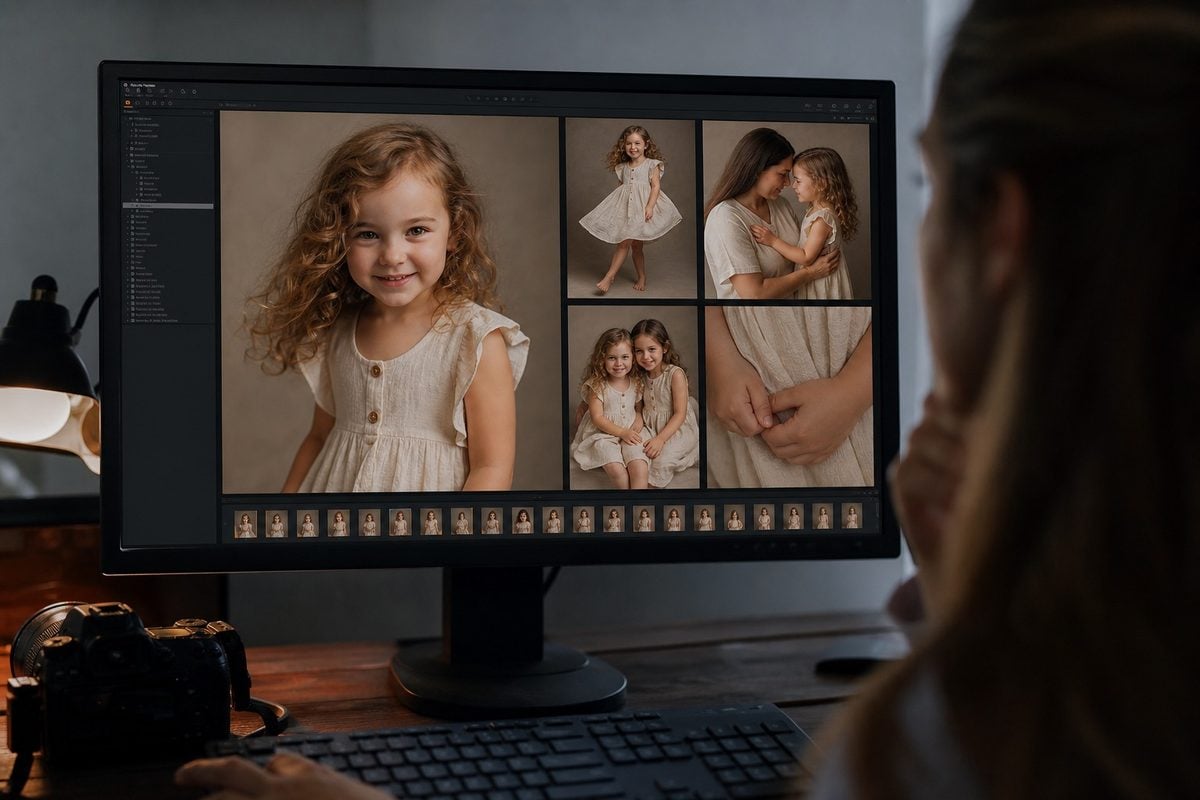
For broader family coverage, see Summer Family Photo Ideas: Practical Session Tips for Heat, Tricky Light & Wiggly Kids.
Cull for Expression, Not Just Sharpness
Child photography creates plenty of technically acceptable images that do not feel alive.
Sharpness matters, but expression matters more. A frame can be perfectly focused and still feel empty. Another frame may have a small hand imperfection but carry the real personality of the child.
Cull by asking:
- Does the expression feel genuine?
- Are the eyes alive or just open?
- Does the body language match the child?
- Are the hands distracting?
- Does this frame add variety?
- Would the parent recognize this as their child?
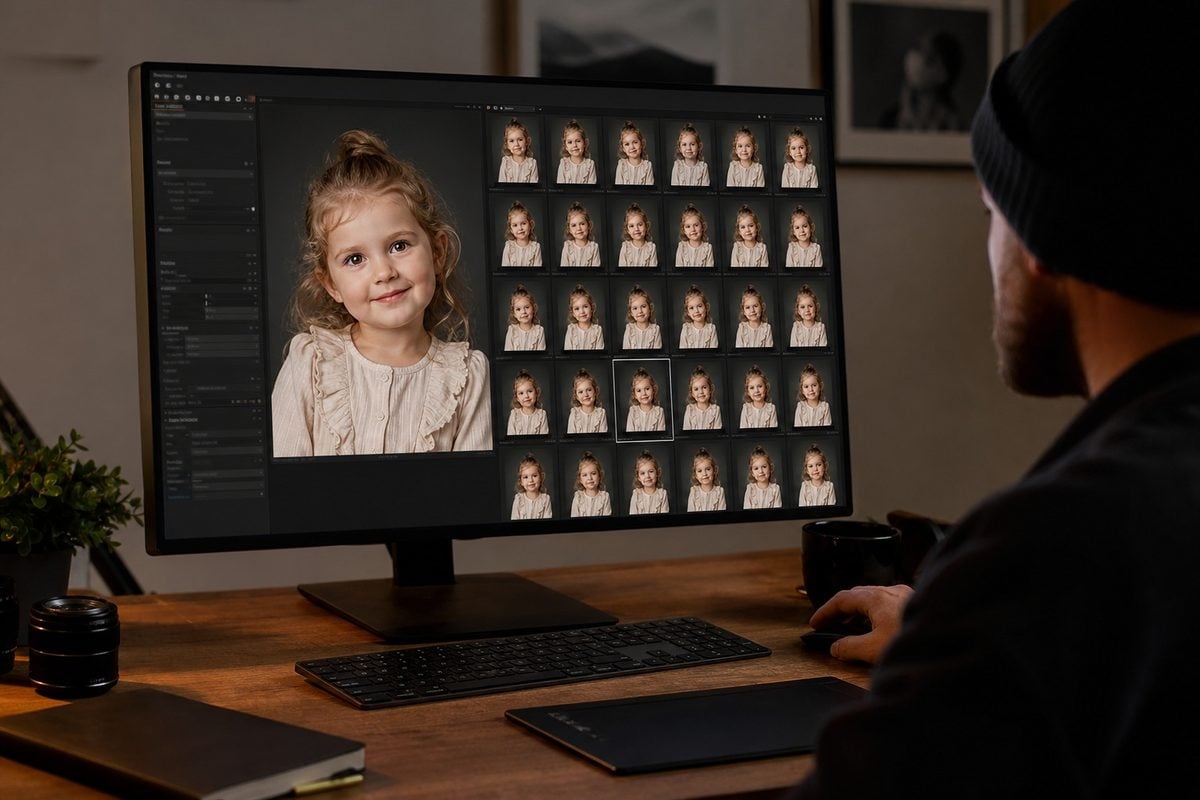
This is where Evoto can keep the post-session workflow manageable. AI Culling can reduce repeated pose variations and near-duplicates, while Photo Organizer helps keep solo portraits, sibling frames, parent moments, and details easy to review.


Powerful AI Photo Editor
Edit Child Portraits Lightly
Natural child photography poses can lose their charm if the edit becomes too polished.
Children should not look like heavily retouched adults. Keep skin texture believable, protect natural color, and avoid making eyes unnaturally bright. Minor distractions, temporary marks, and small color shifts can be cleaned, but the child’s face should still feel real.
A restrained editing order:
- correct exposure and white balance
- match skin tone across the set
- clean temporary distractions near the face
- soften only what truly pulls attention
- avoid heavy skin smoothing
- keep color consistent across different light
For final delivery, Portrait Retouching should be used gently for children’s portraits. AI Color Match can help keep a gallery consistent when the session moves between porch shade, backyard light, open fields, and indoor window spill.

Child Photography Posing Checklist
Before the session:
- Do you know the child’s age and temperament?
- Is there a comfortable seated option?
- Can parents join early if needed?
- Is the light simple enough for short pose windows?
- Do you have movement prompts ready?
During the session:
- Give one clear task at a time
- Keep hands occupied naturally
- Use sitting poses for younger children
- Add movement when expressions get stiff
- Bring parents in for comfort
- Prioritize connection over perfect symmetry
Before delivery:
- Does the gallery include variety?
- Are expressions genuine?
- Do children still look like themselves?
- Is retouching restrained?
- Are skin tones consistent across the set?
Final Thoughts
Natural child photography poses are not about making kids behave perfectly.
They are about giving kids simple shapes, clear tasks, and enough freedom to stay themselves. Sitting poses, hand tasks, parent contact, sibling connection, quiet frames, and small movement prompts all give the photographer control without making the session feel rigid.
When the pose supports the child instead of overpowering them, the final portraits feel relaxed, specific, and worth keeping.
Try Evoto AI Photo Editor
Retouch photos with Evoto AI and make your photos best! Available on Windows, MacOS and iPadOS.