

Symmetry photography is one of the easiest composition ideas to recognize because it feels clean, ordered, and visually satisfying right away. But symmetrical photos only work when the frame is actually precise. A small tilt, an off-center axis, or one distracting object can break the effect fast.
This guide explains what symmetry photography is, how it differs from general visual balance, which types of symmetry show up most often in real photos, why symmetrical frames often fail, and how to shoot and edit them more cleanly.
What Is Symmetry Photography?
Symmetry photography uses a frame where one side visually mirrors or balances the other around a central axis. That axis can run vertically, horizontally, or sometimes around a repeating shape.
In simple terms, symmetry in photography works because the viewer can read the structure immediately. The image feels organized, intentional, and easy to understand.
That does not mean every symmetrical photo has to be mathematically perfect. But the stronger the symmetry is meant to feel, the more exact the framing usually needs to be.

Symmetry vs Balance in Photography
Balance and symmetry are related, but they are not the same thing.
Balance in photography means the visual weight of the frame feels stable. That can happen in many ways. One large subject on one side might balance several smaller elements on the other, even if the frame is not symmetrical at all.
Symmetry is a more specific kind of balance. It usually means both sides of the frame echo each other more directly around a visible or implied center line.
This matters because beginners often confuse any balanced photo with a symmetrical one. A symmetrical composition feels stronger when the scene itself supports a central structure, a reflection, or a repeated pattern that really benefits from precision.
Common Types of Symmetry in Photography
Reflective symmetry
Reflective symmetry happens when one half of the image mirrors the other. This is common in reflections, still water, glass, and some architectural scenes.
It is often the easiest type to recognize because the visual echo is clear right away.

Rotational symmetry
Rotational symmetry appears when the structure of the image feels balanced around a center point. You see this more often in staircases, domes, circular patterns, and some detail shots.
It is less common in everyday beginner photography, but very effective when the subject already has that shape built in.
Pattern and repetition symmetry
This type comes from repeated shapes, windows, columns, seats, tiles, trees, or other elements that create order across the frame. The image may not look like a perfect mirror, but the repetition still creates a strong symmetrical feeling.
This works well because repetition makes even simple subjects look more deliberate.
A quick note on dynamic symmetry
Dynamic symmetry is a more advanced idea about proportional structure and visual flow. It can be useful later, but it is not the first thing most beginners need. For practical shooting, centering, alignment, repetition, and clean framing matter much more.
When Symmetry Works Best in Photos
Architecture
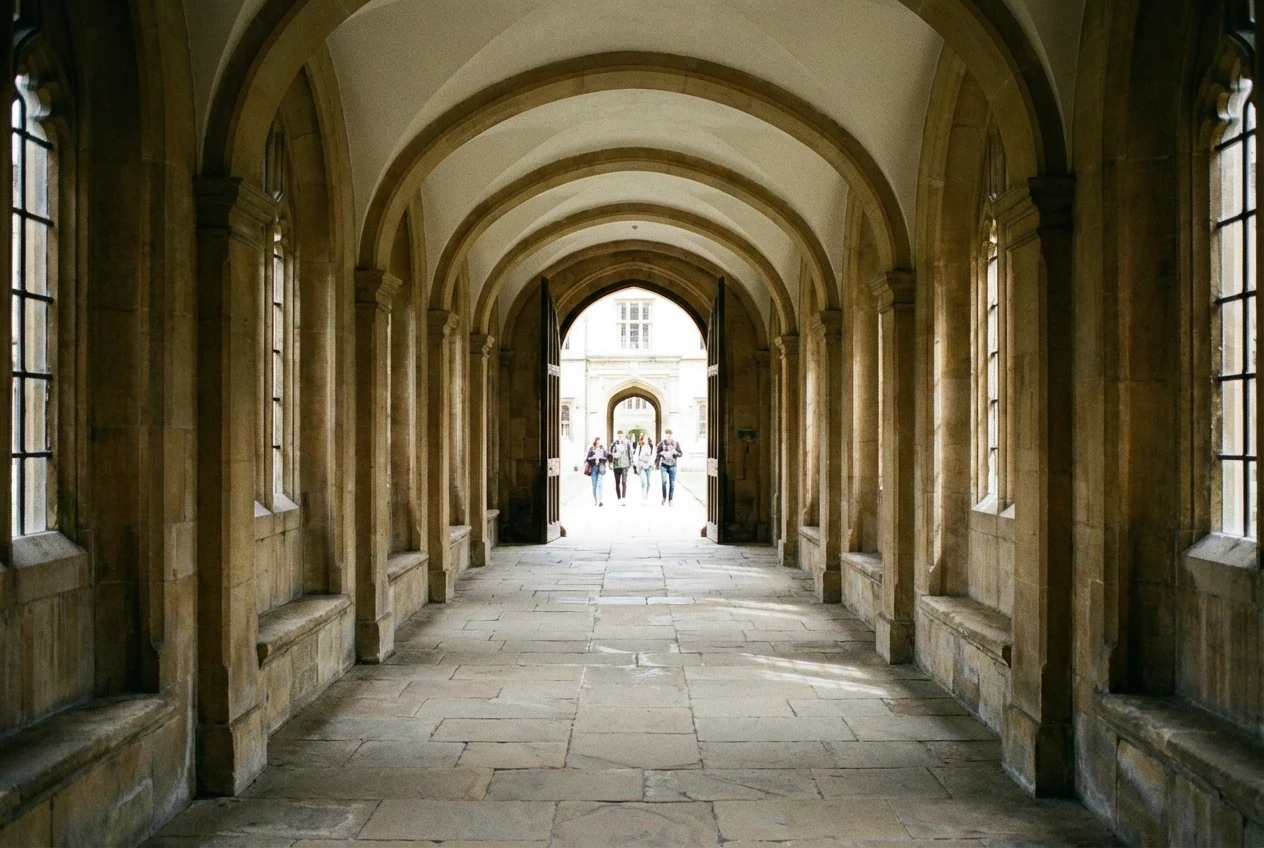
Architecture is one of the easiest places to find symmetrical photography. Doors, windows, facades, staircases, and hallways often already contain strong axes and repeated shapes.
That makes architecture a good training ground because the subject already gives you structure to work with. If you are framing facades or corridors with a wide-angle lens, edge stretch and perspective control become even more important.
Reflections
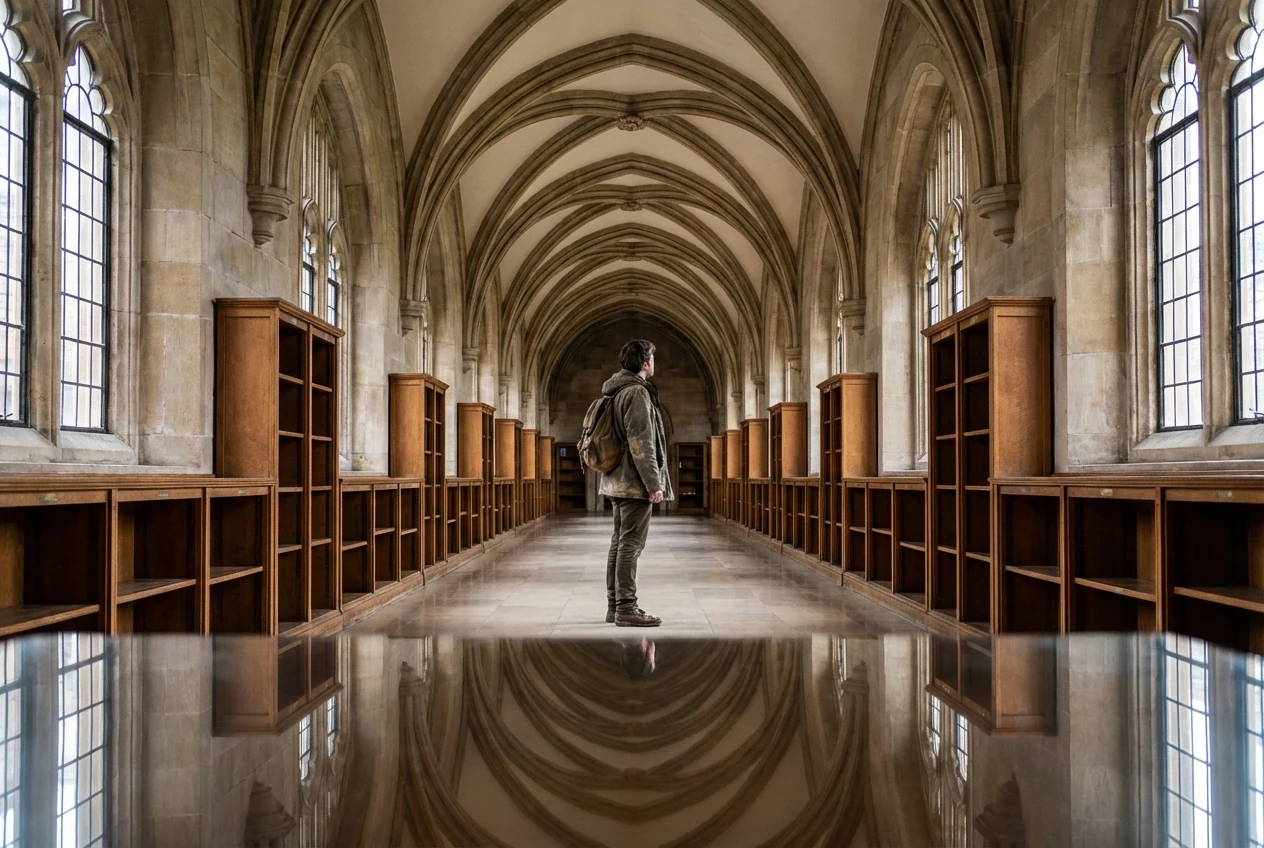
Reflections are a natural fit for symmetry photography because they create an obvious mirrored relationship. Water, puddles, glass, and polished surfaces can all produce strong reflective symmetry.
The main challenge is keeping the horizon and alignment clean enough that the reflection still reads as intentional. If the water is moving or the light is low, a stable shutter speed still matters because softness can break the mirrored effect just as quickly as bad framing.
Streets, corridors, and tunnels
These scenes work well because they often contain strong leading lines and a natural center. Roads, passageways, train platforms, and tunnels all make it easier to build a symmetrical composition with depth.
If the frame is centered well, the image can feel very controlled and immersive at the same time.
Patterns, details, and nature
Symmetry also works in smaller details. Leaves, flowers, textures, repeating branches, rows of seats, and repeating design elements can all produce a symmetrical feel.
This is useful when the full scene is messy but one part of it has clean repetition.
Why Symmetrical Photos Often Fail
One common problem is that the center axis is slightly off. Even a small shift can make a photo feel almost symmetrical instead of clearly symmetrical, which usually feels weaker than either a precise composition or a deliberately off-center one.
Another frequent problem is a crooked horizon or tilted camera. In reflections, architecture, and corridor shots, a slight tilt is often enough to break the effect.
Clutter is another big issue. A trash can, sign, bright object, or stray person on one side of the frame can break repetition immediately. Symmetry is fragile that way. Small distractions matter more because the composition depends on order.
Some symmetrical photos also fail because the frame feels too empty or too stiff. This usually happens when the composition is technically centered but there is not enough visual interest to hold attention.
Finally, there are scenes where the symmetry is clean but there is no deliberate subject or break point. In those cases, the image can feel correct but forgettable. Symmetry is strong, but it still needs intention.

How to Make Symmetry Photography More Interesting
Center precisely when pure symmetry is the goal
If the whole point of the image is symmetry, commit to it. Get centered carefully and check the frame before you shoot. Near-symmetry often feels like a mistake unless the slight imbalance is clearly intentional.
Add a small break in the symmetry on purpose
A small break can make a symmetrical photo much more interesting. One person in the middle of a corridor, one figure in a reflected scene, or one object interrupting a pattern can give the viewer a clear point of attention.
This works because the symmetry creates order, and the break gives the eye a reason to stay.
Watch edges and corners carefully
Edges matter a lot in symmetrical photography. A small object entering one side of the frame or an awkward crop on one edge can break the balance faster than beginners expect.
A quick corner check often improves the shot more than changing lenses or settings.
Use crop and camera height or angle with intention
Sometimes the best symmetrical composition is not found by moving left or right. It comes from changing height, lowering the camera, stepping forward, or tightening the crop.
That is especially true in corridors, architecture, and reflections where a small change in angle can either strengthen or ruin the alignment.
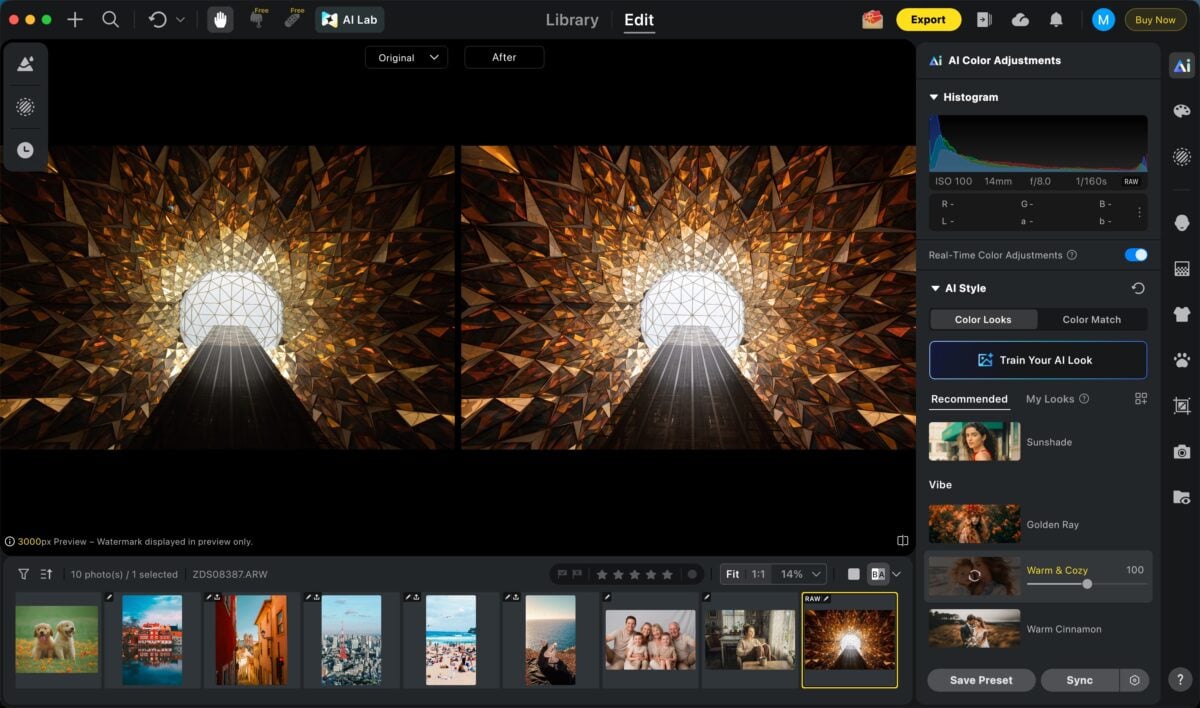
How to Edit Symmetry Photos in Evoto


Powerful AI Photo Editor
Straighten the frame before you judge the symmetry
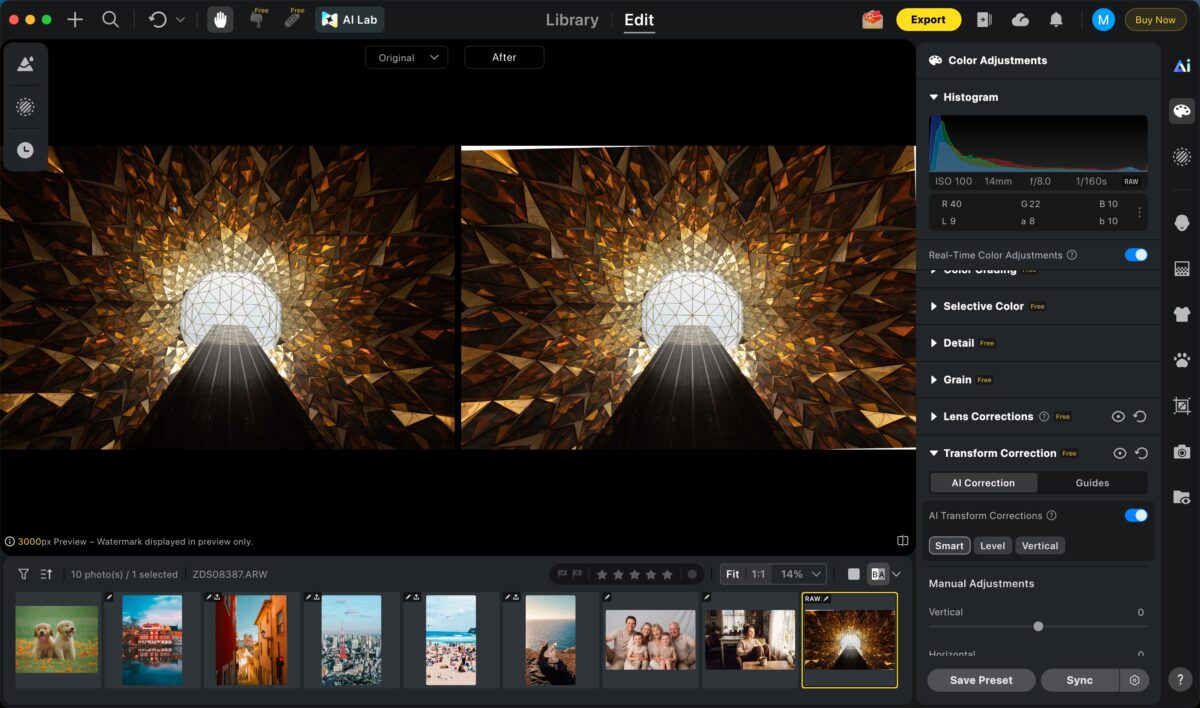
Start by checking whether the frame is level. In symmetry photography, even a slight tilt can make the composition feel wrong before anything else does.
That is why straightening comes first. If the horizon, wall lines, or center axis are not level, it is hard to judge the rest of the image clearly. In Evoto, Photo Straightener is the most natural first cleanup step.
Center and crop the composition more precisely
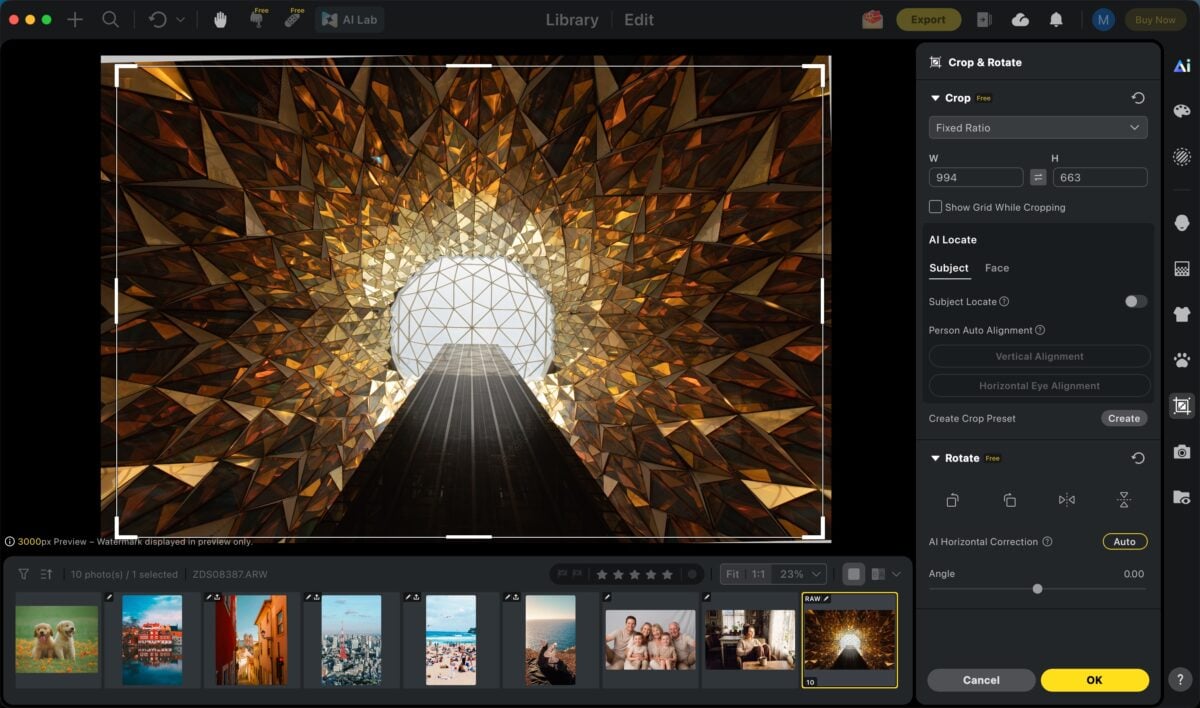
Once the frame is straight, refine the centering and crop. This is where symmetrical photos often improve the most, because a small crop change can make the left and right sides feel much more intentional.
The goal here is not just to make the frame tighter. It is to make the structure read cleanly. For architecture or corridor frames, AI Perspective Correction and AI Crop Image make the most sense after the frame is already level.
Clean small distractions that break repetition
After the alignment is right, look for small elements that break the symmetry. These might be bright spots, small edge distractions, or minor interruptions in an otherwise clean repeated pattern.
This cleanup step matters because symmetrical compositions depend on visual order. A small distraction can matter more here than it would in a looser frame.
Polish color only after the structure feels right
Color comes last. If the structure is not working yet, color polish will not fix the real problem.
Once the frame is straight, centered, and cleaned up, light color adjustment can help unify the image. If the photo is part of a set, AI Color Match can help the final group feel more consistent, but only after the composition itself is already correct.
Final Thoughts
Symmetry photography works because it gives the viewer a frame that feels stable, clear, and intentional. But that strength depends on precision. Small errors stand out faster in symmetrical compositions than they do in looser ones.
If you learn to see the center axis, keep the frame level, control distractions, and decide when to keep the symmetry pure or break it on purpose, your symmetrical photos will feel much stronger.
On the editing side, the cleanest workflow is simple: straighten first, center and crop second, clean small distractions third, and leave color polish for the end.
Try Evoto AI Photo Editor
Retouch photos with Evoto AI and make your photos best! Available on Windows, MacOS and iPadOS.