
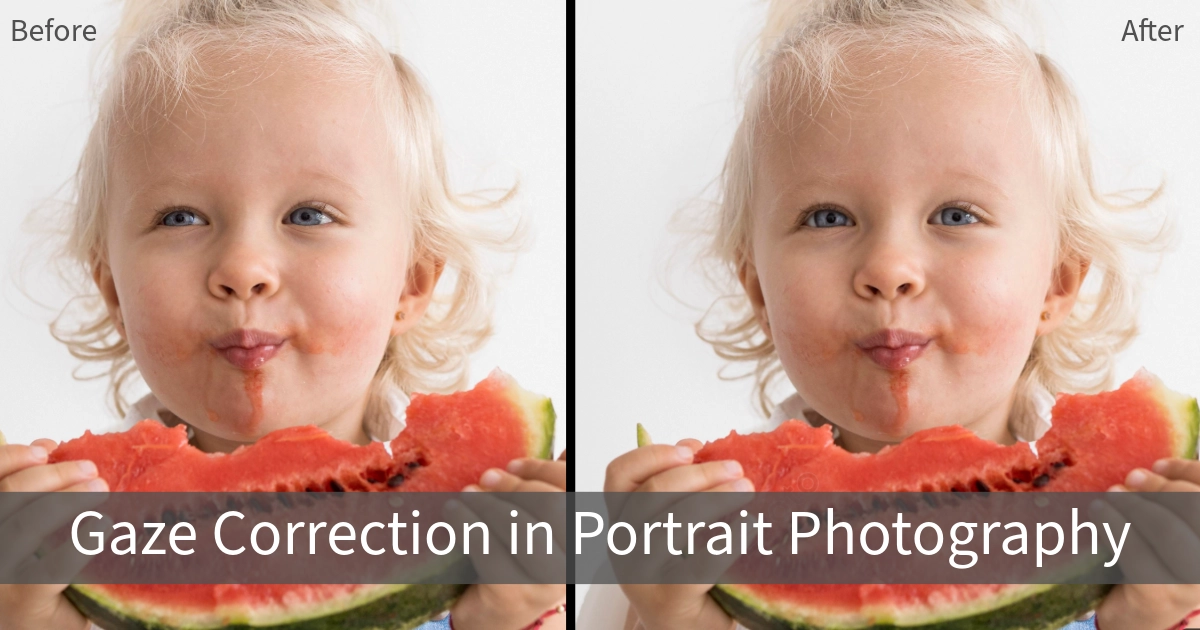
In a headshot, school portrait, or revenue-driving group image, gaze correction is often the difference between “good enough to keep” and “good enough to deliver.” Viewers will forgive a slightly warm skin tone before they forgive eyes that look checked-out, misaligned, or aimed at the wrong point of attention.
TL;DR
- Gaze correction in photos means adjusting apparent eye direction and engagement, which is a different problem from video eye-line correction.
- The most expensive failures tend to happen in groups, children, corporate headshots, and fast event candids where reshoots or manual fixes do not scale well.
- A usable studio workflow separates intentional off-camera looks from accidental drift, batches what repeats, and QA-checks anything that could look uncanny.
What Gaze Correction Means in Photography
In photography, gaze correction is about making eye contact look natural in a single frame. It involves small adjustments—slightly shifting eye direction, fixing uneven squint, or correcting someone looking off-camera.
Standards are higher in still images because viewers can linger. Details like catchlights, eyelid tension, and iris alignment must all feel consistent, or the image quickly looks off.
When Gaze Issues Turn Into a Real Workflow Problem
If you shoot volume, you already know the pattern: the pose works, the expression works, and then you zoom to 100 percent and realize the eyes are telling a different story. The problem is rarely dramatic. It is usually subtle enough to be frustrating, which is exactly why it eats time in post.
Group shots
Someone always follows the wrong cue. One sibling looks at a phone behind the photographer. Another reacts to a parent off to the side. You can reshoot sometimes, but not always. In group work, gaze correction matters because one outlier can ruin an otherwise deliverable frame.
Children and school portraits
Kids drift constantly. They blink, lose focus, or react a half-second too late. The smile may land, the pose may hold, and the eyes still miss. This is where teams start asking how to fix eyes in photos without manually rebuilding hundreds of near-duplicate files.
Corporate headshots
Corporate portraits are deceptively strict. A headshot is a trust object. Even a mild off-axis gaze can read as evasive or disengaged. This is the classic headshot eye direction fix use case: not a dramatic rotation, just enough correction to match a brief like “direct, warm, and approachable.”
Manual Gaze Correction Techniques and Their Limits
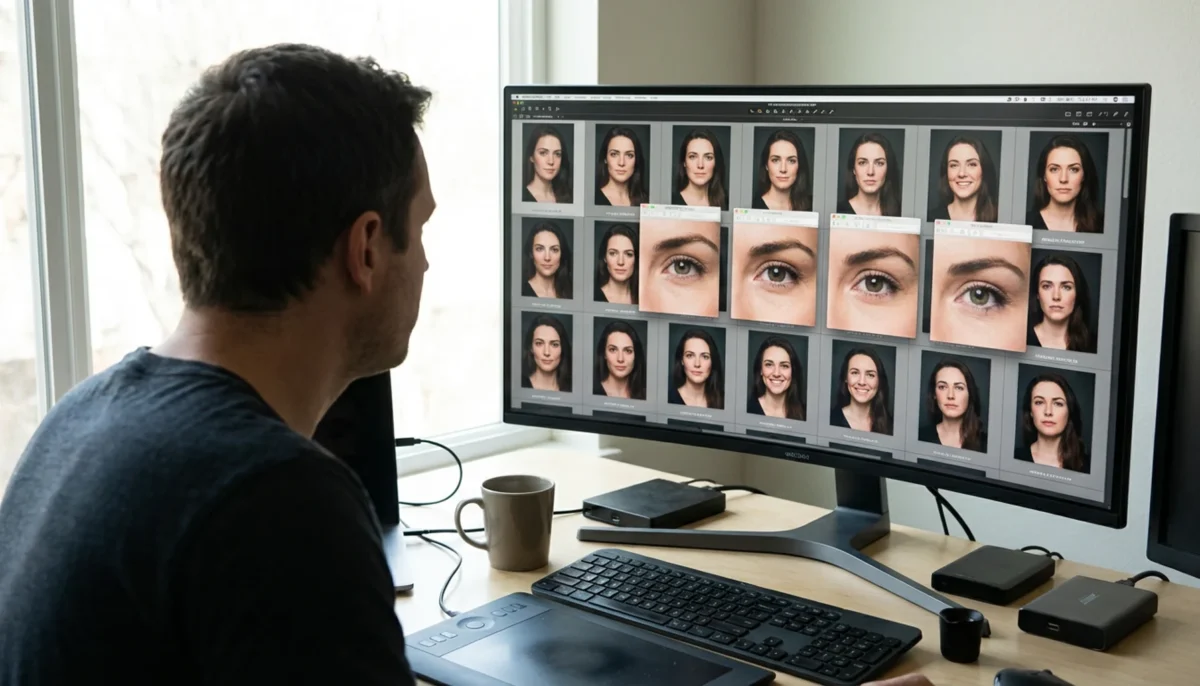
Photographers have always had ways to fix eyes in photos, but most of those methods are craft tricks rather than scalable systems.
Liquify can suggest a new eye direction, but it is easy to bend lids, compress lashes, or stretch the sclera until the result looks wet and artificial. Puppet Warp and mesh-based transforms can move facial features, yet they demand careful masking and repeated comparison. That is manageable on one hero image and painful on fifty near-duplicates.
The deeper limitation is consistency under fatigue. Manual gaze correction is a judgment call repeated over and over. In high-volume work, that repetition produces drift. The same “small” adjustment starts to vary from frame to frame, and clients notice the inconsistency even when they cannot explain what looks wrong.
Where AI Gaze Correction Actually Helps
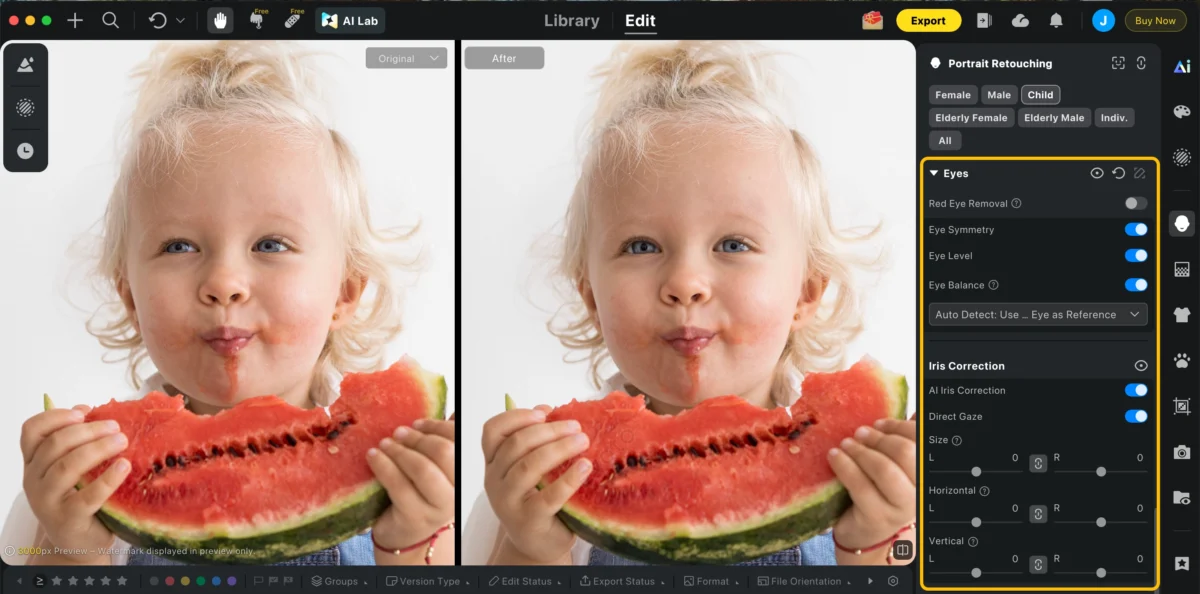
AI gaze correction for portrait photography is useful when it solves a narrow problem well: preserve identity, preserve skin texture, and change only what the viewer reads as eye direction or engagement.
The better systems separate structure from texture. Instead of dragging pixels into place, they infer a plausible eye adjustment for the pose and then blend that change back into the image without collapsing the original skin detail, eyelid shape, or catchlights. In practical terms, that means less time rebuilding eyes by hand and fewer catastrophic artifacts on the eyelid margin.
For studios evaluating tools, the right mindset isn’t “AI replaces taste,” but “AI keeps corrections consistent.” With the Evoto AI photo editor, you can test this on real session selects: apply one-click gaze correction, refine eye asymmetry, enhance catchlights, and whiten eyes—quickly and consistently across your set.


Powerful AI Photo Editor
A High-Volume Gaze Correction Workflow That Holds Up
The best workflow is the one that keeps retouching from turning into a second photoshoot. In practice, that usually means a narrow correction pipeline with a short QA loop.
- Cull for story first, then cull for eyes. Keep your normal storytelling pass, but flag the frames where gaze undermines the image’s purpose, especially hero images, yearbook pages, album covers, and anything headed for print.
- Label the failure mode. Separate “intentional off-camera look” from “accidental drift” and “group mismatch.” Only the accidental bucket belongs in a production correction workflow.
- Batch what truly repeats. School, sports, and repeated portrait setups often share lighting, focal length, and failure patterns. That is where repeatable correction saves real margin.
- QA for believability, not perfection. Compare siblings side by side, check glasses edges, inspect catchlights, and make sure similar images from the same sitting still look like the same human being.
- Deliver corrected heroes first. The strongest corrected frames should lead proofs and client review, not sit buried behind the versions you quietly retired.
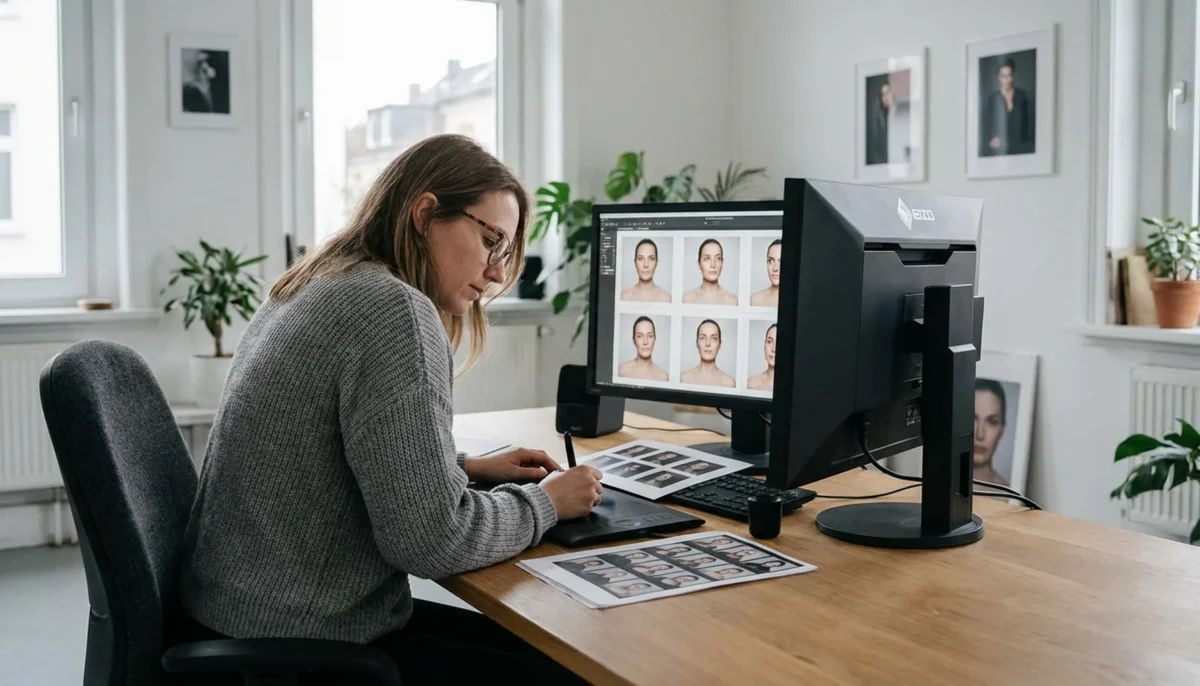
If you want to test whether that workflow meaningfully shortens your calendar, download Evoto free and benchmark it against your manual baseline on a real folder. For studios evaluating budget against monthly volume, the safest current pricing reference is Evoto’s pricing and credit guide.
Powerful AI Photo Editor
When You Should Not Correct Gaze
Gaze is not automatically a problem. It is a communication choice.
Editorial portraits often depend on an off-camera look that feels thoughtful, observant, or candid. Environmental portraits may need the subject engaged with the world around them rather than staring into the lens. Creative portraits can use a breakaway gaze to create mood or tension.
In those cases, correcting the eyes toward camera can flatten the story. The job is not to force directness everywhere. The job is to distinguish between expressive intent and accidental drift.
The Fastest Ways to Make Gaze Correction Look Fake
Symmetric centering
Eyes are not perfectly identical instruments. Forcing both irises into perfectly mirrored positions can create a mannequin stare. It looks technically corrected and emotionally dead.
Iris distortion
Over-rotation can shear highlights, stretch iris texture, or create mismatched catchlights. If the light physics no longer agree with the rest of the face, viewers sense the problem before they can name it.
Inconsistent results across a set
Studios sell consistency. If three headshots from one session look like three different interpretations of direct eye contact, you have replaced one flaw with another. Standard settings and a repeatable QA pass matter more than aggressive correction strength.
FAQ
Can you fix eyes looking away in photos?
Often, yes, when the problem is a small drift or a missed cue rather than an extreme profile angle. The best results come from frames with enough eye detail and reasonable resolution. In more extreme cases, a different select or a reshoot may still be the cleaner answer.
How do you fix eye direction in headshots?
Start with the smallest believable adjustment, then validate it against the lighting. Eyelid shape, iris edge, and catchlight placement all need to remain coherent. In corporate work, natural directness is usually better than dramatic rotation.
What is the practical difference between AI and manual gaze correction?
Manual correction gives you maximum control per image and maximum time cost. AI correction trades some micromanagement for speed and repeatability, which matters when the business problem is volume and consistency rather than one exhibition print.
Is gaze correction noticeable?
When it fails, absolutely. When it works, it should read as “good portrait photography,” not “edited eyes.” That is the right QA standard.
Is batch eye correction realistic for school photos?
Yes, for the right subsets. Repeated lighting, similar poses, and the same failure modes are where batching helps most. It still needs spot checks for glasses, hair over the eyes, and unusual expressions.
Gaze correction is worth doing when it protects the purpose of the image without flattening the subject. The studios that benefit most are not chasing a novelty effect. They are trying to keep good images billable, believable, and consistent at scale.
Try Evoto AI Photo Editor
Retouch photos with Evoto AI and make your photos best! Available on Windows, MacOS and iPadOS.