

Engagement sessions look effortless in a portfolio grid. In the field they are a sequencing problem.
You have two people who may never have been photographed together professionally. You may have two locations, one outfit change, and a light window that moves faster than the posing. The couple wants natural images, save-the-date options, and something that still feels like them—not a Pinterest pose catalog.
Good engagement photography tips are not a list of trendy locations. They are decisions about timing, light, movement, and coverage that still work when the couple is nervous, the wind picks up, or golden hour arrives ten minutes late.
Plan the Session Around Light and Energy, Not Just the Location
The biggest engagement mistake is choosing a location because it photographed well for someone else last season.
A rooftop may look dramatic at sunset but give you nowhere to reset if the couple needs a break. A crowded downtown spot may fit the brand but kill the natural interaction you need in the first twenty minutes. A field may be perfect at golden hour and empty at every other hour.
Before you confirm the plan, check the real constraints:
- How comfortable are they in front of the camera?
- Do they want polished portraits, candid movement, or both?
- How many locations can you actually reach without rushing?
- Will you need one outfit change, or is that too much for the timeline?
- Does the session need save-the-date frames, album images, or mainly wall portraits?
- If the light turns flat or the weather shifts, does the location still work?
Scout at the planned shoot time, not at lunch on a different day. Note where the sun falls, where open shade sits, how busy the path gets, and how long it takes to walk between setups. For more on reading outdoor light before you pose, see How to Shoot Outdoor Portraits with Natural Light.
Build the session in time blocks, not just spots:
- Warm-up block: walking, hand-holding, easy talking—no camera-in-the-face pressure yet
- Safe portrait block: one controlled setup while faces and outfits are still fresh
- Connection block: closer frames, foreheads, laughs, quiet moments
- Movement block: walking away and back, spin, run-in hug—after they have loosened up
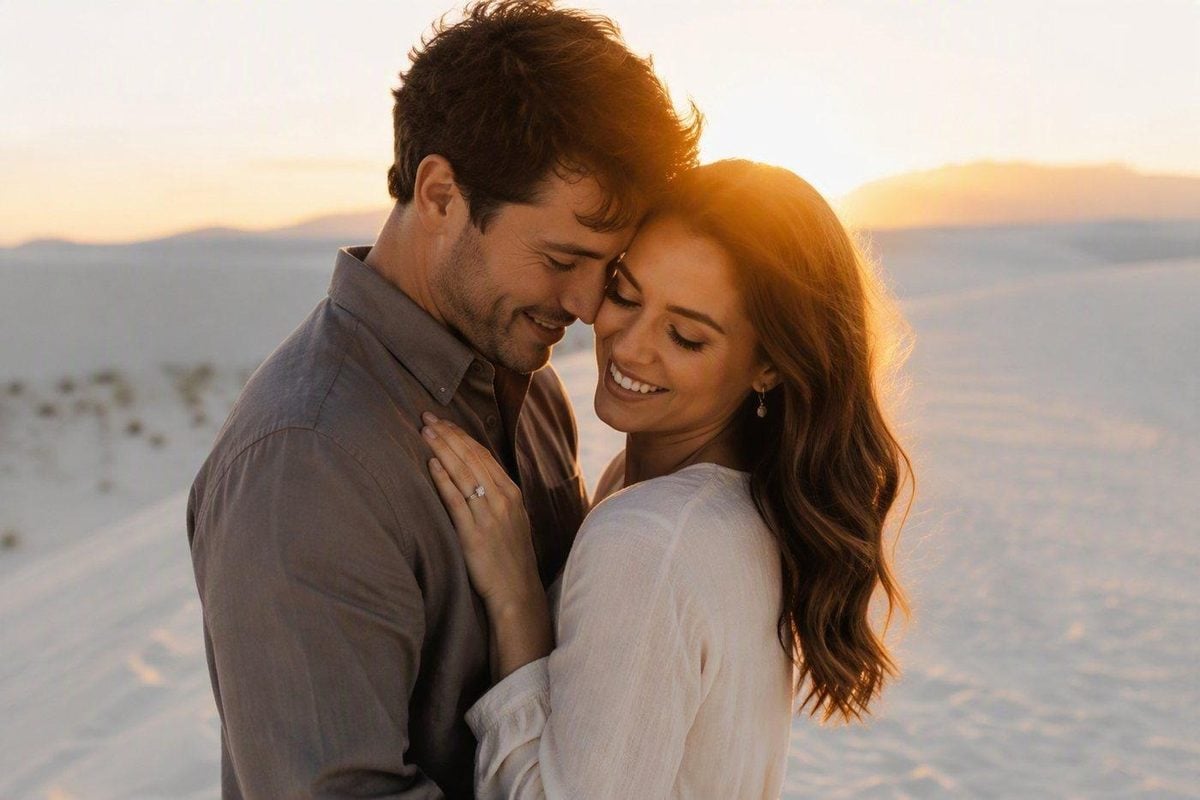
- Golden hour block: backlight, rim light, wider environmental frames
- Detail block: hands, ring, fabric, profile close-ups if the couple wants them
That order protects the gallery. If you spend the whole session chasing one dramatic backlit frame and never get a clean portrait where both faces read clearly, the couple will feel the gap immediately.
Use Light in Layers, Not All at Once
Engagement light fails when photographers treat golden hour like the only plan.
Golden hour is useful because it gives warmth, direction, and separation. It is also unstable. Background brightness shifts every few minutes. Skin can turn orange. Flare can flatten contrast. Wind and hair become harder to manage when the couple is already tired.
Reliable light windows for engagement sessions:
- Open shade with bright surroundings for even, relaxed portraits
- Side light when you want cheekbone shape without losing both eyes
- Soft backlight when faces still read and you have fill from ground or a reflector
- Bright overcast when the couple needs an easy, low-pressure session
- Late golden hour for rim light, walking frames, and wider scenic images
Avoid open midday sun for classic close portraits unless the couple wants a bold, high-contrast look. Squinting, dark eye sockets, and shiny skin are hard to sell as “natural.”
Work in this sequence:
- Get one clean portrait while light is still controlled
- Move into softer side light or open shade for flattering three-quarter frames
- Add movement while faces are still readable
- Save strong backlight, flare, and sun-in-frame shots for the end
That mirrors the layer approach in Golden Hour Photography: secure the safe frame first, then spend the disappearing light on the frames that need it most.
Watch skin as you shoot. Warm stone, autumn leaves, green grass, and open sky all bounce color into faces. If you ignore that on location, the edit becomes a matching problem across what should feel like one session.
Location Ideas That Actually Help You Shoot
Every location should give the couple something to do. Static “stand here and smile” setups burn energy fast.
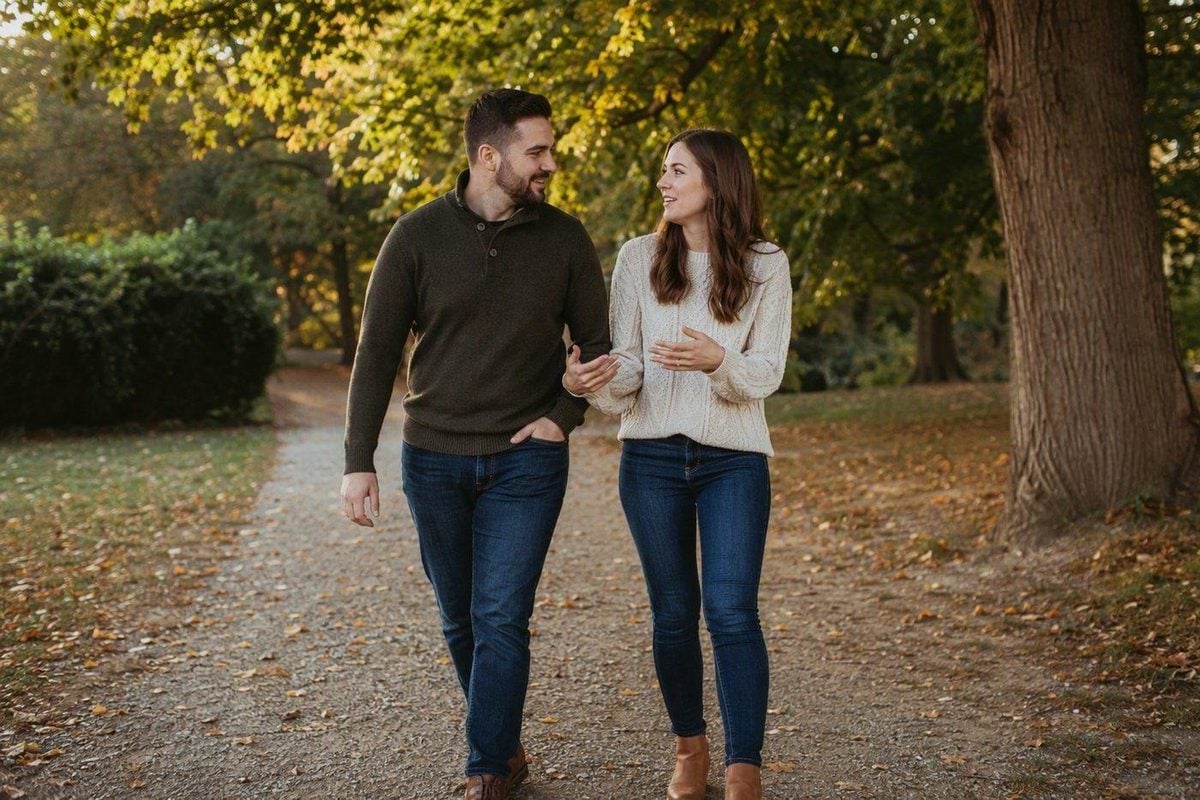
Tree-Lined Path or Park Walk
Why it works: Direction, depth, and an instant warm-up activity.
Best light: Late afternoon shade or overcast.
Prompts: Walk toward you slowly. Switch sides. Look at each other and keep walking. Stop for a quick hug, then keep moving.
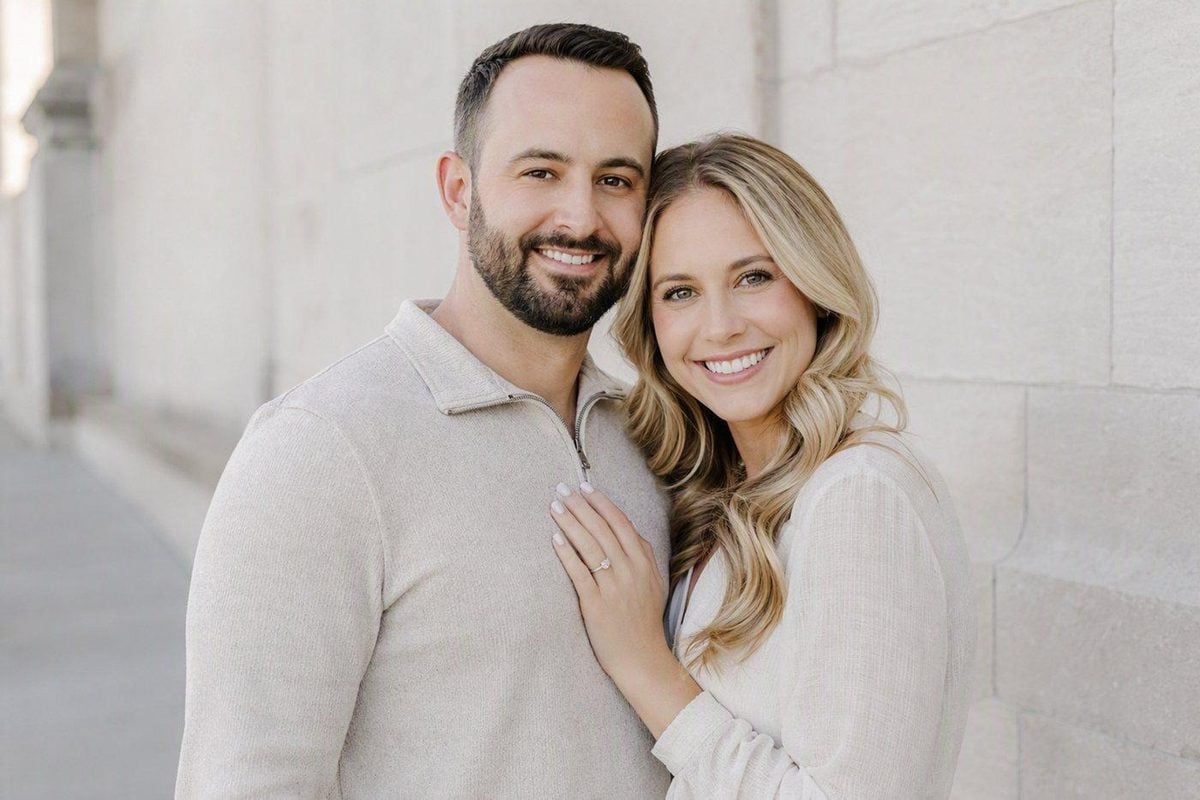
Urban Alley, Steps, or Brick Wall
Why it works: Shape, texture, and leading lines without needing a huge scenic backdrop.
Best light: Open shade or side light along the street. Avoid patchy noon sun between buildings.
Prompts: Sit on steps. Lean shoulder to shoulder. Walk away, then look back.
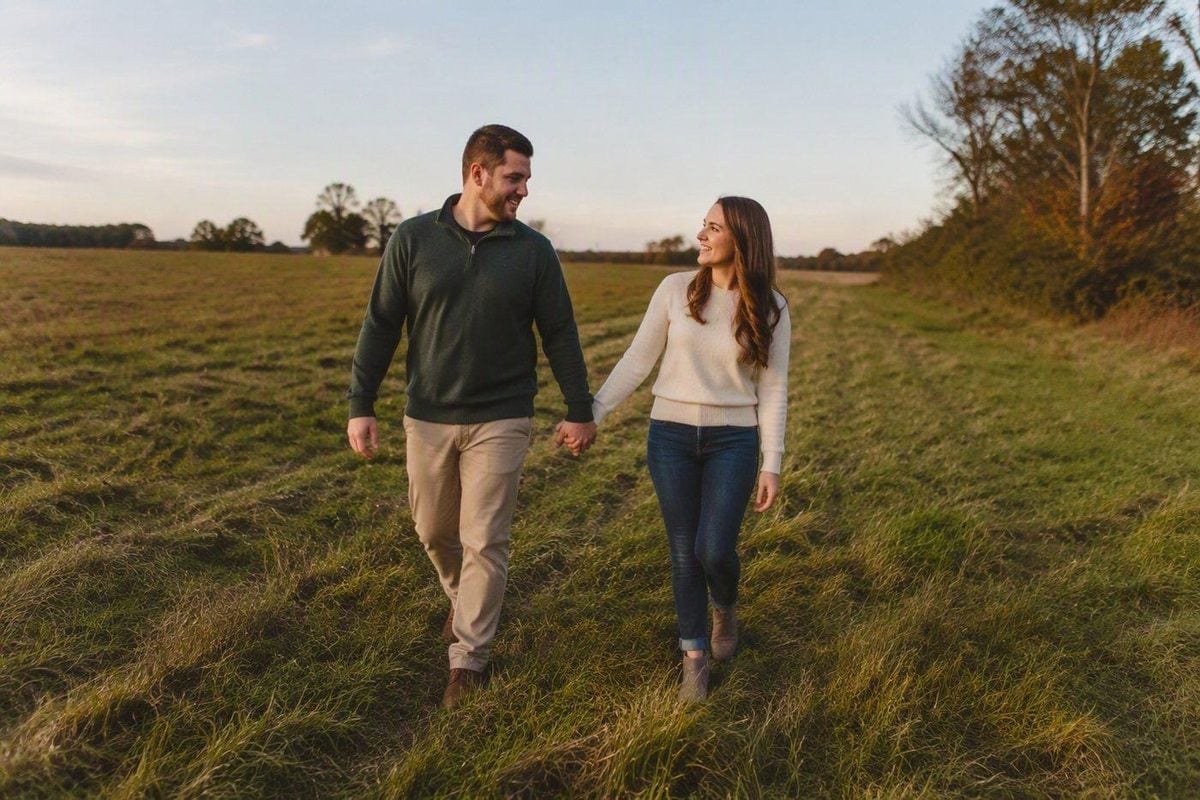
Open Field or Meadow Edge
Why it works: Room for movement, clean horizon, and easy backlight later in the session.
Best light: Last hour before sunset.
Prompts: Hand in hand across the grass. Run back into each other. One quiet stand-and-breathe frame after the run.
Waterfront, Lake, or River Path
Why it works: Reflections and cooler color balance against warm skin and clothing.
Best light: Late afternoon. Watch specular highlights on the water behind them.
Prompts: Walk the path. Stop and look across the water. Hold hands near the edge without stepping into mud.
Downtown Crosswalk or Quiet Street
Why it works: Editorial energy and save-the-date variety.
Best light: Shade from buildings or overcast sky.
Prompts: Walk across on a clear signal. Look at each other mid-step. One stationary frame against a clean wall after the walk.
Meaningful Personal Spot
Why it works: The couple loosens up when the place has history: where they met, got engaged, first date, favorite coffee spot.
Best light: Whatever the spot gives you—commit to one direction instead of fighting mixed light.
Prompts: Tell the story out loud while they walk. Ask one person to share what they remember. Capture the reaction, not the retelling pose.
Skip locations that look good online but fail in person: no shade, no walking room, heavy crowds, long hikes in formal shoes, or a single angle that only works for five minutes.
Prompts Beat Pose Names
Most couples do not know what “prom pose” or “S-curve” means. They do know how to walk, whisper, laugh, and stand closer.
Use short jobs instead of long instructions:
- Walk and talk like you are late for dinner
- Switch places on the path
- Whisper your favorite memory from this year
- Forehead together, eyes closed, breathe once
- Hug from behind and look past my shoulder
- Spin once, then stop when it feels silly
- Walk away from me, then run back
- Look at their hands, not the camera
- Tell them one thing you are excited about
- Fix their hair, then laugh at yourself for fixing it
Start wide, then move closer. A session that opens with a tight face portrait often feels awkward. Walking first gives you movement frames and helps you learn how they interact.
Secure these frames before the session gets creative:
- One clean full-length or three-quarter portrait
- One closer connection frame
- One walking frame
- One laugh or candid reaction
- One wider environmental image
- One detail if they care about the ring
That coverage also makes culling faster. If every frame is a slightly different stiff pose, you will hate the edit later.
Wardrobe and Prep That Survive Real Sessions
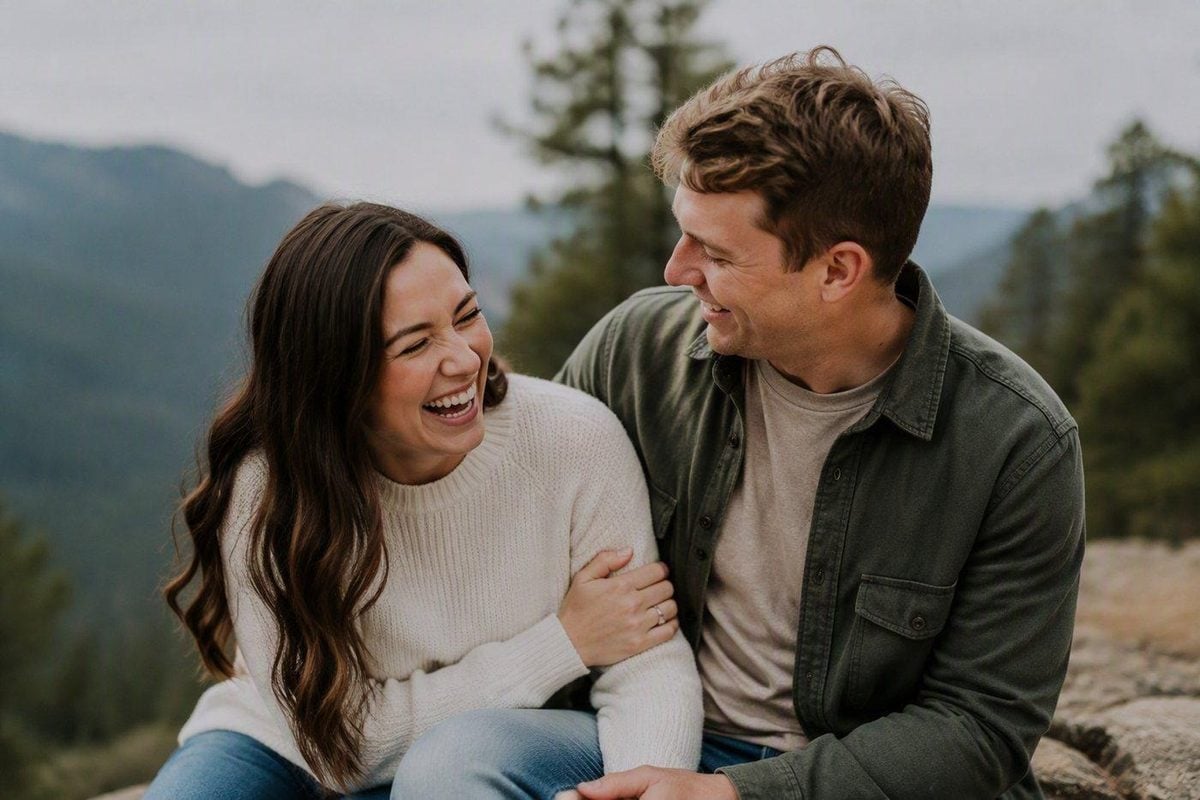
Engagement outfits should coordinate, not match.
A strong palette:
- Base: cream, tan, soft white, light denim, warm gray, olive
- Accent: rust, burgundy, navy, muted green, one deeper jacket
- One pattern at most, usually on one person
- Texture over logos: linen, knits, denim, light layers
Avoid neon, large graphics, identical all-white outfits that blow out in backlight, and two busy patterns in the same frame. If one person wears a strong color, keep the other person in a neutral base.
Shoes matter. City sessions need comfortable walking shoes. Field sessions need boots or flats that can handle grass. Heels only work if the couple truly will not walk far.
Prep saves time on location:
- Confirm outfit change timing if there is one
- Ask them to arrive with comfortable base layers
- Keep jewelry simple unless the ring is the point
- Bring a comb, blotting paper, and a small mirror
- Plan where they can leave bags so hands stay free
If the session feeds save-the-date design, discuss negative space and vertical crops early. A beautiful horizontal backlit frame may not fit the card layout they already chose.
Build a Gallery That Feels Like One Session
Engagement galleries fail when they look like five mini shoots stitched together.
Cover these image types:
- Clean couple portrait
- Three-quarter connection frame
- Walking or movement
- Backlit or environmental wide shot
- Quiet close-up
- Laugh or candid reaction
- Detail: hands, ring, fabric, profile
- One frame that shows the location clearly
You do not need fifty versions of the same hug. Get one strong expression per setup, then change the job: walk, sit, lean, whisper, move.
Lens choice shapes the set:
- 85mm or 70–200mm for flattering compression and clean backgrounds
- 50mm for natural perspective when space is tight
- 35mm when the environment is part of the story—not as the default for every frame
Shoot a mix of orientations if the couple needs save-the-date, album, and wall art. That decision belongs on location, not after the session when you realize every keeper is horizontal.
Edit for Connection, Not for a New Couple
Engagement files usually mix open shade, side light, backlight, and maybe one overcast block if the weather shifted. Skin can drift warm, green, or blue across the set. The biggest editing mistake is pushing romance so hard that the couple stops looking like themselves.


Powerful AI Photo Editor
Work in this order:
- Correct white balance before adding warmth
- Protect skin before saturating sky or foliage
- Recover highlights on faces, white shirts, and light dresses
- Group keepers by light type before broad adjustments
- Retouch lightly: stray hair, shine, temporary blemishes—not a new face
- Keep the gallery consistent from first frame to last
This is where volume and variety collide. An engagement session is not one hero file. It is a small set that has to feel cohesive for announcements, social posts, and wedding-site galleries.
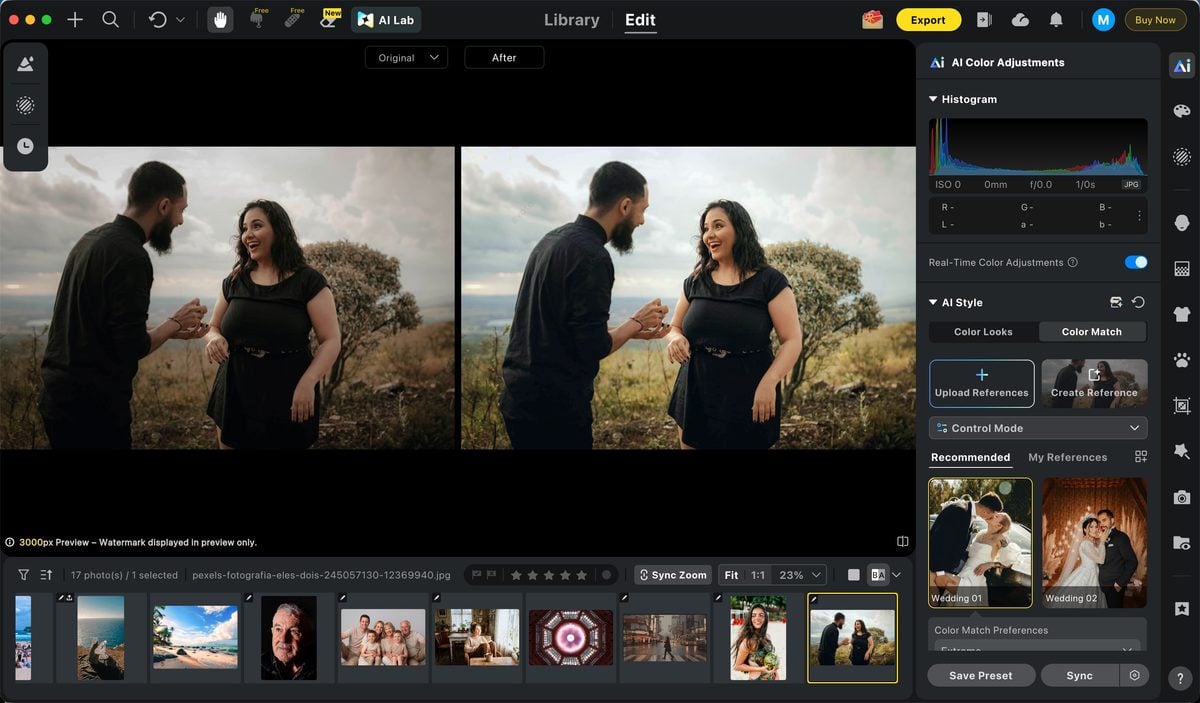
After selects are locked, group by light: shade portraits, side-light frames, backlit golden-hour images. Use AI Color Match from a file where skin already looks right, so one orange sunset frame does not dictate the whole gallery. Batch Edits carry that direction through the set instead of rebuilding sliders on every similar walking frame. For closer portraits, Portrait Retouching belongs in the finishing pass: wind-blown hair, light shine, small distractions—not a beauty-filter rewrite.
If the couple also needs wedding-day coverage later, the engagement gallery is a preview of your consistency. The same logic shows up in Wedding Portrait Photography: secure the safe frames first, then protect consistency once the set moves into post.
Engagement Session Checklist
Before the session
- Did you scout at the planned time of day?
- Is there a warm-up path before the hero portrait?
- Can you reach every location without rushing?
- Do outfits fit the terrain and weather?
- Do the couple know whether they need vertical save-the-date crops?
- Is there a backup spot if the first background gets crowded?
On location
- Did you start with movement before tight posing?
- Is there one clean portrait with both faces readable?
- Did you capture walking, close connection, and one wider frame?
- Are hands and posture fixed before you ask for new expressions?
- Did you save the strongest backlight for after the safe set is done?
Before delivery
- Do skin tones stay believable across shade and golden hour?
- Are highlights on faces and light clothing still holding detail?
- Does the gallery feel like one session, not five color grades?
- Is retouching still recognizable as the same couple?
- Do the selected images cover portrait, movement, environment, and detail?
Final Thoughts
The best engagement photography tips are simple on purpose: scout the light, start with movement, secure one clean portrait early, and build the rest in layers. Locations matter, but prompts matter more. Warmth matters, but believable skin matters more.
When the session is planned around how the couple actually moves and talks, the images feel less like performance and more like them. That is what makes engagement photos useful long after the save-the-date goes out.
Try Evoto AI Photo Editor
Retouch photos with Evoto AI and make your photos best! Available on Windows, MacOS and iPadOS.