

Some photos fail even when the subject is sharp. The face is in focus. The light is usable. The background is interesting. But the frame still feels awkward. The subject may be too centered for the moment, too close to the edge, facing into a dead wall of space, or fighting with a bright object that pulls the eye away.
That is a subject placement problem. Subject placement in photography is the decision of where the main subject sits inside the frame. It controls what the viewer sees first, how the eye moves, how much breathing room the subject gets, and whether the photo feels calm, tense, balanced, cramped, or unfinished.
For working photographers, this is not only a theory exercise. It is a field decision you make under pressure. In portraits, weddings, travel, street, product, sports, and documentary work, you often have seconds to decide whether the subject belongs in the center, on one side, near an edge, or surrounded by space.
The goal is not to follow one rule. The goal is to place the subject where the photo makes the most sense.
What Is Subject Placement in Photography?
Subject placement is the way you position the main point of interest inside the frame. The subject can be a person, face, eye, gesture, product, animal, building, flower, athlete, car, tree, or small figure in a landscape. It can also be a relationship between two subjects, such as a couple, parent and child, player and ball, model and product, or person and environment.
Placement affects the whole photograph. Move the subject to the center and the image may feel direct and stable. Move the subject to one side and the image may feel more open, dynamic, or story-driven. Push the subject close to the edge and the image may feel tense or editorial. Surround the subject with quiet space and the image may feel calm, lonely, graphic, or spacious.
That is why subject placement is more than a grid. The rule of thirds can help. Center composition can help. Negative space can help. But each one is only a starting point. The stronger question is:
Where does this subject need to sit so the viewer understands the photo?
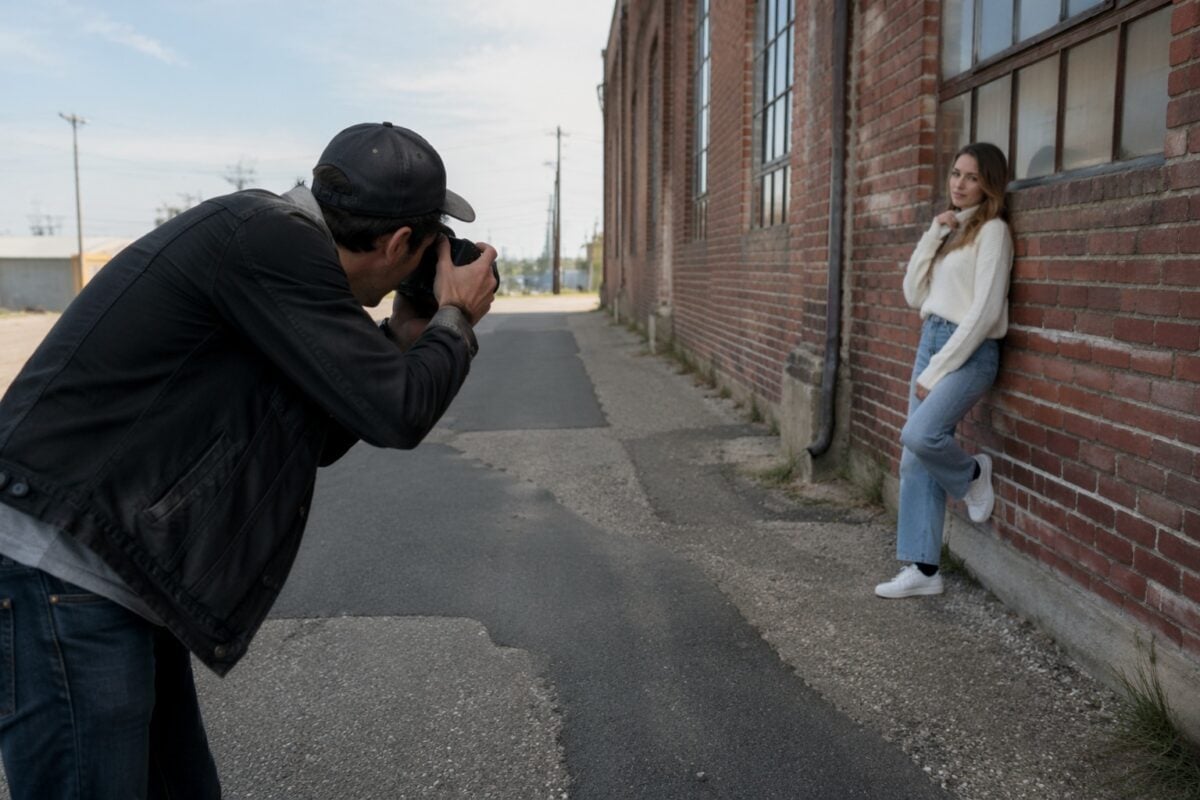
Start With What the Photo Is About
Before you place the subject, decide what the subject actually is. This sounds obvious, but many weak compositions begin with an unclear priority. A photographer sees good light, an attractive background, a strong outfit, or an interesting location and starts arranging the frame before choosing the visual anchor.
Ask this first: What should the viewer notice first?
If the answer is a face, the face needs enough light, contrast, sharpness, and space to lead the frame. If the answer is a product, the product needs to stay stronger than the props. If the answer is a small figure in a landscape, the figure needs enough visual weight to hold the space. If the answer is a gesture, the crop needs to protect that gesture.
Placement cannot save an unclear subject. A weak focal point is still weak if you move it to a thirds intersection. A distracting background is still distracting if the subject is off-center. A centered portrait will still feel confused if a bright sign behind the subject pulls more attention than the face.
Decide what matters first. Then place it.

When Center Placement Works
Centering a subject is not a beginner mistake. It is a strong choice when the photo needs stability, directness, symmetry, or impact.
Center placement works well for:
- direct portraits with strong eye contact
- symmetrical architecture
- reflections
- product photos
- minimal scenes
- subjects framed by doorways, windows, tunnels, or arches
- patterns where one subject breaks the rhythm
- quiet landscapes with one clear anchor
When a subject is centered, the viewer reads it quickly. There is less search. The image feels more direct. That can be useful in portraits. A centered face with clear eye contact can feel confident and honest. In product photography, a centered object can feel clean and premium. In architecture, a centered doorway or hallway can make the frame feel ordered. In minimalist work, a centered subject surrounded by simple space can feel calm and deliberate.
But center placement needs commitment. If the subject is almost centered but not quite, the frame may look careless. If the background is almost symmetrical but slightly crooked, the viewer may notice the mistake before the subject. If the subject is centered but the surrounding space is uneven for no reason, the photo can feel unbalanced.
Use center placement when the photo benefits from directness. Do not center the subject just because you did not decide what else to do.

When Off-Center Placement Is Stronger
Off-center placement is useful when the subject needs a relationship with the rest of the frame. This is why the rule of thirds is so common. Placing a subject away from the middle often gives the image more movement. It lets the viewer see the subject and then read the surrounding space.
Off-center placement works well when:
- the subject is looking or moving in a direction
- the background tells part of the story
- the environment matters
- the frame needs visual tension
- the subject needs breathing room
- a centered crop would feel static
- one side of the frame can act as negative space

For an environmental portrait, placing the person on one side can let the location speak. A chef can sit on one side of the frame while the kitchen fills the rest. A musician can stand near one edge while the studio gear adds context. A bride can sit near a window while the room gives the portrait atmosphere.
In street or travel photography, off-center placement often makes the frame feel observed instead of staged. The subject belongs inside a larger world. The viewer sees not only who is there, but where they are, where they might move, and what surrounds them.
The key is intention. Do not move the subject off-center only because a rule says so. Move the subject because the extra space has a job.

Leave Space for Gaze and Motion
Subjects often need room in the direction they are facing or moving. This is called looking room, leading room, or lead room.
If a person looks to the right, space on the right gives the gaze somewhere to travel. If a runner moves left, space on the left gives the movement direction. If a cyclist, dog, dancer, car, or athlete is moving through the frame, open space in front of the motion usually feels more natural than open space behind it.
Without that space, the frame can feel cramped.
The subject may look trapped against the edge. The viewer may feel the motion has nowhere to go. The photograph may feel like it was taken a fraction too late or cropped too tightly.
This does not mean every moving subject needs a large empty area. Sometimes you may want tension. A subject running out of the frame can feel urgent. A portrait looking into the frame edge can feel lonely or uncomfortable. A tight crop can feel intense. But that should be the point, not an accident.
In the field, ask: Where is the subject’s energy going?
Then leave enough room for that energy to read.

Use Negative Space as Support, Not Filler
Negative space is one of the strongest tools for subject placement. It can be sky, water, fog, snow, sand, shadow, a plain wall, a soft background, or a large area of low-detail tone. It gives the subject room to breathe and helps the viewer find the main point faster.
But negative space only works when the subject can hold it. A small person in a wide landscape can feel powerful if the person has contrast, color, shape, or a clean silhouette. A portrait against a plain wall can feel elegant if the face carries enough attention. A product on a simple surface can feel premium if the product remains the strongest element.
The space should support the subject. If the subject is too weak, the empty area feels accidental. If the quiet side of the frame contains a bright sign, a random face, a hard edge, or a distracting object, it is no longer quiet. It becomes competition.
Good subject placement is not only about where the subject sits. It is also about what you allow around it.

Watch the Distance From the Frame Edge
The closer a subject gets to the edge, the more tension it usually creates.
That can be useful. Edge placement can make a frame feel bold, uneasy, graphic, or editorial. It can create a sense that the subject is entering or leaving the frame. It can make a quiet photo feel more active.
But edge placement is risky. If the subject is too close to the border without intention, the image can feel cramped. If hands, feet, hair, elbows, flowers, product edges, or important gestures are cut awkwardly, the viewer may notice the crop instead of the subject.
Frame edges also attract distractions. A small bright object near the center may be annoying. A small bright object near the edge can pull the eye out of the photo. Partial faces, signs, tree branches, poles, car lights, white shirts, and hard shadows near the border often feel heavier than they should.
Before pressing the shutter, scan the edges.
Ask:
- Is anything touching the border awkwardly?
- Is the subject too close to the edge?
- Is there a bright object pulling the eye out?
- Are hands, feet, hair, or props cropped cleanly?
- Does the subject have enough space to breathe?
A small step left, a slight lower angle, or a tighter crop can solve the problem before it becomes an editing job.

Balance the Subject With the Rest of the Frame
Subject placement always affects balance. A face, bright shirt, bold color, dark shape, large object, sharp texture, or isolated subject can carry strong visual weight. When you move that weight around the frame, the entire image changes.
A subject on the far left may need quiet space on the right. A small subject near the bottom may need sky, shadow, or architecture above it. A dark object near one edge may need a lighter area or secondary detail to keep the frame from feeling lopsided.
Balance does not mean both sides are equal. It means the visual weight feels controlled.
For example, a small person in a red coat can balance a large snowy field. A bright face can balance a dark background. A product can sit off-center if the props, shadows, or negative space keep the frame stable. A bride standing near one side of a window can feel balanced if the curtain, light, or wall shape supports her position.

If the photo feels off, do not only ask whether the subject is on a third. Ask what else is pulling attention.
Subject placement works best when the rest of the frame agrees with it.

Use Background and Lines to Justify Placement
A subject should not feel dropped into a random part of the frame.
The background can help explain the placement. Doorways, windows, shadows, roads, fences, shorelines, stairs, trees, shelves, tables, and architectural lines can all guide the eye toward a subject. If the subject sits off-center, a leading line or natural frame can make that position feel intentional.
This is especially useful in environmental portraits, street photography, travel work, weddings, and product lifestyle images. A subject placed on one side of a hallway can work if the hallway lines lead toward the face. A person near a window can work if the frame of the window supports their shape. A product on one side of a table can work if props and shadows guide the eye back to it.
Be careful with lines that fight the subject.
If a bright road, branch, railing, or shadow leads the eye out of the frame, the subject may feel weaker even if it is placed well. If background lines cut through a head or point toward a distraction, the viewer may follow the wrong path.
Placement and background should work together. One decides where the subject sits. The other helps the viewer arrive there.

Common Subject Placement Mistakes
Many placement problems are easy to miss during the shoot.
The most common mistakes include:
- centering every subject by habit
- placing the subject on a third without checking the rest of the frame
- leaving space behind a moving subject instead of in front
- giving a portrait no room in the direction of the gaze
- placing the subject too close to the edge
- cutting hands, feet, hair, or props awkwardly
- allowing a bright object near the border to steal attention
- using empty space that does not support the subject
- letting background lines pull away from the focal point
- cropping so tightly that the subject feels trapped
These mistakes do not always ruin the photo. Sometimes they create useful tension. But if the tension was not intended, the image may feel weaker than it should.
The fastest field fix is movement. Move your feet. Raise or lower the camera. Step closer. Back up. Wait for a cleaner moment. Ask the subject to turn slightly. Leave more room in the direction of gaze. Remove a bright edge distraction before it becomes the first thing the viewer sees.
Composition often improves before the shutter, not after it.
Refining Subject Placement in Post-Production
Not every placement decision is final in camera. Post-production can help refine the frame, especially when the moment happened quickly or the subject moved before you could perfect the composition.
Start with the crop. Cropping can adjust the subject’s distance from the edge, protect leading room, remove dead space, strengthen negative space, or make the frame feel more balanced. For placement problems, Evoto AI Crop Image can support a faster first pass when a photo needs cleaner spacing around the subject or a stronger compositional boundary.
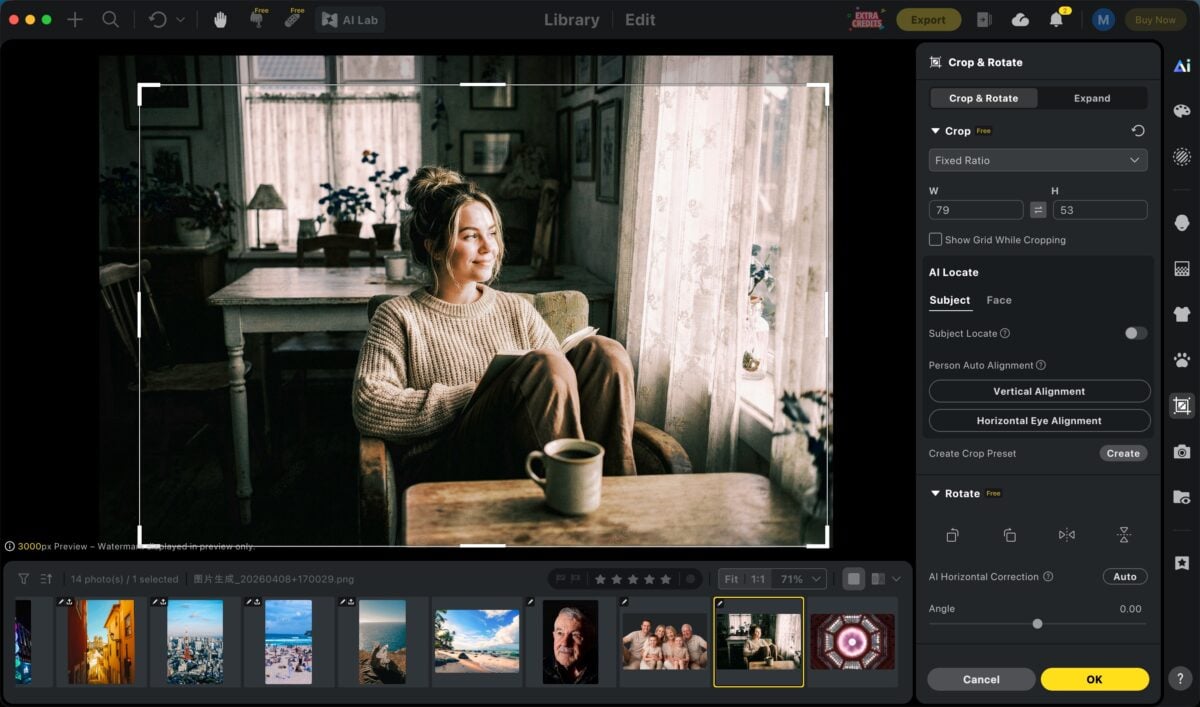
Then check alignment. A subject may be well placed, but a tilted horizon, leaning wall, or crooked doorway can make the whole frame feel unstable. This matters in portraits, interiors, architecture, street scenes, and product images where lines shape the viewer’s sense of order. Evoto AI Photo Straightener can help correct small alignment issues so the placement feels more deliberate.
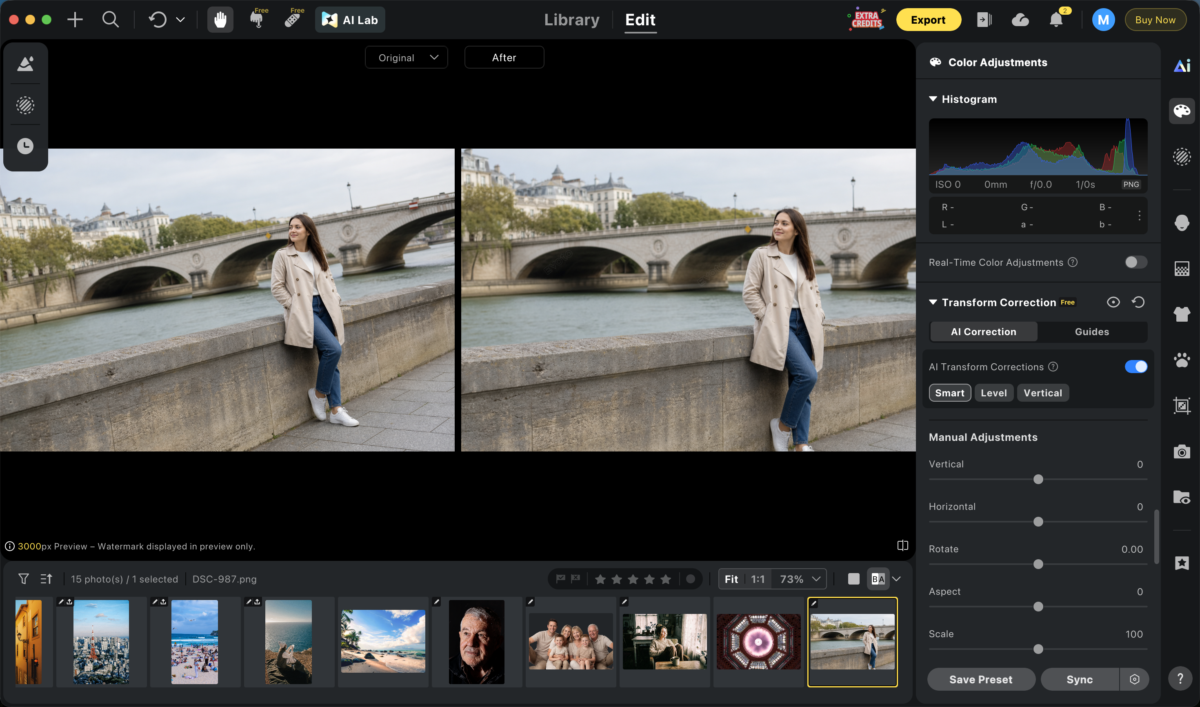
Next, deal with distractions. If a bright sign, cable, trash mark, partial person, or small object near the edge pulls attention away from the subject, the composition may still feel wrong. When a small distraction is weakening an otherwise strong placement, Evoto AI Object Remover can help clean the frame without changing the main idea of the photo.
Finally, refine attention locally. Subject placement is not only a crop problem. The viewer also follows light, contrast, color, and sharpness. Evoto’s guide to local adjustment is useful when the fix is selective: reduce a bright edge, lift a face slightly, soften a background area, or darken empty space so the subject remains the strongest read.
The goal is not to rescue careless composition with heavy editing. The goal is to make a good placement decision cleaner.


Powerful AI Photo Editor
A Simple Field Checklist for Better Subject Placement
When the scene is moving, keep the checklist short.
Ask:
- What is the subject?
- Where should the viewer look first?
- Does the subject need to be centered or off-center?
- Is there enough room for gaze or motion?
- Does the background support the subject?
- Is anything near the edge stealing attention?
- Does the frame feel balanced?
- Would one step left, right, closer, or lower improve the placement?
This checklist works because it keeps the decision practical. You are not trying to remember every composition rule. You are deciding what the photo needs right now.
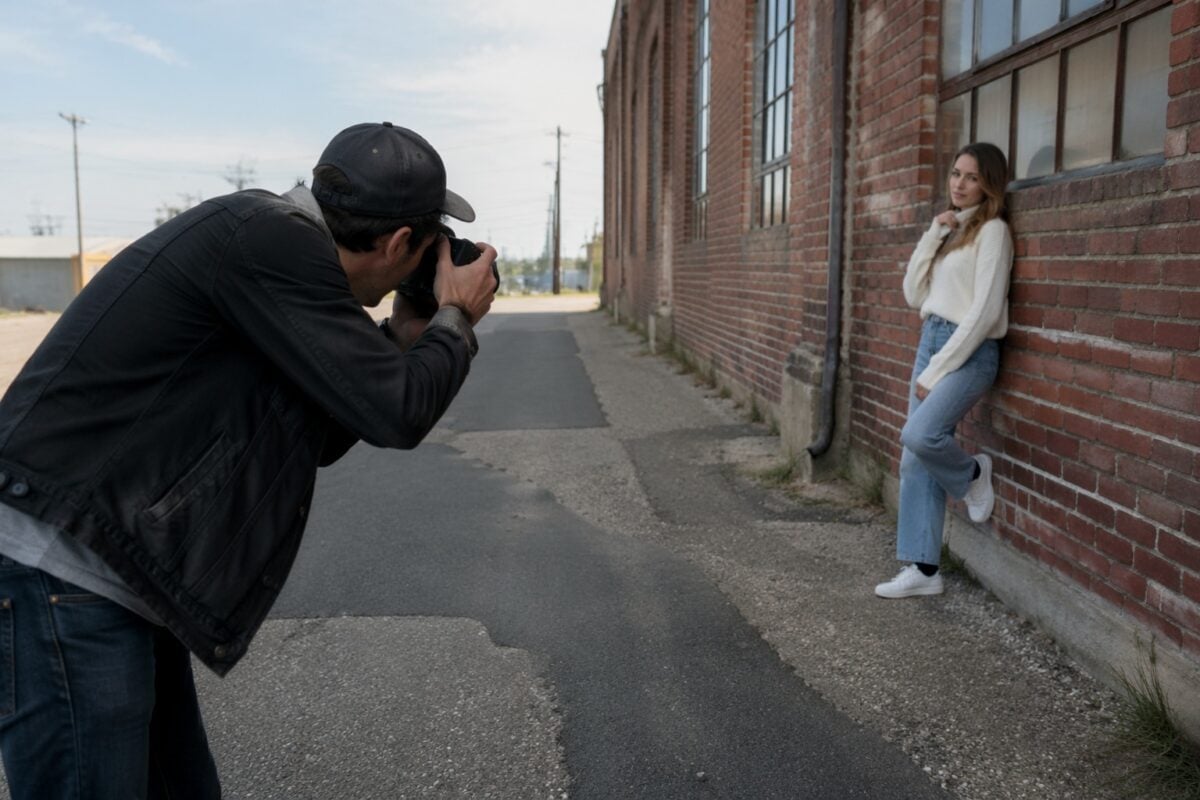
Final Thoughts
Subject placement in photography is not about obeying a grid.
It is about control. A centered subject can feel strong when the image needs directness. An off-center subject can feel stronger when the scene needs context, movement, or breathing room. A subject near the edge can create tension. A small subject surrounded by space can feel powerful. The same placement can succeed or fail depending on light, background, visual weight, and the direction of gaze or motion.
Before you shoot, decide what the viewer should notice first.
Then place the subject so the rest of the frame supports that decision.
That is how subject placement turns a sharp photo into a clear photograph.
Try Evoto AI Photo Editor
Retouch photos with Evoto AI and make your photos best! Available on Windows, MacOS and iPadOS.